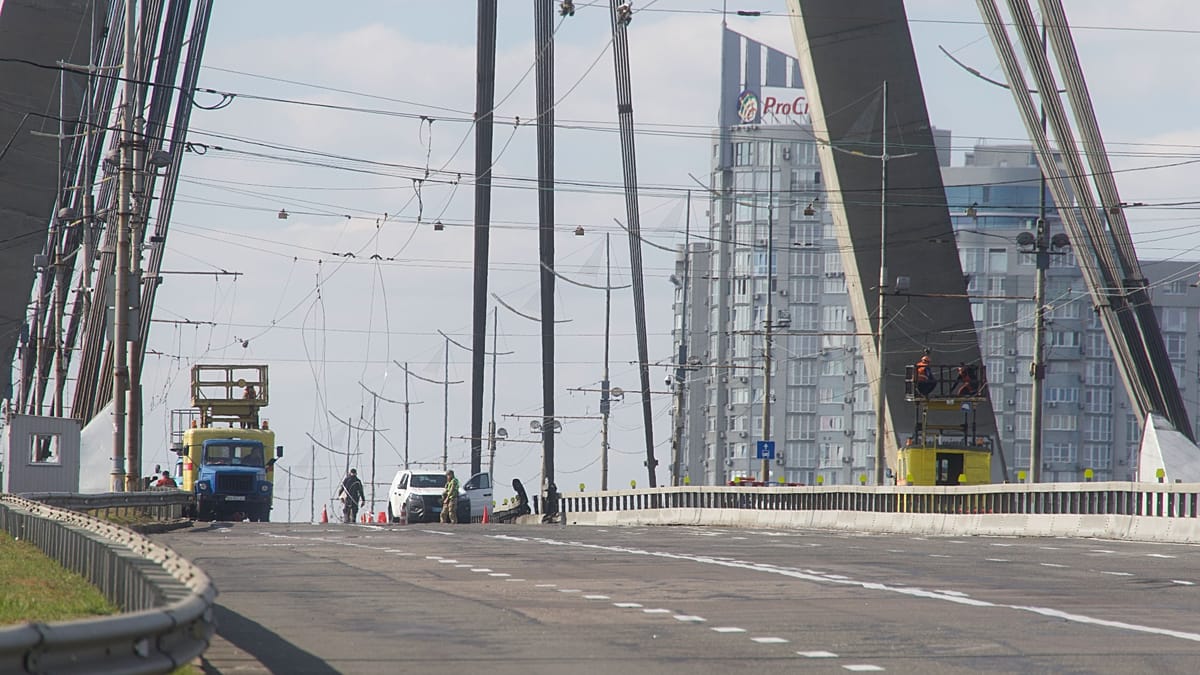
Russian missiles struck two major bridges in Kyiv late on Monday, part of an overnight assault that damaged critical infrastructure and left parts of the Ukrainian capital without heating and water, according to Mayor Vitali Klitschko.
In a Telegram post just before midnight local time, Klitschko reported preliminary hits on the North and South bridges, shortly after the Ukrainian air force warned of incoming missiles. A later statement confirmed that critical infrastructure systems had been damaged, with heating and water supplies affected in several districts.
The attack came despite President Volodymyr Zelenskyy's public warning that Russia was preparing a strike in the coming days. Speaking on Monday, he urged Ukrainians to heed missile danger alerts and vowed a firm response: "And they there, in Russia, must know that for every one of their evils there will be our just response."
Ukraine strikes Crimea bridge again
Ukraine also launched drones toward Russia's capital region overnight, Moscow's mayor Sergey Sobyanin said, claiming air defences had repelled 20 drones. Meanwhile, for the second day in a row, Ukrainian forces struck a symbolic bridge linking the annexed Crimean peninsula to Russia, according to Crimea's Moscow-installed governor, Sergey Aksyonov. Traffic on the bridge was suspended, he said.
The strikes come as diplomatic efforts to end the nearly four-year war intensify. Ukrainian, US and European negotiators held their first talks on future peace negotiations with Russia, Zelenskyy said on Monday. US envoys Jared Kushner and Steve Witkoff joined the online discussions, and for the first time Europe was represented by those who will take part in future talks with Moscow.
France, Britain, Germany, Poland, Italy and the European Union have been chosen to represent the continent at the negotiating table, alongside a NATO representative. Zelenskyy described the conversation as "not easy" but said there was a result, without providing details.
Kushner confirmed the talks, which included national security advisers from the European nations, and insisted that progress was being made. He said much of the focus had been on ways to facilitate direct engagement between Ukraine and Russia. "While much of the public discussion focuses on the differences between the parties, we continue to see positive and constructive ideas emerging through serious discussions away from the public spotlight," he wrote on X.
The diplomatic push comes amid growing concerns over Europe's role in the peace process. Kallas sidelined from Ukraine talks has raised questions about the EU's influence, while some European leaders have voiced fatigue over continued funding. Le Pen's remarks to Kyiv's envoy reflect a broader debate about the sustainability of Western support.
Meanwhile, Zelenskyy reiterated his call for more weapons from European allies, revealing that Russia is receiving "dozens of missiles per month" from North Korea. He urged Europe to respond "on equal terms" to the threat, noting that "Europe has missiles that can deliver truly effective strikes."
According to South Korean and Western intelligence, North Korea has sent thousands of troops to support Russia's invasion, with at least 600 killed and thousands more wounded. In return, analysts say Pyongyang is receiving financial aid, military technology, and food and energy supplies from Moscow.
The latest attacks underscore the fragility of Ukraine's infrastructure and the continued urgency of finding a diplomatic solution. As European and US negotiators work behind the scenes, the human cost of the war remains stark, with cities like Kyiv enduring nightly missile threats.