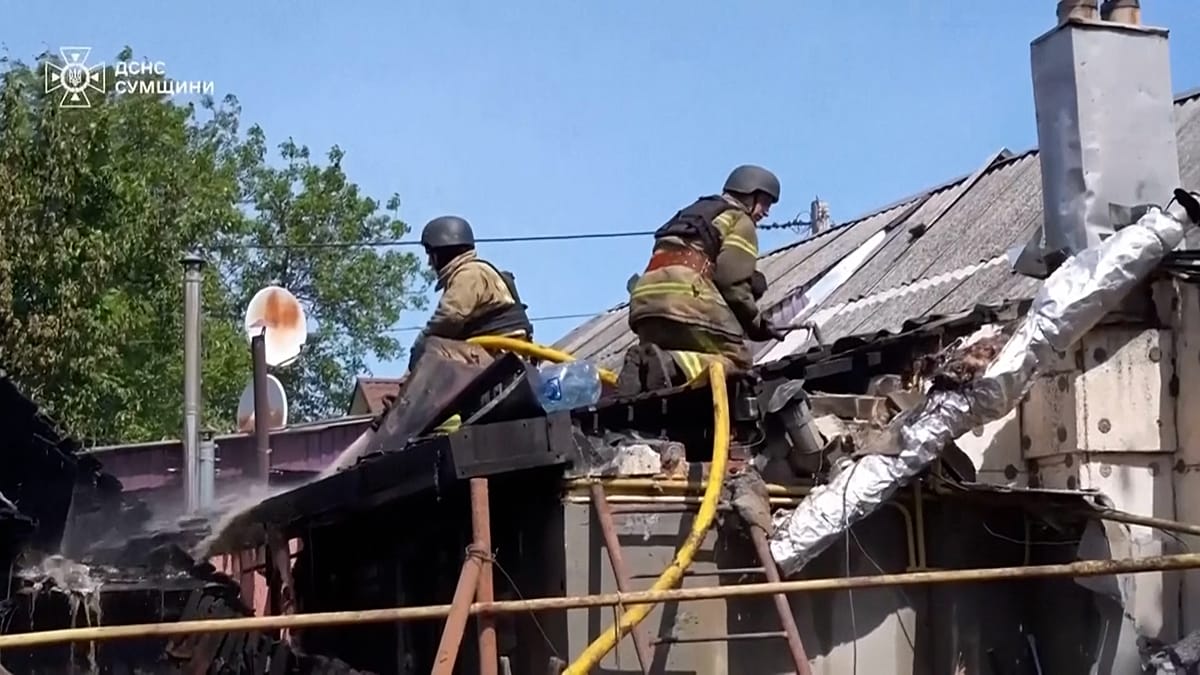
On Thursday, a Russian strike on the northeastern Ukrainian city of Sumy left six people wounded, among them a child, according to Ukrainian authorities. Emergency crews spent hours extinguishing fires that broke out in both residential and industrial zones following the attack. The incident underscores the continued toll on civilian areas as the war enters its third year.
The assault on Sumy was part of a broader wave of Russian drone and missile strikes targeting multiple regions across Ukraine. In recent weeks, Moscow has intensified its aerial campaigns, particularly against energy infrastructure and urban centers. This latest barrage follows a pattern of escalating attacks that have drawn condemnation from European capitals.
Broader Drone Offensive
Ukrainian officials reported that the mass drone attack struck several oblasts, including Kharkiv, Dnipro, and Zaporizhzhia. Air defense systems intercepted a significant number of the drones, but debris and secondary explosions caused damage on the ground. The Russian Drone Barrage Hits Kharkiv Residential Area as Attacks Intensify earlier this month, highlighting the persistent threat to densely populated areas.
In Sumy, the strike hit a residential district, shattering windows and damaging buildings. Local emergency services reported that the injured included a child who was taken to a nearby hospital with moderate injuries. The attack also sparked a fire at an industrial facility, which firefighters contained after several hours.
Ukraine's military has repeatedly called for more advanced air defense systems from its Western allies, including European Union member states. Germany, France, and the Netherlands have pledged additional Patriot and IRIS-T systems, but deliveries have been slow. The European Union's foreign policy chief, Josep Borrell, reiterated the bloc's support for Ukraine, stating that "Russia's indiscriminate attacks on civilians are war crimes that must be answered."
European Reactions and Implications
The strikes come as European leaders grapple with how to sustain military aid to Ukraine amid political shifts in the United States and internal debates within the EU. Poland, a key NATO member bordering Ukraine, has called for increased defense spending and a unified European response. Meanwhile, the United Kingdom and Norway have announced new packages of military assistance, including drones and long-range missiles.
The humanitarian situation in Sumy and other frontline cities remains dire. The United Nations has documented thousands of civilian casualties since the full-scale invasion began in February 2022. The Moscow Orders Foreigners Out of Kyiv as New Wave of Strikes Looms report highlighted the Kremlin's strategy of targeting urban centers to pressure the Ukrainian government.
In Brussels, the European Commission is preparing a new round of sanctions against Russia, targeting entities involved in drone production and energy exports. However, some member states, including Hungary and Slovakia, have expressed reservations, complicating the bloc's unified stance.
As the conflict grinds on, the human cost continues to mount. The attack on Sumy is a stark reminder that no corner of Ukraine is safe from Russian aggression. European leaders must balance immediate military needs with long-term strategies for reconstruction and security guarantees.