Russia launched a fresh wave of attacks across Ukraine on Friday, killing at least two people in the Kharkiv region and sending ballistic missiles toward the capital, Kyiv. The strikes come as Moscow continues to target civilian infrastructure and urban centres, with no sign of de-escalation.
In Balakliia, a town in the Kharkiv oblast, the head of the military administration, Vitalii Karabanov, confirmed the deaths in a Telegram post. “Sadly, the consequences of this attack are terrible. Early reports indicate that two people have been killed in the strike. I extend my deepest condolences to the families and loved ones of those killed,” he wrote.
Kyiv was also under fire on Friday evening. Ukrainian media reported that the city had been hit by ballistic missiles. Mayor Vitali Klitschko issued a warning on Telegram at 19:32 local time, urging residents to take shelter. “Air defense forces are working in the capital. Kyiv is under ballistic fire. Stay in shelters!” he wrote.
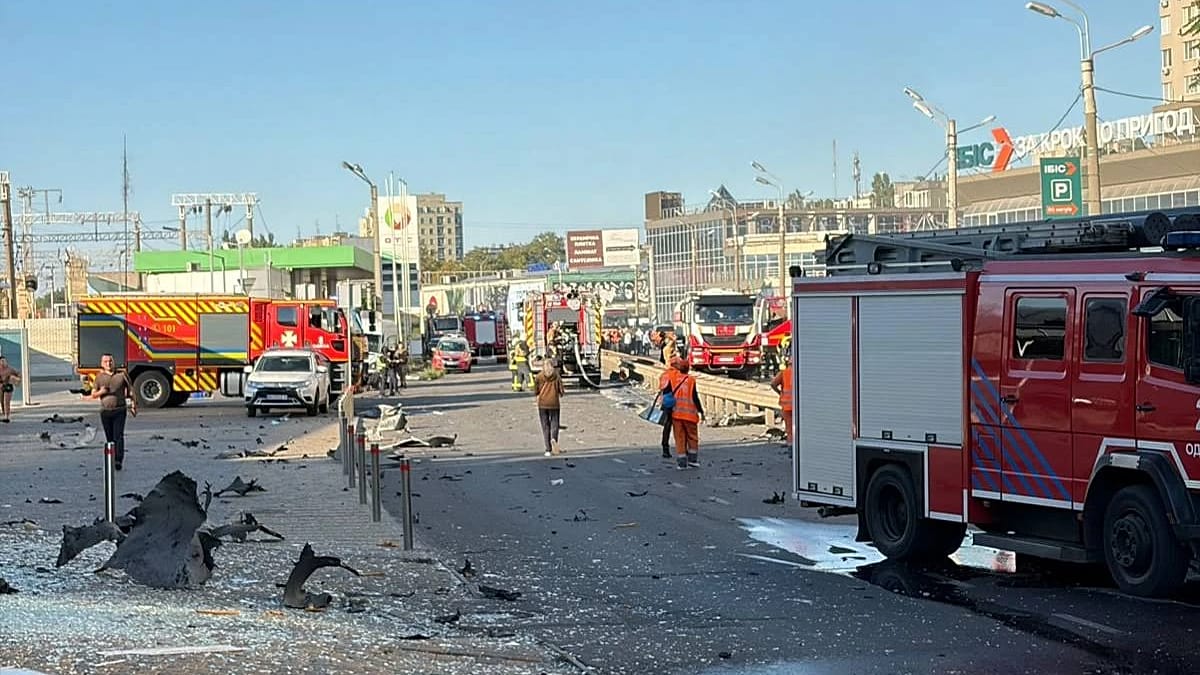
Meanwhile, the southern port city of Odesa endured repeated attacks, with two strikes occurring in quick succession. The second hit during a rescue operation, complicating efforts to help the wounded. Local media reported that at least ten people were injured in the attacks.
Kursk nuclear plant incident
Across the border in Russia, a drone struck a cooling tower at the Kursk Nuclear Power Plant early on Thursday. The International Atomic Energy Agency (IAEA) said on Friday that it had been informed of the strike and confirmed that the plant was operational at the time. The agency added that there was no fire and that operations had continued normally.
The incident raises fresh concerns about the safety of nuclear facilities amid the ongoing conflict. The IAEA has repeatedly warned about the risks of military action near nuclear sites, and this latest episode underscores the fragility of such infrastructure in a war zone.
European leaders have been increasingly vocal about the dangers posed by Russian strikes near NATO borders. Polish Prime Minister Donald Tusk has warned of Russian drone strikes on Poland and other allies, while Poland has scrambled jets in response to Russian activity near its airspace. The EU has also been exploring ways to counter Russian hybrid threats, with French President Emmanuel Macron calling for a G7 energy summit to address the issue.
The attacks come as Russia prepares for tightly controlled elections, which are set to cement President Vladimir Putin's rule. The Duma elections, already underway, are being held against the backdrop of the war and increased domestic repression.
In a separate development, Moscow has placed the Russian units of Nestlé and Auchan under state-appointed control, a move that reflects the Kremlin's tightening grip on foreign businesses operating in the country.
As the conflict grinds on, the human toll continues to mount. The strikes on Kharkiv, Kyiv, and Odesa are a stark reminder of the daily dangers faced by Ukrainian civilians. International observers, including the IAEA, are closely monitoring the situation, but the path to de-escalation remains unclear.