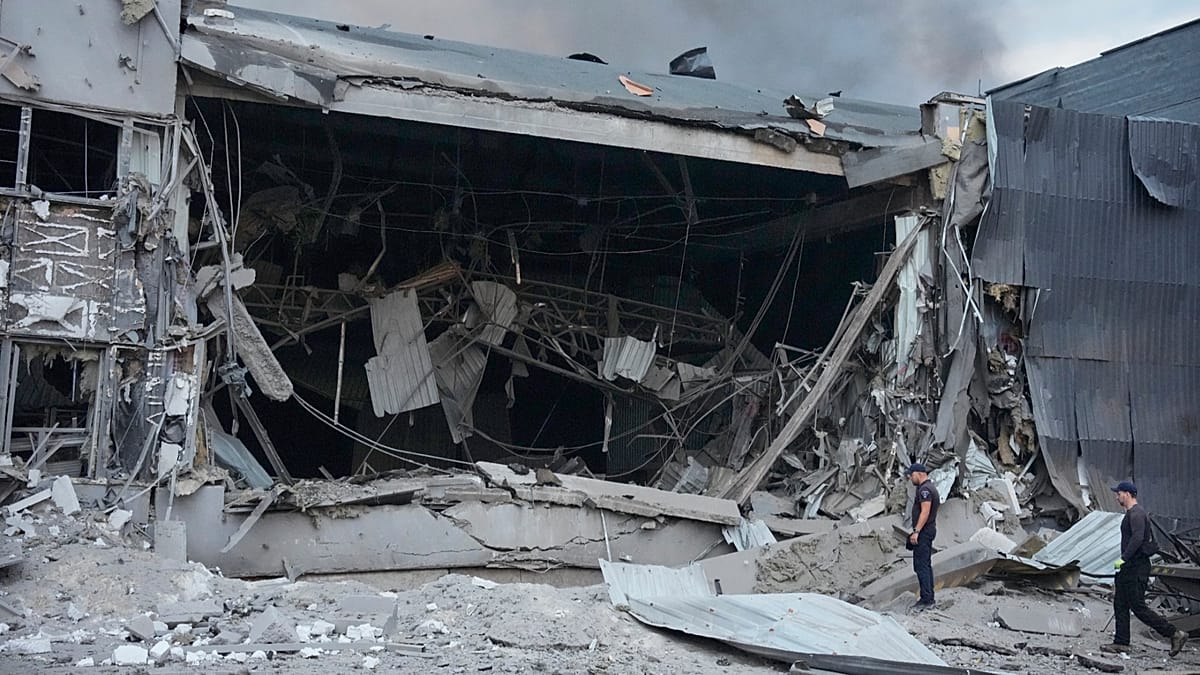
Russian missile and drone strikes killed at least 15 people and wounded dozens more in Kyiv and the surrounding region overnight, Ukrainian authorities said on Wednesday, in the latest wave of attacks on the capital and its suburbs.
Journalists from the AFP news agency reported explosions in Kyiv shortly after midnight, following Ukrainian air force warnings of incoming ballistic missiles. One reporter described dark smoke and the acrid smell of burning lingering in the air hours later.
Kyiv's military administration said the barrage hit residential buildings and several warehouses. "The enemy is once again deliberately striking civilians and civilian infrastructure," it said on Telegram. The administration reported one woman killed and at least 24 other people wounded in the capital, with fires breaking out in four districts.
In the broader Kyiv region, 14 people were killed, according to regional authorities, who added that more than 20 others were wounded. Tymur Tkachenko, head of the regional military administration, wrote on Telegram: "Kyiv region experienced one of its most tragic enemy attacks yet again tonight. Russia has once again brought death and destruction to our land, taking the lives of civilians. Just accountability will certainly follow for every such crime."
Renewed calls for air defence
The attack follows a series of deadly overnight strikes on the capital. On Saturday, Russian attacks on Kyiv and its suburbs killed 10 people and wounded more than 30, while Ukrainian drones sank a large Russian container ship in the Black Sea.
Kyiv has in recent months urged allies to supply more US-made Patriot interceptors as Russia steps up its use of ballistic missiles more than four years into its full-scale invasion. President Volodymyr Zelensky has said the lack of such interceptors "only encourages Russia to launch such attacks that take human lives." He met US President Donald Trump last Tuesday, partly to lobby Washington for licences to produce Patriots domestically. However, the licence remains uncertain as Washington stalls on a decision.
Both sides have increased long-range attacks in recent weeks. According to an AFP analysis, Russia more than doubled its use of missiles in July. Drone strikes have also become a regular occurrence, with Ukraine intensifying attacks on civilian infrastructure, including oil and gas facilities and logistics hubs inside Russia.
On Tuesday morning, five people were killed and 10 wounded in the Moscow region in strikes that targeted depots of the Russian e-commerce giant Wildberries. Moscow's mayor said on Wednesday that air defences had intercepted and destroyed at least 10 drones heading toward the capital. The governor of Tula region, south of Moscow, said Russian defences destroyed 107 Ukrainian drones overnight, damaging two apartment buildings and causing a fire at a Wildberries logistics facility. The company, which Ukraine has accused of storing drone parts and aiding the Russian military, ordered a "precautionary evacuation."
Ukraine, meanwhile, expressed outrage over a video showing a man chased by a drone in Kherson city, calling it a deliberate "hunt" and "safari" targeting civilians. UN human rights monitors have voiced concern about rising civilian casualties, which have reached their highest level since Russia's invasion in February 2022.
The attacks underscore the urgent need for European solidarity with Ukraine. As the war grinds on, support for Ukraine's EU bid varies across the continent, but the human cost of the conflict continues to mount.