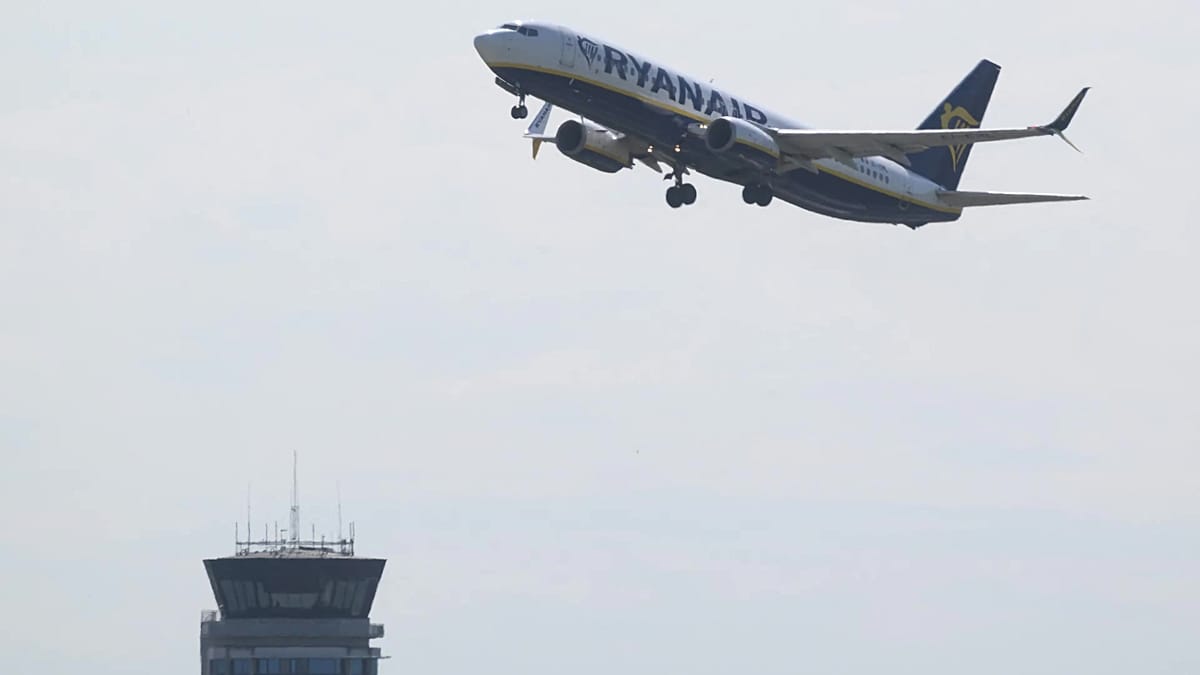
A Ryanair flight en route from London Stansted to Sofia was forced to divert to Plovdiv, Bulgaria, on [date], after authorities received a bomb threat. The aircraft, which was carrying passengers and crew, landed safely at Plovdiv Airport, where it was met by emergency services.
Audio from the cockpit, which has since circulated online, captures the moment air traffic controllers informed the pilots that a military aircraft would be intercepting them as they entered Bulgarian airspace. The controllers also noted that two other aircraft had already landed in Sofia following similar threats, leaving the capital's airport unable to accommodate additional diversions.
The incident is part of a broader wave of hoax bomb alerts that have disrupted air travel across Europe for a third consecutive day. According to reports, around 20 flights have been affected, with several airlines and airports grappling with the fallout. The disruptions have raised concerns about the vulnerability of European aviation to such threats, even when they turn out to be false alarms.
Military escort and diversion
The cockpit audio reveals a tense exchange between the Ryanair pilots and air traffic control. The controller is heard saying, "A military aircraft will follow you into Bulgarian airspace," before instructing the crew to proceed to Plovdiv. The pilots acknowledged the instruction, and the flight was diverted without further incident.
Plovdiv, Bulgaria's second-largest city, is located about 150 kilometres southeast of Sofia. The airport there is smaller than Sofia's, but it was able to handle the diverted flight. Passengers were later transported to Sofia by bus, according to local authorities.
Ryanair has not yet issued a detailed statement about the incident, but a spokesperson confirmed that the flight was diverted as a precautionary measure and that all passengers were safe. The airline is cooperating with Bulgarian authorities in their investigation.
Wider pattern of hoax threats
The Sofia-bound flight was not the only one affected. Earlier on the same day, two other flights were diverted to Sofia after receiving similar threats, which ultimately proved to be hoaxes. The cumulative effect overwhelmed the airport's capacity to handle additional diversions, prompting the decision to send the Ryanair flight to Plovdiv.
This wave of hoax alerts has been felt across Europe, with airports in Germany, France, and the UK reporting disruptions. The incidents have prompted calls for stronger international cooperation to identify the perpetrators and to develop more efficient screening procedures for such threats.
Security experts note that while hoax bomb threats are not new, the frequency and coordination of these recent alerts are unusual. Some have suggested that the threats may be part of a coordinated campaign to disrupt travel and create public anxiety, though no group has claimed responsibility.
The European Union has been working to enhance aviation security, but the recent events highlight the challenges. In a related development, the EU's 2030 military readiness goals are under threat despite record spending, as reported by European Pulse. The incident also comes amid broader concerns about the resilience of European infrastructure.
For passengers, the disruption is a reminder of the fragility of air travel. Many have expressed frustration over the delays and the lack of clear information. "We were told nothing for hours," said one passenger on the diverted Ryanair flight. "It was only when we landed in Plovdiv that we realised something was seriously wrong."
Bulgarian authorities have launched an investigation into the bomb threat, but no arrests have been made so far. The hoax alerts have also raised questions about the cost of such disruptions, both in financial terms and in terms of public trust.
As the third day of alerts came to a close, airlines and airports were bracing for further disruptions. The European Union Aviation Safety Agency (EASA) has issued a bulletin reminding airlines to follow established protocols and to remain vigilant.
The incident also underscores the importance of regional cooperation in managing such crises. With flights diverted across borders, coordination between national authorities is essential. The situation in Bulgaria, where multiple flights were redirected, illustrates the need for flexible contingency plans.
For now, passengers are advised to check with their airlines for the latest updates. The hoax alerts have not resulted in any injuries, but they have caused significant inconvenience and have tested the resilience of Europe's air travel network.