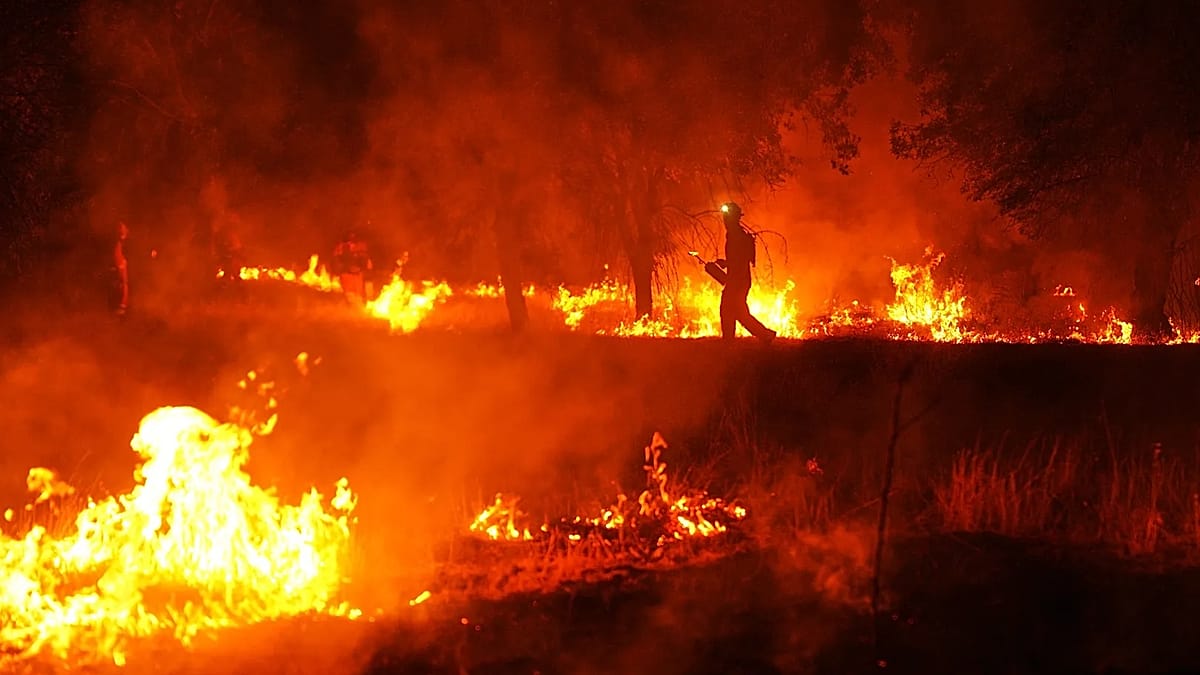
Spanish Prime Minister Pedro Sánchez used his traditional pre-summer-break press conference on Tuesday to deliver a sharp rebuke to climate denialism, calling it “the worst possible fuel for tackling the climate emergency; it makes us much more vulnerable.” His remarks came as Spain continued to battle major wildfires that have devastated large areas of central Spain over the past week.
Sánchez acknowledged that the country was beginning to see “light at the end of the tunnel” in the fight against the blazes, but warned that the coming hours would remain challenging. He urged extreme caution as Spain faces soaring temperatures and a new heatwave forecast by the State Meteorological Agency (Aemet), which is expected to complicate firefighting efforts and increase the risk of further wildfires across much of the country.
The prime minister also called for a cross-party agreement on climate action, describing it as “an imperative, not an option.” His comments come amid criticism from the opposition, which has accused the government of mishandling the initial emergency response. Sánchez did not directly address those accusations but stressed that climate denial undermines preparedness and resilience.
Nearly 100,000 people affected
According to the latest government figures, nearly 100,000 people have been affected in Castile and León, the Community of Madrid, and Castile-La Mancha. More than 63,000 have been evacuated, while another 35,000 remain confined to their homes. Fire crews are working on the fires in Ávila and those affecting San Martín de Valdeiglesias and Villa del Prado, in the Madrid region, treating them as a single major fire because the fire fronts have merged.
Interior Minister Fernando Grande-Marlaska told TVE on Tuesday morning that work over the past few days had produced “reasonably positive” results. He said night-time operations had been effective and that the priority was now to build on the progress made on the ground. He added that enough resources had been deployed, but said Spain also needed to strengthen wildfire prevention and modernise its aerial firefighting fleet.
Spain lifted evacuation orders in 13 municipalities in two wildfire-affected areas at 17:00 (15:00 GMT) on Tuesday, the Interior Ministry said. It was not immediately clear how many residents were covered by the measure or whether they would be able to return home immediately. Even so, the move was another sign of progress in Spain's battle against the wildfires.
Extreme temperatures hamper firefighting efforts
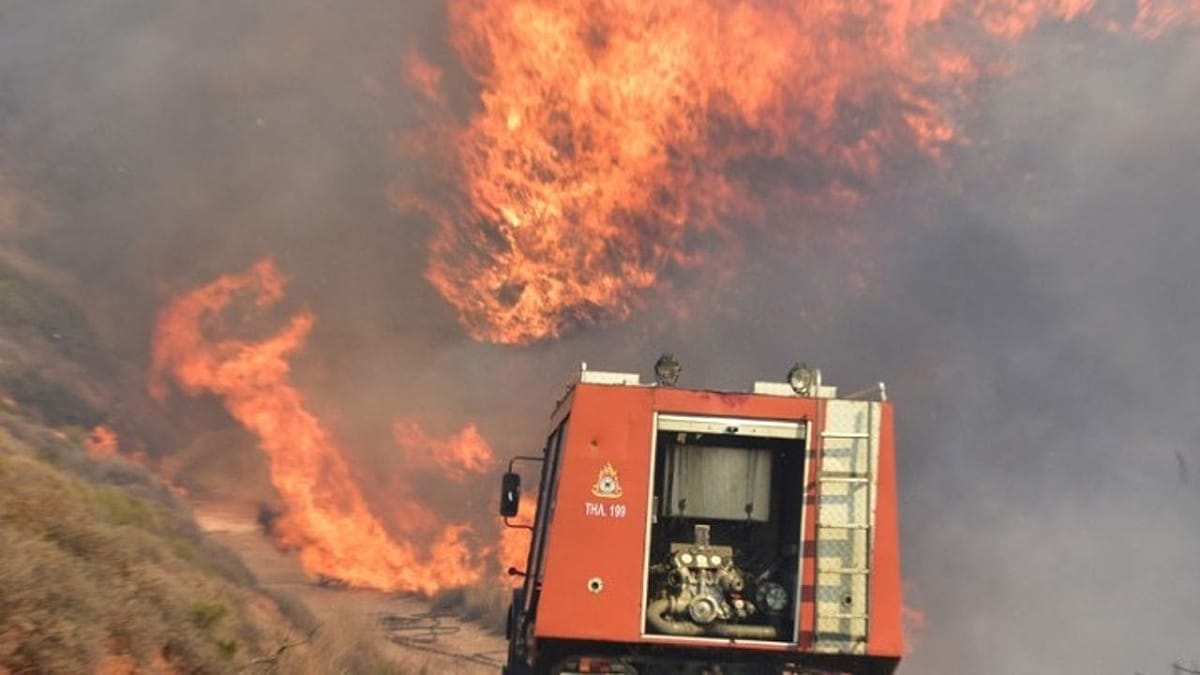
Despite overnight improvements, authorities remain on maximum alert. A new heat dome is expected to bring extreme temperatures, very dry air, and stable atmospheric conditions, which could reignite hotspots and hamper firefighting efforts in the fires affecting Ávila, Madrid, Toledo, and Castellón.
Investigators believe the fire started when heavy machinery was used without authorisation in a forested area near Burgohondo. Since then, the flames have devastated large parts of the Alberche Valley, the Sierra de Gredos, Tierra de Pinares, the Tiétar Valley, and the area around the El Burguillo reservoir.
The wildfires in Spain are part of a broader pattern across southern Europe. In France, massive blazes in the Gironde region have forced tens of thousands to flee, while in Portugal and Greece, firefighters have also struggled to contain flames amid record temperatures. The European Union has activated its Civil Protection Mechanism to coordinate assistance, deploying firefighting aircraft and personnel from several member states.
Scientists and policymakers have increasingly linked the intensity and frequency of such wildfires to climate change. A recent report from the European Environment Agency warned that degraded landscapes amplify climate extremes, making ecosystems more vulnerable to fire. Sánchez's call for a cross-party climate deal reflects a growing consensus that adaptation and mitigation must become national priorities.
As Spain braces for more extreme weather, the government faces pressure not only to manage the immediate crisis but also to address the underlying vulnerabilities exposed by the fires. The coming days will test whether the progress made so far can be sustained, and whether political divisions can be set aside in the face of a common threat.