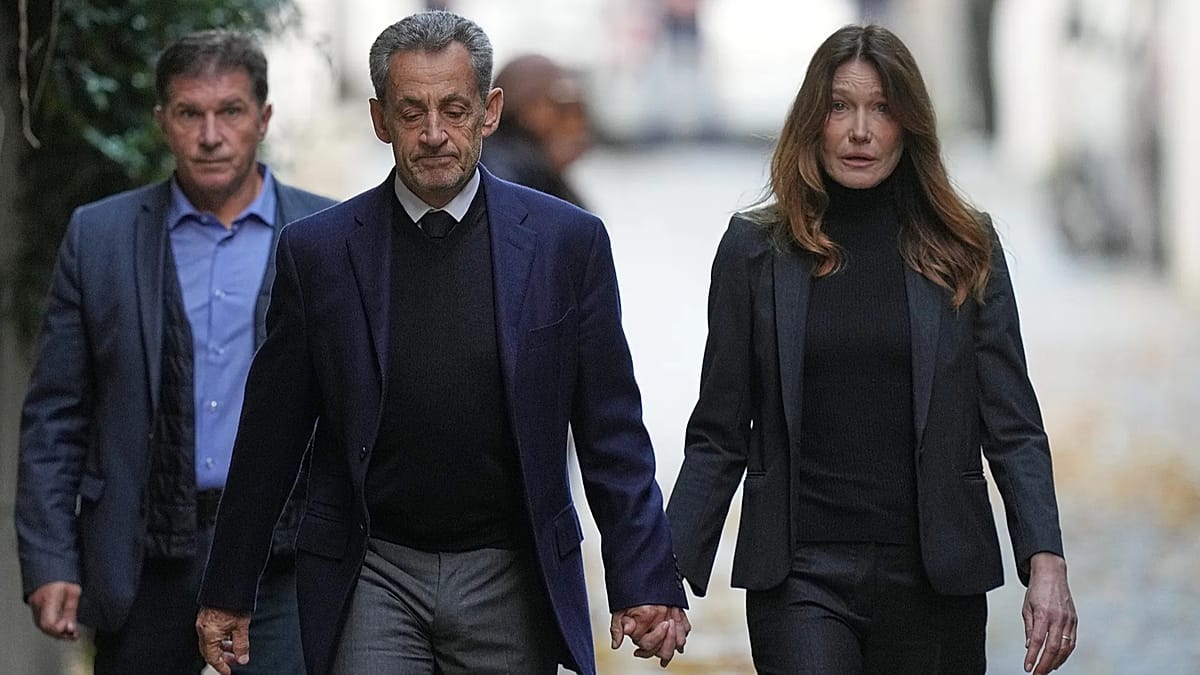
Nicolas Sarkozy, France's former president, is set to face another legal battle. On Tuesday, a source close to the investigation confirmed that he and his wife, singer Carla Bruni, will be tried before the Paris criminal court in a case involving the alleged paid retraction of a key witness. The trial is scheduled to run from 3 November to 2 December 2027.
The case stems from accusations that Sarkozy and Bruni conspired with Mimi Marchand, a controversial figure known as the "high priestess of the paparazzi," to pay Ziad Takieddine, a Franco-Lebanese businessman, to withdraw his testimony. Takieddine had previously claimed he delivered millions of euros in cash from Libyan dictator Muammar Gaddafi to Sarkozy's 2007 presidential campaign.
All those under formal investigation in this affair, including Marchand, have been sent to trial. Sarkozy and Bruni face charges of "criminal conspiracy to commit fraud as part of an organised gang" and "concealment of witness tampering." Marchand is charged with "witness tampering," "criminal conspiracy to commit fraud as part of an organised gang," and "preparing acts of corruption of foreign judicial personnel." If convicted, they could face up to ten years in prison and a fine of €150,000.
The Takieddine U-turn
The case is intertwined with the broader investigation into alleged Libyan financing of Sarkozy's 2007 campaign. In 2016, Takieddine claimed he had personally delivered up to €5 million in cash from Gaddafi to Sarkozy and his chief of staff. However, in November 2020, he dramatically reversed his story in an interview with French media, only to change his mind again later.
Prosecutors allege that Sarkozy and Bruni enlisted Marchand to persuade Takieddine to retract his accusations, possibly in exchange for payment. Both Sarkozy and Bruni have consistently denied any wrongdoing. Bruni is specifically suspected of having arranged a clandestine phone line in late 2019 to communicate with Marchand about the case.
This new trial adds to Sarkozy's already extensive legal troubles. He became the first former French president to be jailed when he was sentenced to five years in prison for criminal conspiracy in the Libyan case, though he was released after twenty days pending appeal. He has also been definitively convicted in two other cases: one for overspending during his failed 2012 re-election bid, and another for attempting to obtain favours from a judge.
The upcoming trial is a significant moment for French justice, as it involves a former head of state and his celebrity wife. It also raises questions about the integrity of judicial processes and the influence of money in politics. The case has drawn widespread attention across Europe, where similar concerns about political corruption and accountability are being debated.
As the legal proceedings unfold, observers will be watching closely to see how the French judicial system handles such a high-profile case. The trial is expected to be a lengthy and complex affair, with many legal arguments and testimonies. For now, Sarkozy and Bruni maintain their innocence, and their lawyers have vowed to fight the charges.
This development comes at a time when France is also dealing with other legal and political challenges, including the trial of a police officer in the Nahel shooting death and an investigation into a prefect over alleged leaks to the National Rally. These cases highlight the ongoing scrutiny of public officials and the rule of law in the country.
For Europe, the trial underscores the importance of judicial independence and the need for transparency in political financing. It also serves as a reminder that no one, regardless of their position, is above the law. As the continent grapples with issues of corruption and democratic accountability, this case will be closely followed by citizens and policymakers alike.



