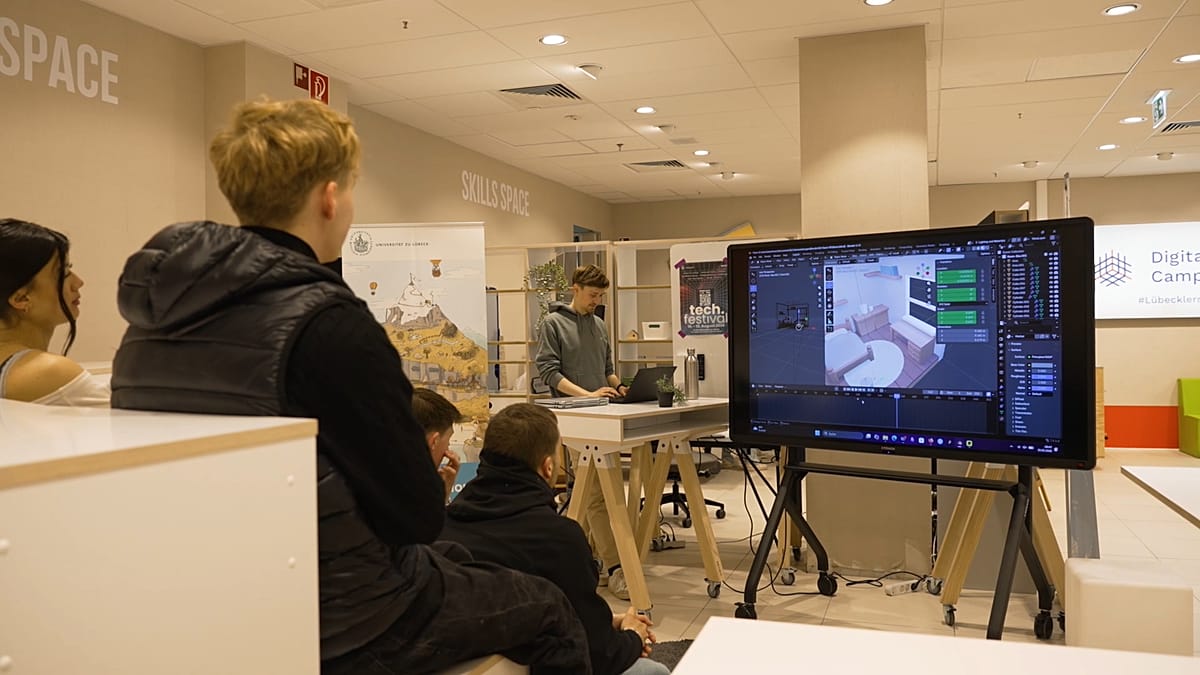
In the northern German state of Schleswig-Holstein, a novel educational initiative is breaking down barriers to digital literacy. The Digital Learning Campus (DLC), launched in March 2024, offers over 600 courses—both online and in-person—covering artificial intelligence, virtual and augmented reality, robotics, and other cutting-edge technologies. Crucially, all courses are free of charge and open to anyone, regardless of age or background.
The DLC is not confined to traditional classrooms. Instead, it operates across 11 towns—including Flensburg, Enge-Sande, Schleswig, Eckernförde, Kiel, Heide, Neumünster, Itzehoe, Elmshorn, Bad Oldesloe, and Lübeck—hosting workshops in gardens, markets, shopping centres, and other unconventional venues. This approach, says Thomas Lange, head of the DLC project in Lübeck, makes the offerings more appealing and accessible. “We are offering free digital learning opportunities for everyone from pupils to pensioners, from migrants to technicians in town, and the core is: everything is free. We have a very low threshold for people to take part and find a way of engaging with learning, therefore improving their lives as well,” Lange explains.
Bridging the Digital Skills Gap
The initiative is co-funded by the European Union and managed by Schleswig-Holstein’s Ministry of Education. It aims to address the growing need for digital skills in a rapidly evolving job market. Courses are taught or facilitated by entrepreneurs and university lecturers, ensuring that training aligns with market demands. Participants do not need prior programming knowledge or understanding of AI, VR, or robotics—the workshops are designed for complete beginners.
One notable partner is MINT4Girls, an association of female students from Munich University of Applied Sciences that encourages girls to pursue careers in STEM fields (mathematics, informatics, natural sciences, and technology). The DLC in Lübeck hosts around fifty young students from the region as part of the association’s programme. Printha Tharmabalan, project manager at MINT4Girls, notes: “AI and everything is kind of new and the digital field is not that represented in school. We can just come here, and we have a lot of workshops. Digitalisation is getting more important every day, as these kids know themselves. This is the future, and for us, to see it in one place is the best option.”
The DLC also offers an online learning platform with 230 courses, each lasting one to six hours. Topics range from basic digital literacy to advanced AI applications, covering subjects that are often absent from school curricula but increasingly relevant for future employment. Students can register with a single click and receive a certificate upon completion. Arthur Feliz Redlin, a student in Kiel, says: “A few of my teachers told me to have a look at this, and yeah, it's quite nice, I'd say. I don't know if I get points for this in particular, but I'll definitely get a certificate, which is also nice to hand in whenever you're applying for anything.”
With 5,000 registered students, 20,000 course completions, and 60,000 visits to date, the DLC platform is already showing significant traction. Stefan Lemke, Policy Adviser for Future Skills at the Ministry of Education of Schleswig-Holstein, indicates plans for expansion. The initiative is part of a broader European trend to democratise digital education, similar to efforts in Estonia and other member states.
The DLC’s model of placing learning in everyday settings—rather than in formal institutions—could serve as a blueprint for other regions. By lowering barriers to entry and focusing on practical, market-relevant skills, Schleswig-Holstein is investing in the continent’s digital future. As the EU pushes for greater digital sovereignty and competitiveness, initiatives like this one demonstrate how local action can contribute to broader European goals, such as those discussed in the EU Space Investment strategy.