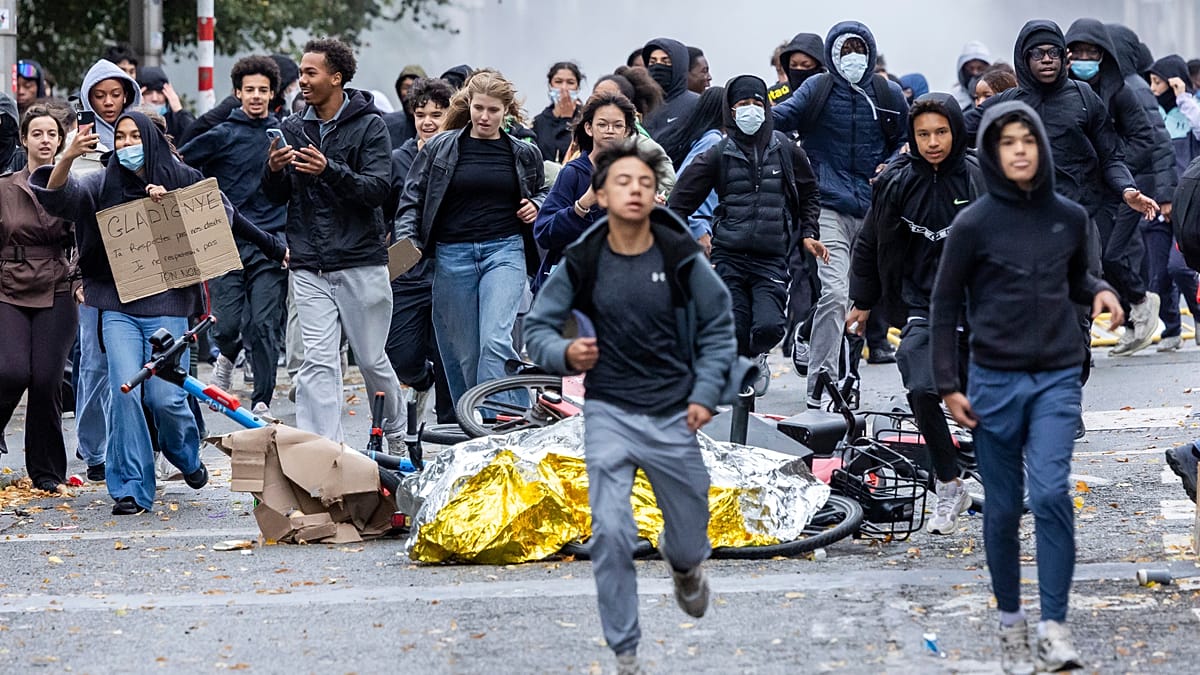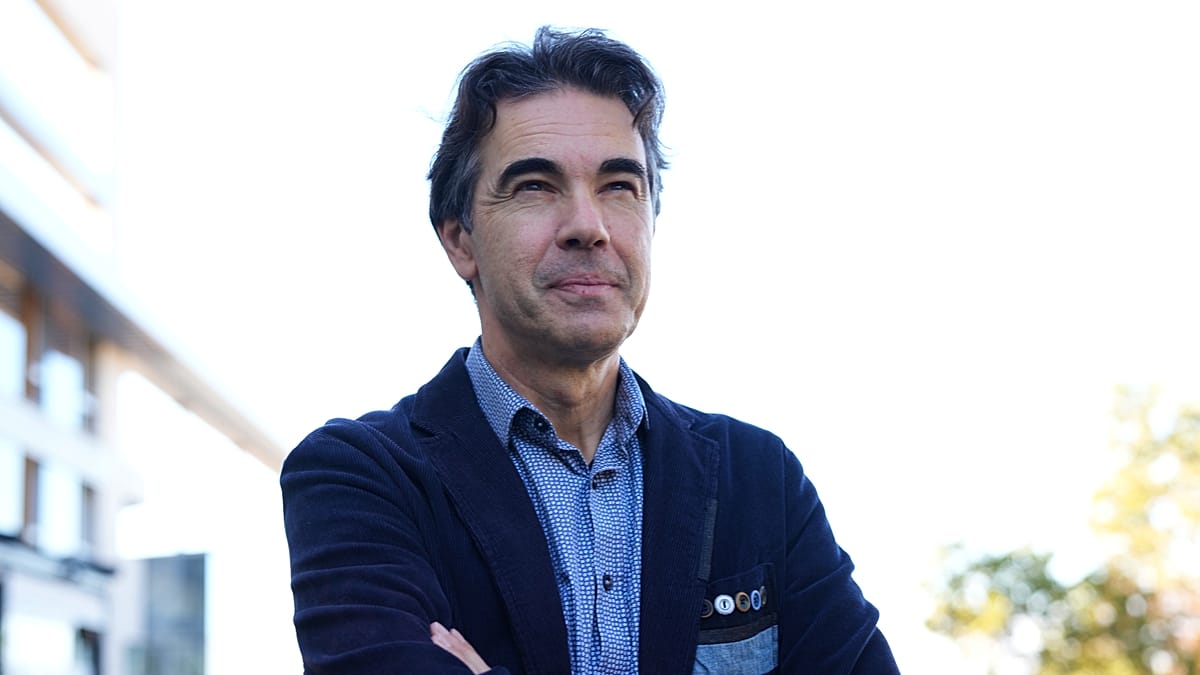
Serbia's newly ascendant Student List will push to accelerate the rule-of-law reforms that underpin the country's European Union accession, according to Aleksandar Baucal, a professor and freshly elected member of parliament who addressed the EU Enlargement Forum in Brussels on Monday. It was the first time a representative of the movement — which emerged from nearly two years of street protests and last month ended fourteen years of dominance by Aleksandar Vučić's party — had spoken to an international audience.
Baucal framed the European path as inseparable from domestic renewal. "For us, the European path is one of reforms: strengthening European values, building functional institutions and a genuine rule-of-law system, developing a sustainable economy integrated in the European market," he told an audience that responded with a standing ovation. He added that a central strategic objective would be to speed up fulfilment of the interim benchmarks under chapters 23 and 24, the accession chapters covering judiciary and fundamental rights, and justice, freedom and security.
A reset in Belgrade's relations with Brussels
The Student List's electoral breakthrough has raised expectations of a thaw in Serbia's often fraught relationship with Brussels. Two weeks before Baucal's speech, Enlargement Commissioner Marta Kos met a Student List delegation — the movement's first formal encounter with a senior EU official. Those delegates said the incoming government would prioritise restoring the rule of law, judicial independence and media freedom, arguing that these goals matter for Serbians themselves and not merely as boxes to tick for accession.
Baucal returned to that theme, pledging progress on the "fundamentals" of membership and describing a government that would remain open to dialogue and focus on solving concrete problems rather than manufacturing new ones. "This is not only about the European Union helping Serbia protect democracy," he said. "It is also about a democratic Serbia contributing to a stronger and more resilient Europe."
He also sketched a broader ambition: to turn the solidarity forged during the protest movement into durable trust in public institutions. "Citizens were able to set many differences aside," he said. "But in a democratic society, these interests and opinions will once again come to the fore. We believe that thanks to our differences, we will build a better system for our citizens."
Unresolved questions on Russia and Kosovo
Yet the movement's positions on two of the most sensitive issues in Serbian foreign policy remain unclear. Prominent figures within the Student List have been cautious about aligning fully with EU foreign policy, particularly on sanctions against Russia — measures that are deeply unpopular in Serbia, where memories of Western sanctions endured under the Milošević regime are still raw. Recognition of Kosovo is another potential stumbling block with EU member states; Albanian Prime Minister Edi Rama has already warned that the new government is unlikely to shift Serbia's longstanding refusal to recognise its neighbour's independence.
The Student List grew as a heterogeneous movement without a clearly defined leadership, and its precise stance on accession and foreign policy may only become apparent once its MPs agree on the composition of the next government. For now, Baucal's Brussels appearance signals a desire to engage with the EU early and at a high level, even as the harder questions are deferred.
Serbia's accession process has long been stalled on rule-of-law benchmarks, and the EU has made clear that progress on chapters 23 and 24 is a precondition for advancing further. Whether the Student List can translate its electoral momentum into concrete legislative change — and reconcile that with public opinion on Russia and Kosovo — will determine how quickly Belgrade's European path moves from rhetoric to reality.