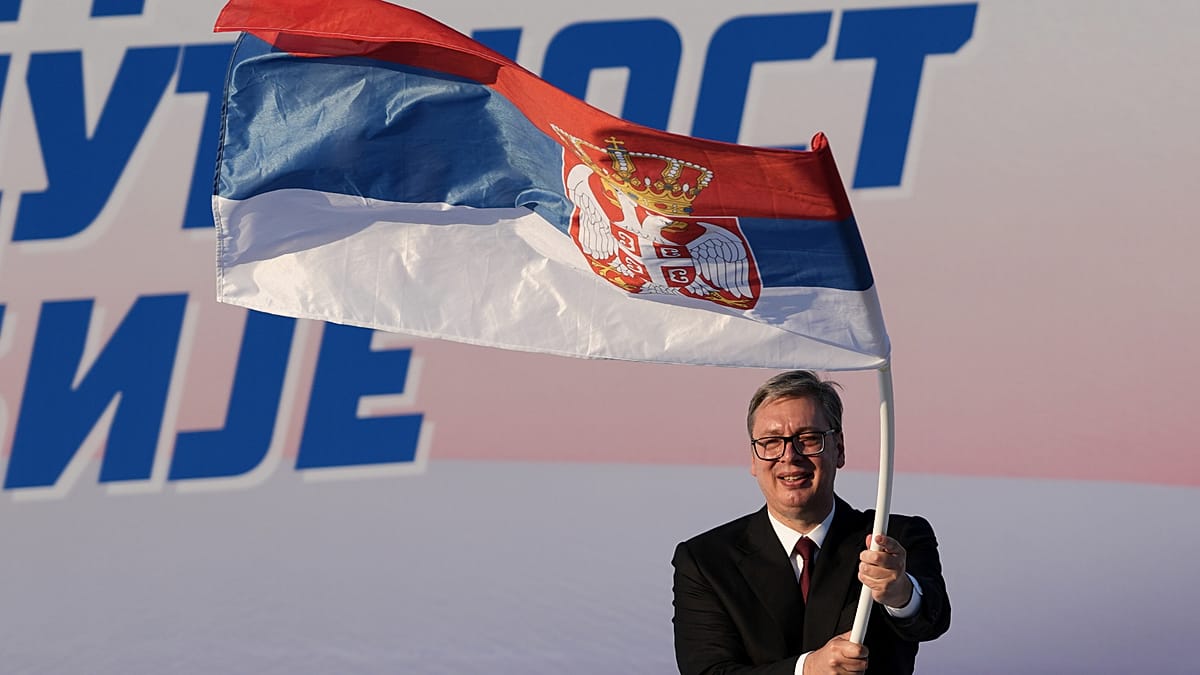
Serbian President Aleksandar Vučić announced on Saturday that he will step down within weeks and called for early presidential and parliamentary elections, a move that reshapes the country's political landscape.
"I will be president for only a few weeks, and then I will resign," Vučić told a pro-government rally in Belgrade. His second and final term was originally set to expire in mid-2027.
The announcement follows months of speculation about his political future, including hints that he might seek a return as prime minister, a role he held from 2014 to 2017. It also comes after a year and a half of student-led anti-corruption protests, triggered by the collapse of a railway station canopy in Novi Sad that killed 16 people. The protesters have been demanding early elections.
Political Context and Next Steps
Vučić said he would support his Serbian Progressive Party in the upcoming elections, including snap parliamentary polls originally scheduled for next year. The exact date of the elections has not yet been set, but they are expected within the coming months.
The president's resignation and call for early elections are seen as an attempt to regain political momentum amid growing public discontent. The protests, which began after the Novi Sad tragedy, have evolved into a broader movement against corruption and governance in Serbia.
Serbia, a candidate for European Union membership, has faced repeated criticism from Brussels over democratic backsliding and media freedom. Vučić's decision to step down could be interpreted as a concession to domestic and international pressure, though his party remains dominant in parliament.
The opposition has welcomed the call for elections but remains skeptical about the fairness of the process. They have accused Vučić of using the snap polls to consolidate power rather than address underlying issues.
Analysts note that Vučić's resignation does not necessarily mean an end to his influence. He could potentially return as prime minister, a position that in Serbia's semi-presidential system holds significant executive power. The Serbian Progressive Party is expected to campaign heavily on stability and economic progress.
The European Union has not yet officially commented on the announcement, but the bloc's enlargement policy remains a key factor in Serbia's political calculations. The EU has linked further integration to reforms in rule of law and anti-corruption efforts.
For now, Serbia's political future hangs in the balance as the country prepares for a new electoral cycle. The coming weeks will be crucial in determining whether Vučić's resignation leads to genuine change or a reshuffling of the same political forces.