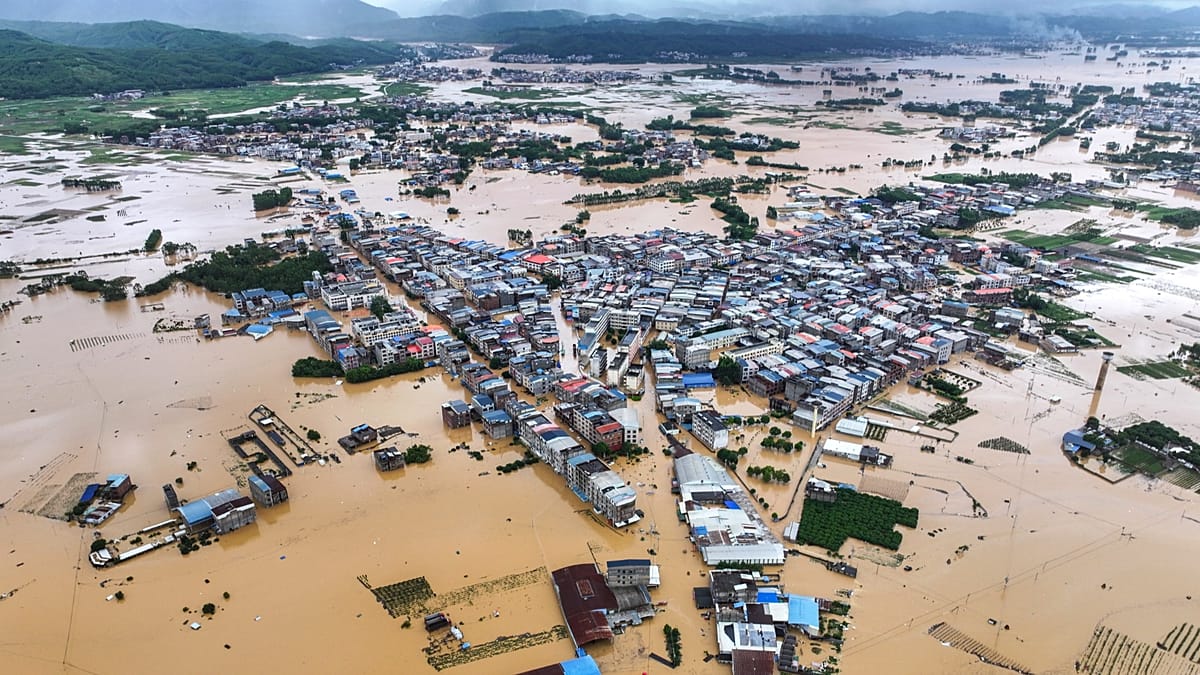
Severe thunderstorms and flooding across central and southern China have claimed at least 17 lives, with hundreds injured and tens of thousands displaced, according to state media reports on Tuesday. The extreme weather events highlight the growing risks posed by climate change, even as the world's largest emitter of greenhouse gases pursues ambitious renewable energy targets.
Central China Hit by 'Severe Convective Weather'
In Hubei province, thunderstorms and strong winds struck cities including Huangshi and Huanggang on Monday, killing eight people, state broadcaster CCTV reported. The term 'severe convective weather' was used to describe the phenomenon, which also spawned tornadoes in some areas. Nine people remain missing, and 275 others were injured in Huanggang's Huangzhou district, according to the Xinhua news agency. Authorities evacuated 408 residents to safer locations as rescue operations continued.
The scale of the damage underscores the vulnerability of urban areas to sudden, intense storms. In Huanggang, emergency crews worked through the night to clear debris and search for survivors, with local officials deploying heavy machinery to restore access to affected neighborhoods.
Typhoon Maysak Triggers Flooding in Guangxi
Further south, Typhoon Maysak brought torrential rains to the Guangxi region, causing the Liulan Reservoir to breach its dam. Dramatic footage shared by CCTV showed a torrent of muddy water rushing through a collapsed concrete wall, submerging homes and vehicles. At least two people died, and more than 48,000 residents were evacuated as of Monday evening. In Nanning, the regional capital, authorities raised the flood control emergency response to its highest level after the dam failure.
Rescue workers in life vests and helmets navigated flooded streets on inflatable boats, searching for stranded residents. The Guangxi government reported that additional rainfall was expected, complicating relief efforts.
Xi Jinping Calls for 'All Out' Rescue Operations
Chinese President Xi Jinping urged authorities to spare no effort in rescue and relief operations, state media reported on Tuesday. 'The need to go all out in organising emergency rescue operations, treating the injured, and resettling affected residents, carrying out disaster prevention and relief work effectively,' Xi said, according to CCTV. His remarks came as the death toll continued to rise, with officials warning that more severe weather could be on the way.
The Chinese government has invested heavily in disaster preparedness in recent years, but the frequency of extreme events is testing those systems. Scientists warn that the intensity and frequency of global extreme weather events will increase as the planet continues to heat up due to fossil fuel emissions.
Climate Context and European Parallels
China is the world's largest emitter of greenhouse gases, but it is also a global leader in renewable energy, aiming to achieve carbon neutrality by 2060. The country's dual role as both a major polluter and a clean energy powerhouse mirrors debates within the European Union, where member states are grappling with how to balance economic growth with climate commitments. The EU has set a target of net-zero emissions by 2050, and recent extreme weather events across Europe—from heatwaves in Spain to floods in Germany—have intensified calls for faster action.
As European policymakers consider their own responses to climate change, the situation in China offers a stark reminder of the human cost of inaction. The EU's trade relationship with China, which includes significant imports of solar panels and electric vehicle components, also ties European climate goals to Chinese industrial policy. For now, the focus in Hubei and Guangxi remains on rescue and recovery, but the broader implications for global climate policy are clear.