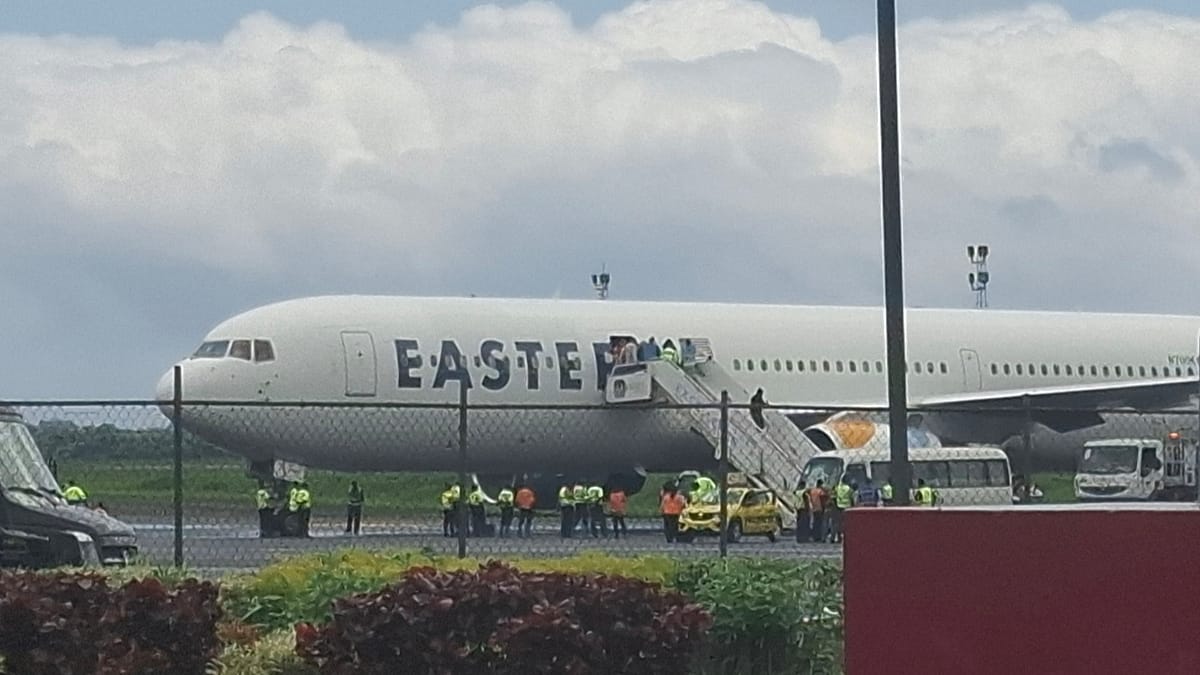
MONROVIA — The first group of twenty migrants deported from the United States landed at Roberts International Airport outside Liberia's capital on Thursday, marking the start of an agreement under which the West African nation will accept up to 1,200 foreign nationals over the next year.
The arrivals, who were escorted onto a waiting bus and taken to a processing facility, are the first tangible result of a memorandum signed earlier this week between the Liberian government and Washington. Staff from the Liberian Commission on Repatriation, Resettlement and Reintegration were on hand to receive them, though journalists were kept at a distance and had no opportunity to speak with the new arrivals.
A humanitarian framing, but questions remain
Monrovia has been careful to describe the arrangement as "entirely humanitarian," emphasizing that it has "not demanded or received any compensation or promise of rewards in exchange for its consent to participate in the programme." The government added that those arriving are "free to depart the country when they so desire" or may apply for asylum.
Under the partnership, Liberia will receive technical and financial support to manage the programme and to strengthen its broader migration system. That support, officials say, is intended to help the country cope with the influx and to improve its capacity to handle future migration flows.
The deal places Liberia among a growing list of African nations that have agreed to take in migrants deported under President Donald Trump's expanded immigration enforcement. In his second term, the Trump administration has broadened the categories of people eligible for removal, including individuals who previously held legal protections that allowed them to live and work in the United States due to fears of persecution in their home countries.
Washington has argued that it is legally barred only from sending such individuals directly to their countries of origin, and that third-country arrangements are permissible. Human rights groups, however, have raised concerns about the due process and the long-term safety of those transferred, particularly if they are sent to countries where they may not have established ties.
The first flight's arrival comes as European nations watch closely, with several EU member states grappling with similar debates over migration policy and external processing. The relocation of migrants from makeshift camps in Ceuta and the ongoing movement of migrants from beaches to temporary shelters in Spain highlight the continent's own challenges in managing arrivals and asylum claims.
For Liberia, a country still rebuilding after decades of civil war and the 2014-2016 Ebola outbreak, the agreement is a test of its capacity to integrate newcomers. The government has pledged to treat the arrivals with dignity and to provide them with basic services, but details on housing, employment, and long-term integration remain scarce.
Observers note that the deal could set a precedent for other African nations, as the US seeks to expand its network of third-country partners. Whether such arrangements genuinely serve the interests of migrants or merely shift burdens remains an open question, one that European policymakers are likely to ponder as they design their own responses to migration pressures.
The Liberian government has said it will provide regular updates on the programme, but for now, the twenty arrivals are being processed and will soon begin their new lives in a country that has agreed to offer them a fresh start.