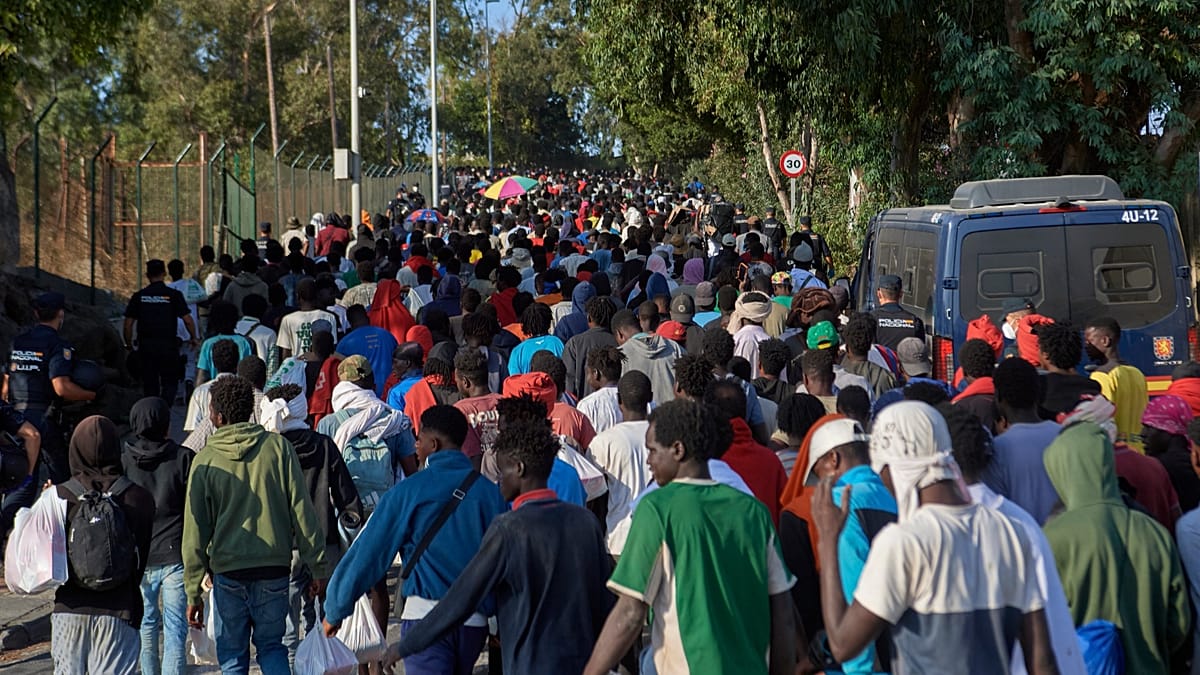
Spanish authorities launched a large-scale operation early Thursday on El Trampolín beach in Ceuta, beginning the relocation of migrants to temporary shelters. The move is part of a broader plan to ease the humanitarian crisis that has gripped the Spanish enclave since a mass influx from Morocco in late July.
The Spanish government announced the creation of two temporary reception facilities with capacity for 1,800 migrants. According to local media, around 4,000 people have been living on the beach in makeshift camps. The migration ministry said the shelters would be "expanded progressively as the adaptation work on the other planned spaces is completed."
A crisis with deep roots
The recent surge follows an event in which tens of thousands of migrants crossed from Morocco into Ceuta, one of Spain's two North African enclaves. Each year, thousands of people from across Africa travel to Morocco hoping to find a route into Europe, fleeing conflict, poverty, and instability.
At least 90 people died on both sides of the border during the crossings, making it one of the deadliest migration crises in the region's history. Human rights groups have reported even higher death tolls.
Most of those who breached the border have since returned to Morocco, but thousands remain, including unaccompanied children. NGOs have repeatedly warned that women and girls are particularly vulnerable in the overcrowded and unsanitary conditions.
In a notable policy reversal, Madrid announced plans to transfer 500 unaccompanied migrant girls from Ceuta to the Spanish mainland. This decision contrasts with the European Union's stance, which supports the return of unaccompanied minors to Morocco. The EU has backed Spain's plan to return minors, but the move to relocate girls to the mainland has sparked regional opposition.
Conditions on the beach have deteriorated severely over time. Migrants who remain in Ceuta are sleeping in makeshift camps and relying on humanitarian organisations for food and other basic necessities. Many struggle to access clean water, shelter, and sanitation as the city's resources are overwhelmed.
The operation aims to provide a safe space for people who have been forced to sleep on the beach or in public areas. Spanish police and Civil Guard officers escorted migrants to the new shelters, which are expected to offer more dignified living conditions.
Local authorities have also faced criticism over the state of their own facilities. A police union has demanded fixes for squalid barracks in Ceuta, highlighting the broader infrastructure challenges in the enclave.
The situation remains fluid, with NGOs and international observers calling for a coordinated European response. The crisis has left thousands of minors unprotected, and the long-term solution remains uncertain as Spain and the EU grapple with migration policy.