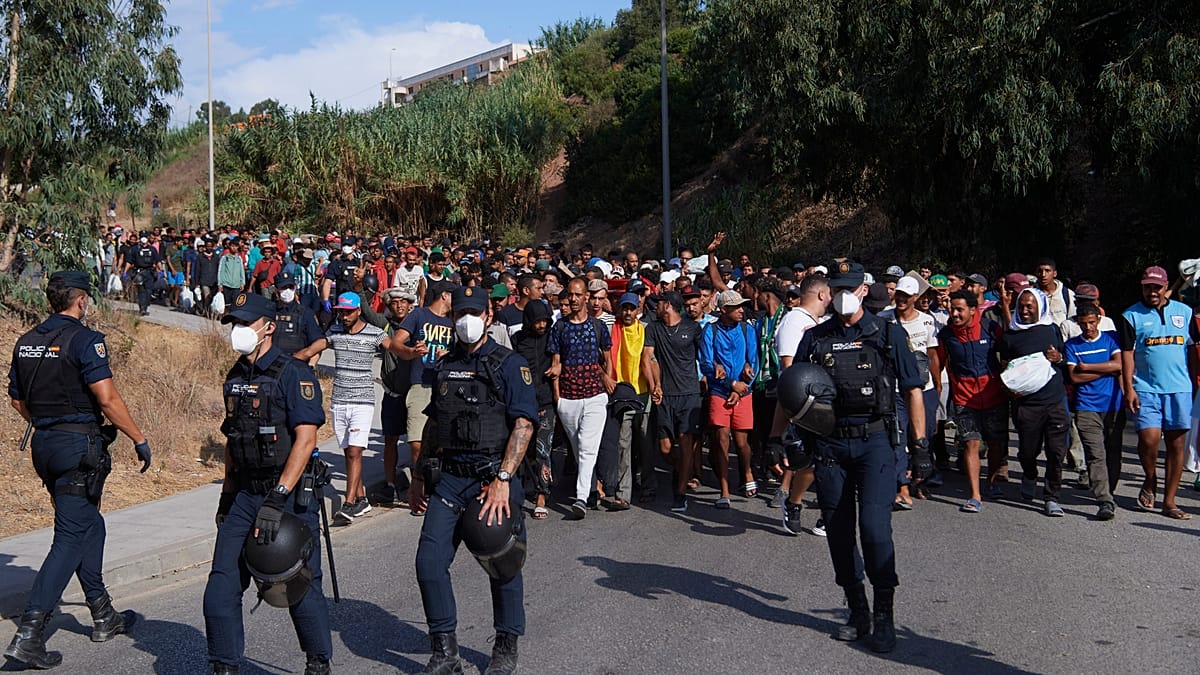
Spanish authorities have begun moving migrants from a makeshift camp on Ceuta's El Trampolín beach to temporary shelters, nearly three weeks after a mass border surge overwhelmed the North African enclave. The operation, which started on Thursday, aims to provide more adequate housing for hundreds of people who had been living in precarious conditions on the sand.
The relocation marks a significant step in addressing the humanitarian situation that developed after thousands of migrants crossed into Ceuta from Morocco in mid-August. Many had been sleeping in the open, with limited access to sanitation and clean water, prompting concerns from aid groups and local officials.
A slow and delicate process
According to Spanish authorities, the transfer is being carried out in phases, with priority given to families with children and vulnerable individuals. The migrants are being moved to reception centres and other facilities across the enclave, as well as to the mainland, where some have already been relocated.
Local officials in Ceuta have stressed the need for a coordinated response, noting that the enclave's infrastructure is limited. The Spanish government has also been in talks with Morocco to manage the situation and prevent future surges.
The operation comes amid broader discussions about migration policy in Europe. The European Union has recently increased funding for migration cooperation with Morocco, a key partner in managing migratory flows. This support is part of a wider strategy to address the root causes of migration and improve border management.
Meanwhile, the relocation of unaccompanied minors has been a particularly sensitive issue. Spain has moved hundreds of migrant girls from Ceuta to the mainland, despite opposition from some regional governments. The EU has backed Spain's plan to return some minors to Morocco, a move that has drawn criticism from human rights organisations.
The conditions in Ceuta have also drawn attention to the broader challenges facing border regions. A Spanish police union has demanded improvements to squalid barracks used by officers, highlighting the strain on public services in the enclave.
As the relocation continues, authorities are working to ensure that the migrants receive proper care and support. The situation in Ceuta remains a test of Europe's ability to respond to migration pressures with humanity and efficiency.
The beach camp, which had become a symbol of the crisis, is expected to be cleared in the coming days. However, the underlying issues that led to the surge remain unresolved, and many fear that similar events could occur again.
For now, the focus is on providing relief to those who have been living in limbo. The relocation is a positive step, but it is only the beginning of a longer process of integration and support.