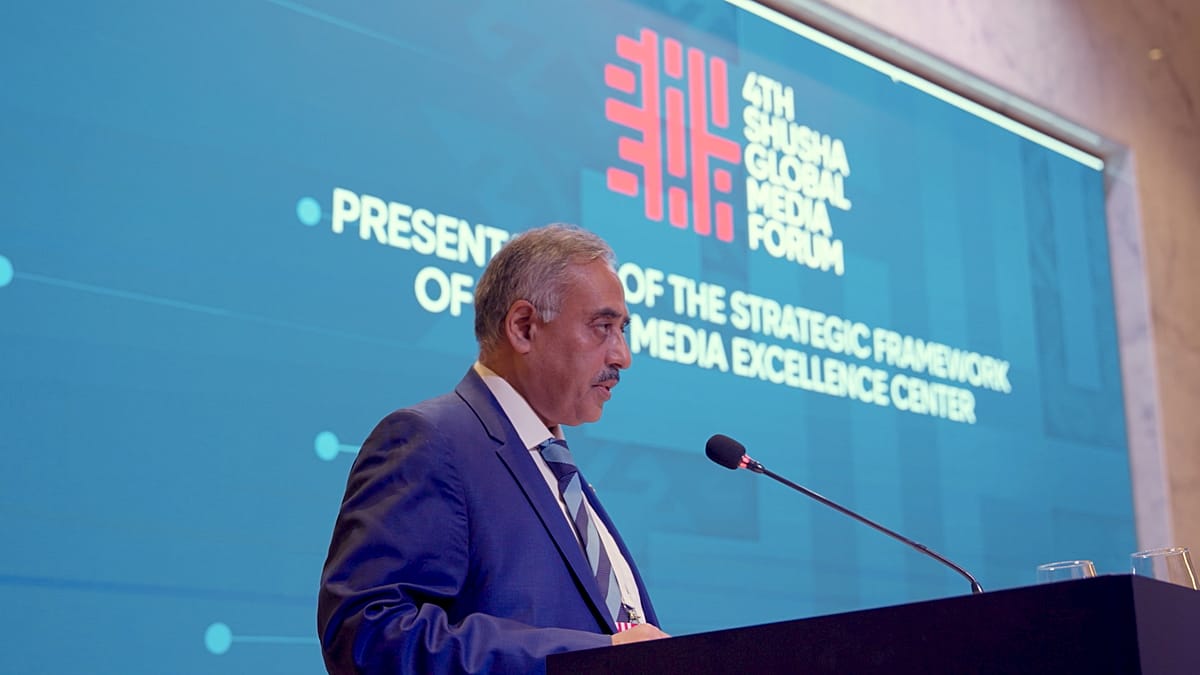
The 4th Shusha Global Media Forum, held in the Azerbaijani city of Shusha, convened media professionals, policymakers, and representatives from international organisations to examine the evolving challenges facing journalism. The event focused on how artificial intelligence, disinformation, and declining public trust are reshaping the news industry, and what steps can be taken to preserve credibility.
Participants from across Europe and beyond debated the dual-edged nature of AI in newsrooms. While AI tools can enhance efficiency in data analysis and content personalisation, they also raise concerns about algorithmic bias, job displacement, and the spread of synthetic media. Several speakers argued that news organisations must adopt clear ethical guidelines to ensure AI serves the public interest rather than undermining it.
Disinformation and the Battle for Trust
A central theme of the forum was the growing threat of disinformation, which erodes public confidence in media and democratic institutions. Panellists highlighted how false narratives often spread faster than verified facts, particularly on social media platforms. The discussion echoed broader European concerns, as seen in recent debates over proposals for voluntary nighttime social media curfews for older teens in the UK, reflecting a push for stricter regulation of online content.
Cross-border collaboration was identified as a key strategy to combat disinformation. Journalists from EU member states, the Western Balkans, and the UK shared experiences of fact-checking networks and joint investigations that have helped expose coordinated misinformation campaigns. The forum underscored the need for sustained investment in media literacy programmes, particularly in regions where trust in news is lowest.
AI and the Future of Reporting
Artificial intelligence is transforming journalism in ways both promising and perilous. Automated news generation, personalised content feeds, and AI-assisted fact-checking were cited as innovations that could improve efficiency and reach. However, delegates warned that reliance on AI without human oversight risks amplifying biases and spreading unverified information. The European Union's ongoing work on the AI Act was referenced as a potential model for balancing innovation with accountability.
Several participants pointed to the importance of maintaining editorial independence in an era of algorithmic curation. As newsrooms increasingly depend on platforms like Google and Meta for distribution, the risk of losing direct reader relationships grows. The forum encouraged media outlets to invest in direct subscription models and community engagement to build sustainable business models.
International Dialogue and Media Ethics
The Shusha Forum also served as a platform for discussing media ethics in a polarised world. Delegates from countries including France, Germany, and Poland emphasised that ethical journalism requires transparency about sources, corrections, and conflicts of interest. The role of public service broadcasters, such as those in the Nordic countries, was highlighted as a benchmark for maintaining trust through independence and accountability.
Discussions touched on the broader geopolitical context, including the impact of conflicts on media freedom. In regions like the South Caucasus and the Balkans, journalists often face pressure from both state and non-state actors. The forum called for stronger protections for journalists and for international bodies to monitor threats to press freedom more closely.
As the forum concluded, participants agreed that the future of journalism depends on a collective commitment to truth, transparency, and dialogue. While technology will continue to disrupt the industry, the core principles of responsible reporting remain unchanged. The challenge for European media is to adapt without compromising the values that underpin democratic discourse.