Can a region synonymous with coal mines and heavy industry be reimagined as a carefree holiday resort? That is the question posed by a new exhibition in Katowice, the capital of Poland's Silesian voivodeship. Titled The Last Days of Vacation, the show brings together artists who offer a fresh, often whimsical perspective on a part of Poland that has long been defined by its industrial past.
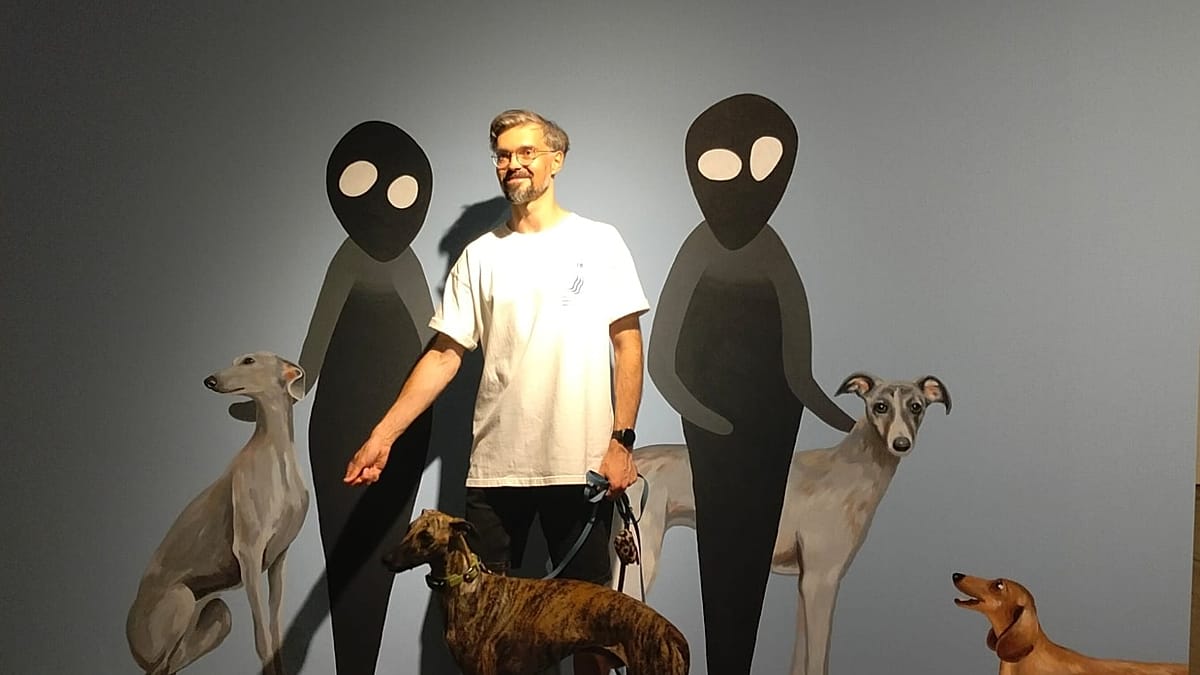
At the heart of the exhibition is Holiday Courier, a series by Michał Prażmo, an artist from northern Poland who was invited by curator Adrian Chorębała to look at Silesia with fresh eyes. Prażmo's paintings are populated by dogs, aliens, and surreal scenes set against the region's parks and architecture. The result is a nostalgic, postcard-like vision that deliberately avoids the clichés of smokestacks and miners.
From mental crisis to playful escape
Prażmo describes the series as a deliberate departure from his previous work, The Breakdown Treats, which explored mental health struggles and loneliness. “Painting that sort of thing is exhausting and it affects me, so I wanted to do something by way of contrast, something more relaxed, more nostalgic,” he explains. Drawing on his own travel photographs, he created mood boards and combined images to build a dreamlike version of Silesia.
His initial impressions of the region, formed while living in the north, were based on hearsay. But travelling through Silesia surprised him. “I wanted to avoid those clichéd associations. I started with Spodek, because it is a symbol and has to appear somewhere, but after that I didn't want to tick off any more icons,” he says. Instead, he was drawn to Silesian Park, the largest urban park in Europe, with its striking architecture and vast open spaces.
Dogs, aliens, and a touch of surrealism
Dogs are the protagonists of Prażmo's paintings. In Holiday Courier, a UFO lands and attempts to make contact—but chooses dogs as its interlocutors. “I'm afraid that if it were people, it could play out very differently,” the artist jokes. The narrative unfolds across several canvases, including A Brawl in the Japanese Garden, where greyhounds friendly to the aliens clash with mongrels who oppose them. The final painting, Who Opened the Gates, leaves the aliens' intentions ambiguous.
Curator Adrian Chorębała, a regular visitor to Silesian Park with his own dogs, appreciates the lightness and humour. “I believe art should reach out to people. People often feel like going to a gallery, mixed perhaps with a bit of anxiety, but, for instance, they don't know that they can do it for free,” he says. His two dogs even made it into the poster image for the exhibition.
A new generation of Silesian artists
Chorębała notes that contemporary Silesian art has moved beyond the heavy industry themes that dominated a decade ago. While some younger artists still reference the region's mining heritage, others explore mysticism, mythology, and identity. Paweł Sobczak delves into spiritual and existential questions, while Milan Zientara draws on the legacy of the Janówska Group, a collective of Silesian painters active in the 1960s. Ksawery Sajdak creates an imaginary world that is both deeply Silesian and strikingly contemporary.
The exhibition at Rondo Sztuki in Katowice offers a playful yet thoughtful reimagining of a region in transition. As Europe grapples with the shift away from fossil fuels, Silesia's cultural reinvention is a timely reminder that post-industrial landscapes can find new life through creativity. For those planning a trip, the region's growing appeal as a cultural destination might be worth considering—perhaps alongside walking holidays that are gaining popularity across the continent.
The Last Days of Vacation runs at Rondo Sztuki in Katowice. It is a testament to the power of art to transform how we see a place—and to the enduring appeal of a good summer story, even if it involves aliens and a pack of arguing dogs.