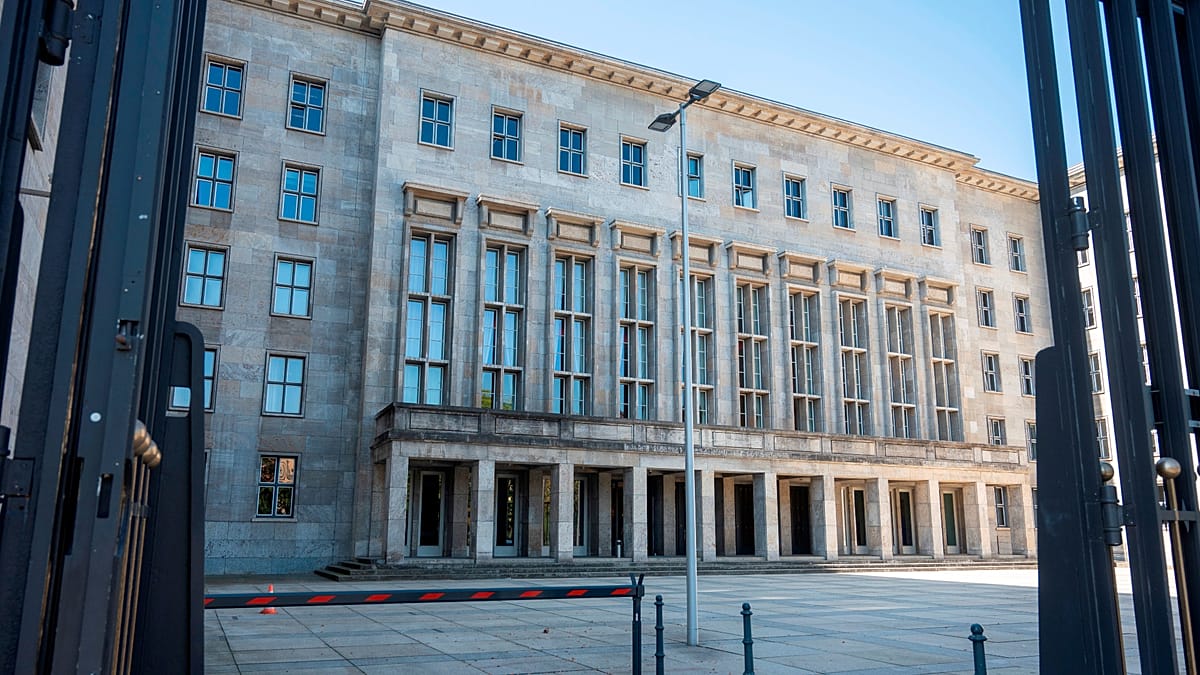
SpaceX has awarded a €60 million supply contract to Singulus Technologies, a mid-sized German mechanical engineering company headquartered in Kahl am Main, Bavaria. The agreement covers the delivery of specialised solar cells for the next generation of satellites in Elon Musk's Starmind constellation, a project the SpaceX founder has described as an effort to build orbital AI data centres.
The announcement, made by Musk on X, triggered an immediate market reaction. Singulus shares jumped by as much as 80 percent before settling, briefly valuing the company at roughly €73 million. For context, the firm reported annual revenue of €48.3 million in 2025 — meaning a single order now exceeds its entire yearly turnover.
Heterojunction cells built for orbit
Singulus manufactures what are known as heterojunction solar cells, a technology that combines thin-film and crystalline silicon layers to achieve high efficiency and durability. These characteristics make them particularly suited to the harsh conditions of space, where radiation and temperature swings degrade conventional panels. The company's core business is the development and assembly of production machinery for photovoltaics, semiconductors, medical technology, packaging, glass, automotive, battery and hydrogen markets.
"The strategic partnership with SpaceX allows us to further industrialise these capabilities at a meaningful scale and solidify our position as a leading Western provider of next-generation solar cell technology," said Lars Lieberwirth, a member of Singulus's executive board.
Mike Nicolls, SpaceX's senior vice president for Starlink, framed the arrangement as a long-term industrial bet: "The combination of their process expertise and our long-term commitment creates a durable option for scaling solar production."
According to the companies, the partnership envisages additional facilities and production lines capable of reaching 100 gigawatts of annual solar manufacturing capacity — roughly equivalent to the output of ten large nuclear reactors.
Starmind and the 'sentient sun'
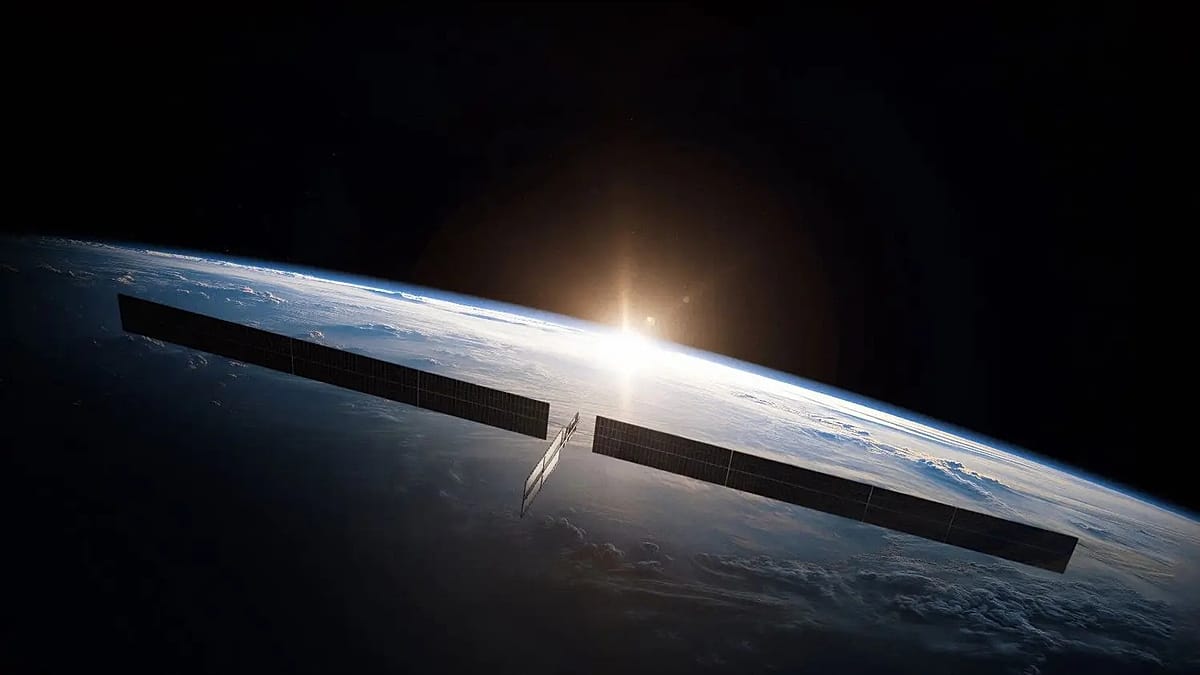
The cells will feed into SpaceX's Starmind satellite manufacturing site in Texas, with deliveries scheduled to begin in early 2027. Musk has pitched Starmind as a fleet of spacecraft equipped with solar wings measuring 75 metres across, designed to compute AI workloads in orbit and beam results back to Earth via laser links.
In a filing with the US Federal Communications Commission, Musk argued that the satellites would "directly harness near-constant solar power with little operating or maintenance costs," achieving what he called transformative cost and energy efficiency while reducing the environmental footprint associated with terrestrial data centres.
He has also described the concept — somewhat poetically — as a "sentient sun."
The scale of the ambition invites scepticism. Musk has floated the idea of launching one million satellites, a figure far beyond current orbital reality. As of today, roughly 15,000 satellites circle the planet, about 9,500 of them belonging to SpaceX's own Starlink network. Industry analysts note that operators routinely request authorisation for far more spacecraft than they intend to build, in order to preserve design flexibility with regulators.
A European supplier in a US-led space economy
For Singulus, the contract represents both a financial lifeline and a strategic repositioning. The company has spent years navigating the cyclical machinery markets of Europe's industrial heartland, and the SpaceX order places it at the centre of a supply chain that is increasingly defined by American launch and satellite ambitions. Whether that translates into durable European manufacturing capacity — or simply a subcontracting role — remains an open question.
The deal also lands amid broader European debates about energy infrastructure and industrial sovereignty. The continent's solar manufacturing base has struggled against cheaper imports, even as Europe's solar boom strains grids during dark, windless periods. A high-value niche like space-grade cells could offer a template for European firms seeking to compete on technology rather than volume.
SpaceX has indicated that the €60 million order is the first of several, though no further figures have been confirmed. For now, the agreement stands as a rare instance of a German Mittelstand company tying its fortunes to Musk's expanding orbital infrastructure — and to a vision of computing that, if realised, would reshape both the space industry and the energy demands of artificial intelligence.