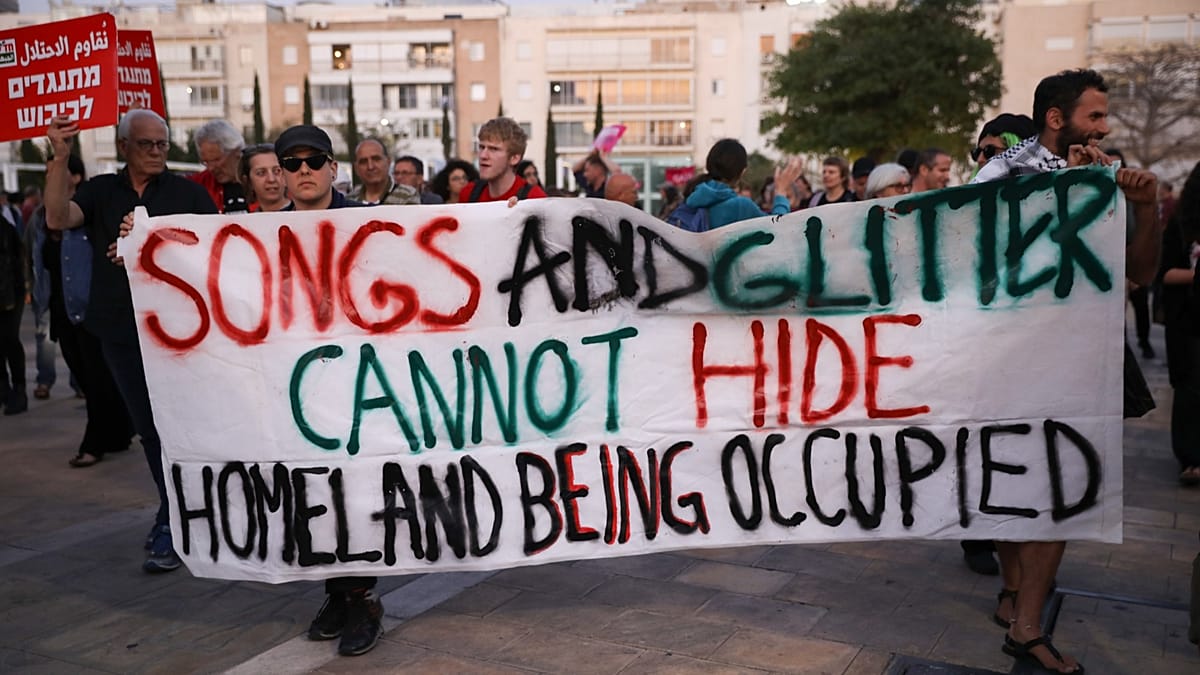
Slovenia's public broadcaster, RTV Slovenia, has confirmed it will not broadcast the 2025 Eurovision Song Contest, opting instead to air a series of films about Palestine. The decision places Slovenia alongside Ireland and Spain in a growing boycott of Europe's largest live music event, driven by objections to Israel's participation.
“We will not be broadcasting the Eurovision Song Contest,” Ksenija Horvat, RTV Slovenia's director, told the Associated Press. “We will be airing the film series ‘Voices of Palestine,’ featuring Palestinian documentaries and feature films.”
The boycott reflects deepening divisions within the European Broadcasting Union (EBU) over its decision to allow Israel to compete, despite widespread criticism of its military campaign in Gaza. Slovenia, Ireland, and Spain have all withdrawn from the contest, while the Netherlands and Iceland will still broadcast the event through their respective national broadcasters, NPO and RÚV.
A 70th Anniversary Marred by Controversy
This year's edition, marking Eurovision's 70th anniversary, is scheduled to take place in Vienna from 12 to 16 May, with 35 competing countries. The event's slogan, “United by Music,” has been undercut by accusations of hypocrisy: Russia has been barred from Eurovision since its full-scale invasion of Ukraine in 2022, yet Israel remains eligible despite a UN inquiry concluding in September 2025 that it is committing genocide in Gaza. Israel has consistently denied these allegations.
The boycott has gained momentum beyond national broadcasters. Thousands of artists—including Massive Attack, Kneecap, Mogwai, Brian Eno, Sigur Rós, and Nadine Shah—have signed an open letter urging fans to boycott the event. Organised by the No Music for Genocide campaign and the BDS movement, the letter states: “As musicians and cultural workers, many living within the reaches of the [EBU], we reject Eurovision being used to whitewash and normalise Israel's genocide, siege and brutal military occupation against Palestinians.” It calls on the EBU to ban the Israeli broadcaster KAN, which it deems complicit.
Spain's RTVE reiterated its decision not to air Eurovision last week—a first since 1961—and Ireland's RTÉ announced its withdrawal in December 2024. Slovenia's move, confirmed this week, adds further weight to the protest. The broader context includes ongoing EU-level discussions on the Middle East, as seen in EU Leaders Gather in Cyprus for Crisis Talks on Energy, Defence, and Middle East, where the conflict's regional implications remain a key agenda item.
The controversy highlights the EBU's struggle to balance its founding principles of inclusivity with political realities. Critics argue that allowing Israel to participate while excluding Russia sets a double standard, undermining the contest's credibility. For Slovenia, the decision to replace Eurovision with Palestinian cinema is a deliberate cultural statement, reflecting a broader shift in European public opinion on the conflict.
As the 70th Eurovision approaches, the boycott underscores the event's entanglement with geopolitics—a far cry from its origins as a post-war celebration of unity. Whether the EBU will adjust its stance remains uncertain, but the growing list of non-participating broadcasters suggests that the pressure is unlikely to subside.