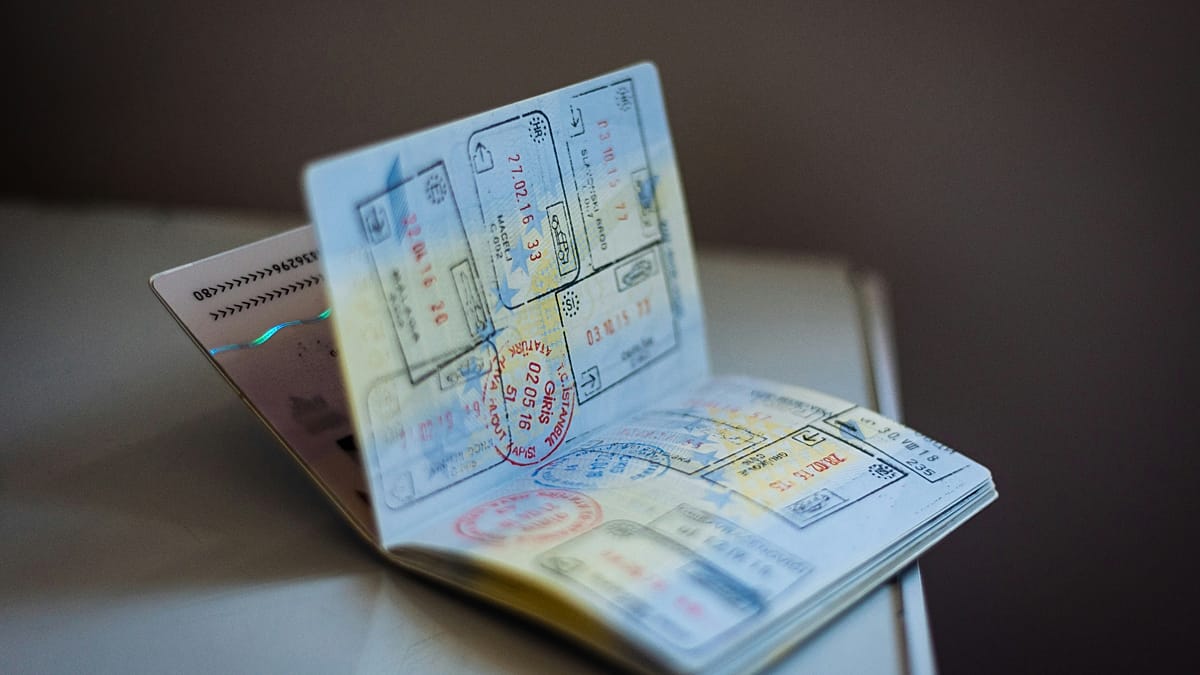
For many travellers, the dream of spontaneous getaways often collides with the reality of visa paperwork. But for citizens of certain European countries, that friction is minimal. A fresh analysis by Passport Reports ranks passports by the number of destinations their holders can enter without a prior visa, whether entirely visa-free, with an electronic travel authorisation (ETA), or by obtaining a visa on arrival.
The latest figures place two European nations inside the global top five, trailing only the United Arab Emirates and Singapore, which occupy first and second places respectively. Malaysia sits fourth overall.
Spain and Luxembourg lead the continent
Spain emerges as the strongest European passport, ranked third worldwide with a mobility score of 174. Spanish passport holders can visit 121 countries without any visa, and a further 42 destinations grant entry on arrival. However, 11 countries require an ETA, and 24 demand a traditional visa before travel.
Luxembourg follows closely, scoring 173 and taking fifth place globally. Its citizens enjoy visa-free access to 122 countries, with 41 more available on arrival. Ten destinations require an ETA, while 25 require a visa in advance.
Belgium and France share sixth place, each with a mobility score of 173. Their passports allow visa-free travel to 121 countries, visa-on-arrival in 41, ETAs for 11, and visas for 25.
Six European nations are tied in seventh place, all scoring 173: Denmark, Finland, Germany, Italy, the Netherlands, and Sweden. Holders of these passports can travel to 120 countries visa-free, 42 with visa on arrival, 11 with an ETA, and 25 with a visa.
Beyond the top tier
Greece ranks eighth, followed by Portugal and Switzerland in ninth, and Austria in tenth. Norway takes eleventh, Ireland twelfth, and Malta fourteenth. Hungary and Poland share fifteenth place.
The ranking underscores a broader trend: European passports remain among the most powerful globally, despite the rise of Asian nations like the UAE and Singapore. For context, the global aviation rankings show a similar shift, with Asian carriers outperforming European ones in 2026.
While the data highlights convenience, it also reflects diplomatic relations and security agreements. For instance, the recent resurfacing of AI-generated passports in a disinformation campaign illustrates how travel documents can become geopolitical tools.
For travellers, the practical takeaway is clear: a Spanish or Luxembourgish passport opens doors that others cannot. Yet even the strongest passports come with caveats, as some destinations still require ETAs or visas. As train travel gains ground within Europe, the continent's internal mobility remains a separate matter from global visa access.
The ranking also serves as a reminder that passport strength is not static. Countries can negotiate new agreements, and geopolitical shifts can alter access overnight. For now, however, Europe's top passports offer their holders remarkable freedom to explore the world.