Spain's economy is outpacing most of its European neighbours, yet the average worker's paycheque buys less today than it did in 2009. This disconnect between macroeconomic growth and household finances has moved to the centre of the country's election campaign, with voters heading to the polls on Sunday.
According to the European Commission, Spain's economy is expected to expand by 2.6% this year – more than double the eurozone's projected 1.2%. But after adjusting for inflation, average annual wages in 2025 stood at €35,121, roughly 1% below the 2009 peak of €35,533. Since Prime Minister Pedro Sánchez took office in 2018, real pay has risen only about 5%.
Economists point to immigration as a key driver of growth. New arrivals have expanded the labour force, but many take low-paying jobs in agriculture, tourism, and other sectors. “What’s happening is that we have more people working,” said Pedro Aznar, an economist at Esade Business School in Barcelona. “We have a larger working population contributing to GDP, but our growth is driven more by volume rather than by generating more output per worker.”
The minimum wage is a notable exception: it has climbed 66% since 2018, leaving those at the bottom better off even after inflation. But for many other workers, pay rises have been eaten away by rising costs.
Housing and food costs squeeze budgets
Housing has become a flashpoint. House prices in Spain rose 43% between 2015 and 2025 in real terms, according to Eurostat, compared with an average of 25% across the European Union. The Bank of Spain estimates a shortage of 750,000 homes, a legacy of the post-2008 construction bust and insufficient new building. Large investors have also fuelled speculation, pushing homeownership out of reach for many young Spaniards.
Rents have followed a similar trajectory, climbing 43% over the past decade, with the steepest increases in cities and coastal areas. The spread of short-term tourist lets on platforms like Airbnb and Booking.com has reduced the supply of long-term rentals. As a result, roughly one in four renters in Spain spends more than 40% of their income on housing – a higher share than in Germany, France, or Italy.
Food prices have also surged, rising 45% between 2015 and 2025. The government has responded with temporary VAT cuts, energy subsidies, and direct household support, but analysts say the cumulative effect of price spikes – partly driven by the wars in Ukraine and Iran – has outpaced wage growth. “Since the war in Ukraine began, we have experienced significant spikes in inflation, and at many points, the rate of inflation has outpaced wage growth,” Aznar said. “Consequently, even if wages rise, if inflation increases by a greater margin, the worker loses purchasing power.”
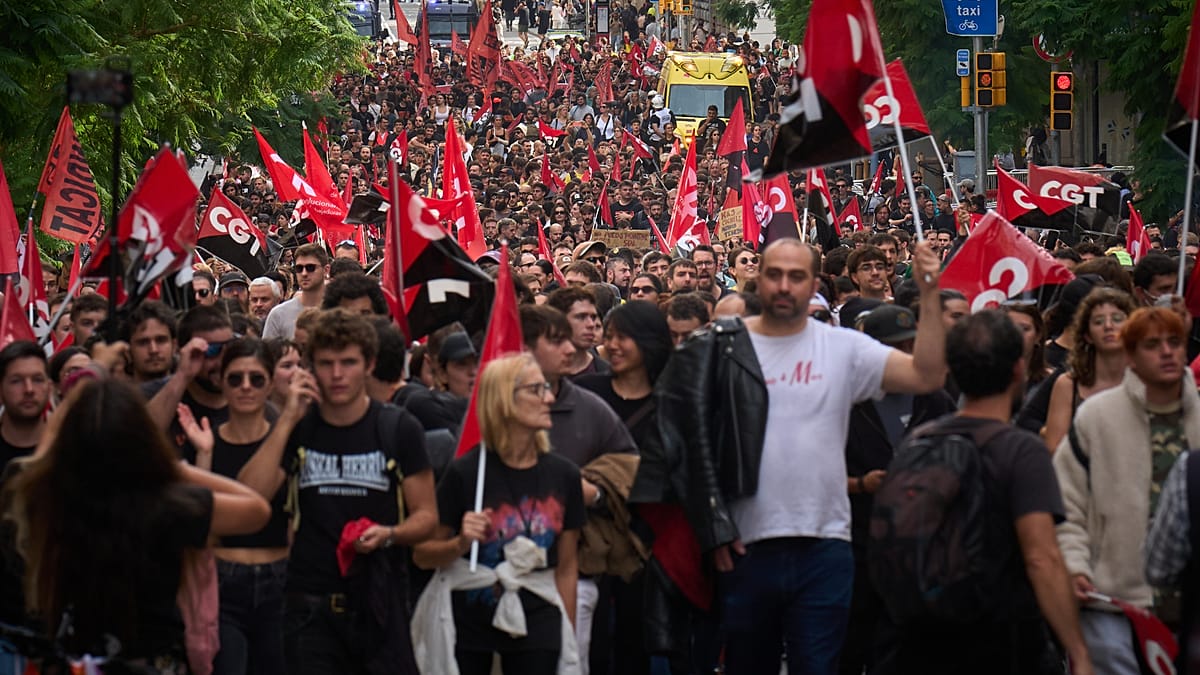
The cost-of-living squeeze has become a central theme of the campaign, echoing protests across Portugal, France, and Spain. Conservative opposition leader Alberto Núñez Feijóo has promised to cut personal income tax within his first year in office, while Sánchez points to the country's strong growth and defends his immigration policies as essential to sustaining the welfare state.
For many Spaniards, the gap between the headline numbers and their daily reality is stark. Ángel Talavera, an economist at Oxford Economics, put it bluntly: “You have a big chunk of the population that essentially has seen their income in real terms go down because prices have gone up more than their wages. Housing has gone, well, bananas.”
The election outcome will shape how Spain tackles these pressures. With the right-wing Popular Party leading in polls, a change in government could bring tax cuts but also tighter immigration policies. Whatever the result, the challenge of translating economic growth into tangible improvements for households will remain.



