For decades, Spain's lack of domestic oil and gas reserves was seen as a structural weakness. Now, that very absence is turning into an advantage. With some of the continent's best solar and wind resources, and ample land for large-scale renewable parks, Spain is betting that it can become Europe's leading producer of green hydrogen.
“Spain has always had the disadvantage of not having oil or gas,” says Maarten Wetselaar, CEO of Moeve, the energy company formerly known as Cepsa. “But now it's Spain's moment because it has abundant solar power, very good wind resources and space to build large renewable parks.”
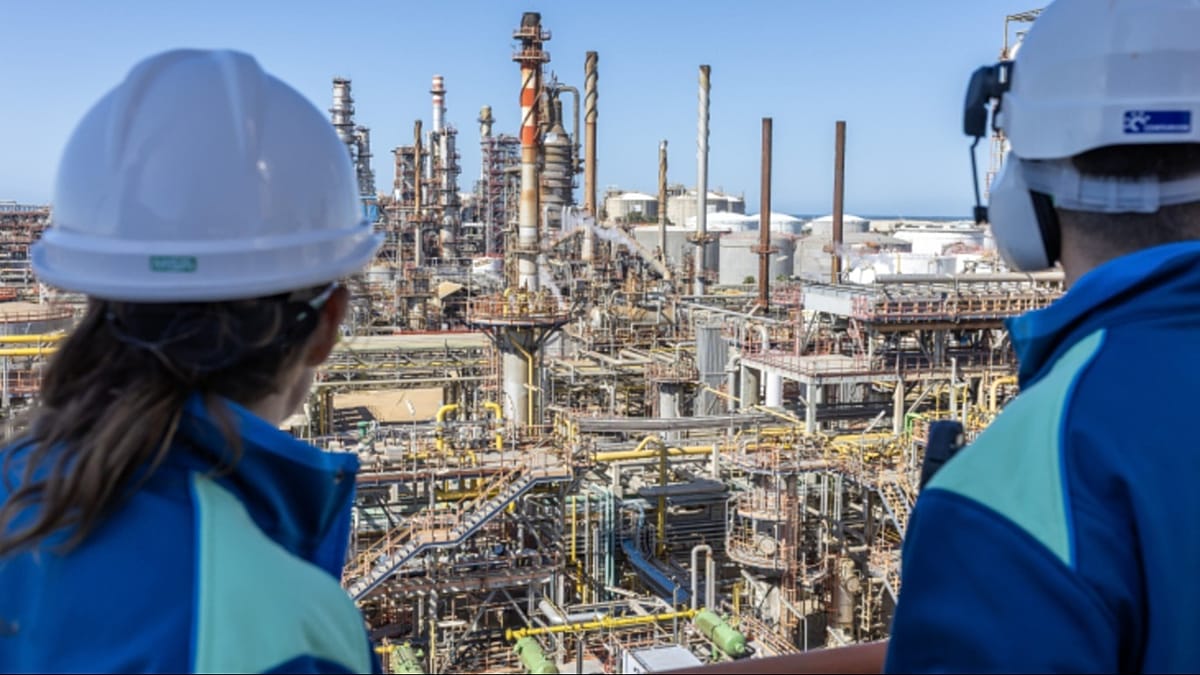
Moeve is putting that conviction into practice. In Palos de la Frontera, near Huelva in Andalusia, the company has started construction on Onuba, the first phase of what it calls the Andalusian Green Hydrogen Valley. The project represents an investment of more than €1 billion and will begin with 300 megawatts (MW) of electrolysis capacity, with room to expand.
The ambition extends far beyond a single plant. Spain wants to build a whole new industrial sector, reduce its dependence on imported fossil fuels, and eventually export renewable hydrogen to other European countries. But to understand the scale of the challenge, it helps to start with the basics.
What is green hydrogen, and why does it matter?
Hydrogen is often described as a fuel of the future, but it is not an energy source like sunlight or wind. It is an energy carrier: you have to put energy in to get it out. Most hydrogen used today, known as grey hydrogen, is produced from natural gas through a process that releases CO2. Green hydrogen, by contrast, is made by splitting water into hydrogen and oxygen using electricity from renewable sources, a process called electrolysis.
That is where Spain's first advantage lies. Electricity accounts for roughly 70% of the cost of green hydrogen, according to Wetselaar. “If you go to the place in Europe where renewable electricity is cheapest, which is the Iberian Peninsula, then your green hydrogen will be very, very competitive,” he says.
But if renewable electricity is already cheap, why not just use it directly? The answer is that some sectors are hard to electrify. Heavy industry, chemical production, and parts of maritime and air transport need dense, portable fuels that batteries cannot easily provide. Green hydrogen can be used to make ammonia, synthetic fuels, or feed directly into industrial processes. It is not a universal replacement for fossil fuels, but a targeted solution for the hardest-to-decarbonise parts of the economy.
Spain's prime minister, Pedro Sánchez, made that case at the launch of the Onuba project in September. “This transformation is not only about protecting ourselves better against crises, which is also very significant. It is also about seizing a huge industrial opportunity,” he said.
Huelva: a testing ground for Spain's hydrogen strategy
The choice of Huelva is no accident. The region has abundant renewable resources, but also existing industrial activity, port infrastructure, and potential customers for hydrogen nearby. Onuba will initially have 300 MW of electrolysis capacity, expandable by another 105 MW, and is expected to produce around 45,000 tonnes of renewable hydrogen per year.
Moeve's longer-term plan is to scale the entire Andalusian Green Hydrogen Valley to 2 GW of capacity, with facilities in both Huelva and Cádiz. “By connecting Huelva with other industrial areas in Europe, whether through pipelines or maritime solutions, we will be able to expand this plant from the 300 megawatts we are currently building to 2 gigawatts and beyond,” Wetselaar explains. The goal, he adds, is to “truly create a new industry in Spain.”
The project has also drawn political support. Sánchez attended the launch, framing the investment as part of a broader strategy to modernise the Spanish economy. But the government's enthusiasm is not shared by everyone. Some critics point to the high cost of green hydrogen and question whether it will ever be competitive without heavy subsidies. Others worry about the environmental impact of large-scale renewable installations on sensitive land.
The biggest unknown remains price. Producing green hydrogen is still generally more expensive than producing grey hydrogen from natural gas, although the gap narrows when gas prices rise or when carbon taxes are applied. Wetselaar argues that the current energy context is already shifting the balance. “Green hydrogen is competitive with grey hydrogen today, partly because the price of gas is very high,” he says.
If Spain can deliver on its promise, it could transform its energy position and become a net exporter to the rest of Europe. But the road is long, and the competition is fierce. Germany, France, and the Netherlands are all investing heavily in hydrogen infrastructure, and the EU is still debating how to define and regulate the market. Spain's bet is that its natural advantages will win out in the end.