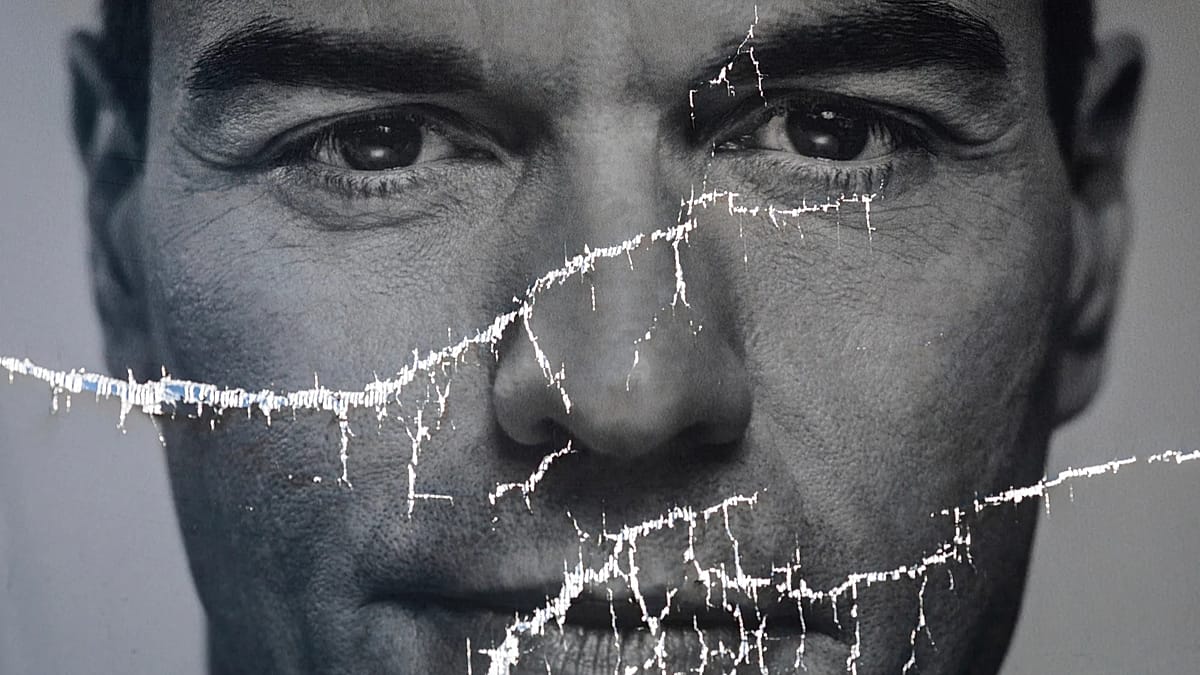
Spanish Prime Minister Pedro Sánchez has called a snap election for 29 November, a move that comes after months of mounting crises and street protests that have left his government looking increasingly paralysed. The decision marks a gamble for the Socialist leader, who has sought to position Spain as a progressive counterweight in Europe but now faces the very real prospect of losing power.
The immediate trigger was a high-profile housing eviction that crystallised public anger over affordability and the lack of decent housing, particularly among younger Spaniards. But the discontent runs deeper. Just weeks earlier, the Spanish enclave of Ceuta was overwhelmed by a mass incursion of some 80,000 people from Morocco, an event that exposed the limits of Madrid's control over its North African borders and left the local community reeling. The government's response to both crises has been widely criticised as slow and inadequate.
For a country of nearly 50 million people, the election is being framed as a political Gordian Knot. Spain has long been Europe's last major socialist bastion, and its fall would have repercussions far beyond the Iberian Peninsula. As analysts have noted, the outcome could embolden conservative forces across the EU and make progressive lawmakers less willing to cooperate across the aisle.
An EU-wide mood of anti-incumbency
Javier Carbonell, an expert at the European Policy Centre, told Europe Today that the mood in Spain mirrors a broader zeitgeist across the bloc. "There's this big anti-incumbency, anti-establishment sentiment," he said. If Sánchez loses in November, Carbonell expects a right-wing government to make large gains, which could pave the way for increased defence spending and tougher migration policies in Spain.
The stakes are not lost on Brussels. A leaked draft agenda for next week's European Council summit includes a section on the Ceuta crisis, albeit only a single point. More prominently, the agenda features a chapter on competitiveness, the European Commission's favourite buzzword, set against the backdrop of a deteriorating EU-China trade relationship. The EU's trade chief, Maroš Šefčovič, has set an "October" deadline to address the bloc's trade deficit with Beijing, which remains heavily in China's favour.
EU ambassadors are meeting in Brussels today to discuss the state of play, including a joint letter from France and Germany sent to Commission President Ursula von der Leyen this month. The two capitals, which have often held opposing views on China policy, are now calling for a "new set of tools" to rebalance the trade relationship. Šefčovič is due to meet his Chinese counterpart, Commerce Minister Wang Wentao, in Beijing on Thursday and Friday. If those talks fail, the issue will be thrashed out at the European Council next week, with all eyes on what those "new tools" might be.
Preparing for a bigger EU
Meanwhile, the European Commission is today presenting its long-awaited plan for bringing candidate countries closer to the EU and making an enlarged bloc function effectively. Enlargement Commissioner Marta Kos has previewed the proposal, which focuses on internal reforms to make EU institutions "leaner" and decision-making faster, notably by moving away from unanimity to qualified majority voting in several areas.
The plan also includes safeguards to prevent another "Trojan horse" like Viktor Orbán's Hungary, as well as proposals for "gradual integration" to show candidate countries the early benefits of membership. Sensitive EU policies, including enlargement itself, would be protected from potential obstruction by new members. The proposal nods to the roadmaps announced by von der Leyen in her State of the Union speech for the four frontrunners: Montenegro, Albania, Moldova and Ukraine.
Combating sexualised deepfakes
In the European Parliament, lawmakers are continuing their plenary session, with a press event scheduled to explore "the way forward" for tackling sexualised deepfakes. In May, the Parliament and Commission agreed to prohibit "nudifier apps" — AI tools that digitally alter images of clothed people to make them appear naked or sexualised, often without consent. The issue has affected everyone from ordinary citizens to Italian Prime Minister Giorgia Meloni.
Austrian MEP Lena Schilling of the Greens/European Free Alliance, who was herself targeted, told Europe Today that discovering the deepfake was an "immense shock" that took her "dignity away." She warned that such technology could further discourage women from entering public-facing roles like politics, and called on national governments to take tougher action.
Russian diplomats under scrutiny
Separately, the EU is considering tighter restrictions on Russian diplomats as hybrid attacks attributed to Moscow continue to shake European security. Senior diplomats say the issue could become the next step in the bloc's sanctions regime. Brussels is seeking to close ranks after the contentious removal of two high-profile oligarchs last month strained the EU's united front. The debate comes as the bloc grapples with a series of incidents, from cyberattacks to sabotage, that have heightened concerns about Kremlin interference.
As Spain heads to the polls, the outcome will be watched closely across Europe. A victory for the right would not only end Sánchez's premiership but could also signal a broader shift in the EU's political centre of gravity, with implications for everything from migration to defence spending. For now, the Socialist stronghold is cracking, and the cracks are spreading.