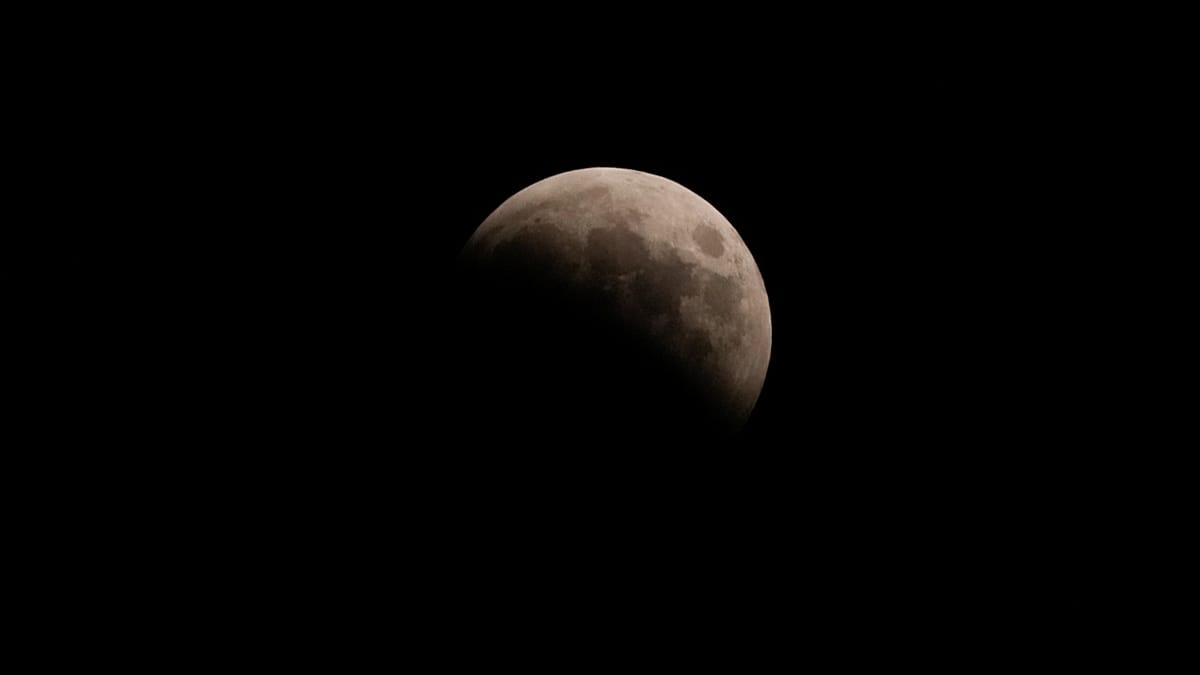
Sixteen days after the total solar eclipse that dazzled the Iberian Peninsula on 12 August, Spain is preparing for another celestial spectacle. On the evening of 28 August, a partial lunar eclipse will darken the Moon across the country, offering a dramatic sight that requires no special equipment.
The National Geographic Institute (IGN) has confirmed that the eclipse will reach a magnitude of 0.93, meaning that at its peak, the Earth's umbra – the darkest part of the planet's shadow – will cover about 93% of the Moon's diameter. This is not the same as the percentage of the lunar surface that will be darkened, but it indicates an unusually deep partial eclipse, one of the most significant in recent years.
How to watch the eclipse
Unlike the solar eclipse, which demanded certified eclipse glasses to protect the eyes, the lunar eclipse is completely safe to observe with the naked eye. According to the IGN, no filters or telescopes are necessary, though binoculars can enhance the view of the Moon's gradual darkening and the subtle reddish hue that often accompanies deep partial eclipses.
A lunar eclipse occurs when the Earth passes directly between the Sun and the Moon, casting its shadow onto the lunar surface. When only part of the Moon enters the umbra, the event is classified as partial. On 28 August, the alignment will be such that the Moon will skim through the Earth's shadow, producing a prolonged period of partial coverage.
Regional viewing times
The eclipse will be visible in some form across Europe, Africa, the Americas, and western Asia, according to IGN data. In Spain, the partial phase will be observable from the entire country before moonset, but the duration will vary significantly by location.
In the centre and east of the Iberian Peninsula, including Madrid, Valencia, and the Balearic Islands, as well as in Melilla, the Moon will set before the partial phase concludes. This means observers in these areas will see the eclipse cut short by the horizon. In contrast, the rest of the peninsula, the Canary Islands, and Ceuta will enjoy the full partial phase, with moonset occurring after the eclipse has ended.
For those in the eastern regions, the best advice is to find a location with a clear, unobstructed view to the west-southwest, where the Moon will be low on the horizon. In the Canary Islands, the eclipse will be visible higher in the sky, offering a more comfortable viewing experience.
This event comes at a time when Spain is increasingly in the spotlight for its astronomical appeal. The 12 August solar eclipse, the first visible from the Iberian Peninsula in over a century, drew thousands of visitors and generated significant media attention. The upcoming lunar eclipse is expected to attract similar interest, though it will be a more subdued affair given the lack of need for protective gear.
For those who miss this eclipse, the next major lunar event visible from Spain will be a total lunar eclipse in 2027, which is already driving early travel bookings across Europe, as enthusiasts plan their viewing trips. The 28 August partial eclipse, however, offers a more accessible opportunity for casual stargazers.
As the Moon rises in the east and climbs into the night sky, observers across the country will have a chance to witness one of nature's most elegant demonstrations of celestial mechanics. Whether you are in a bustling city like Barcelona or a quiet village in Andalusia, the eclipse will be a reminder of the vastness of the universe and our place within it.