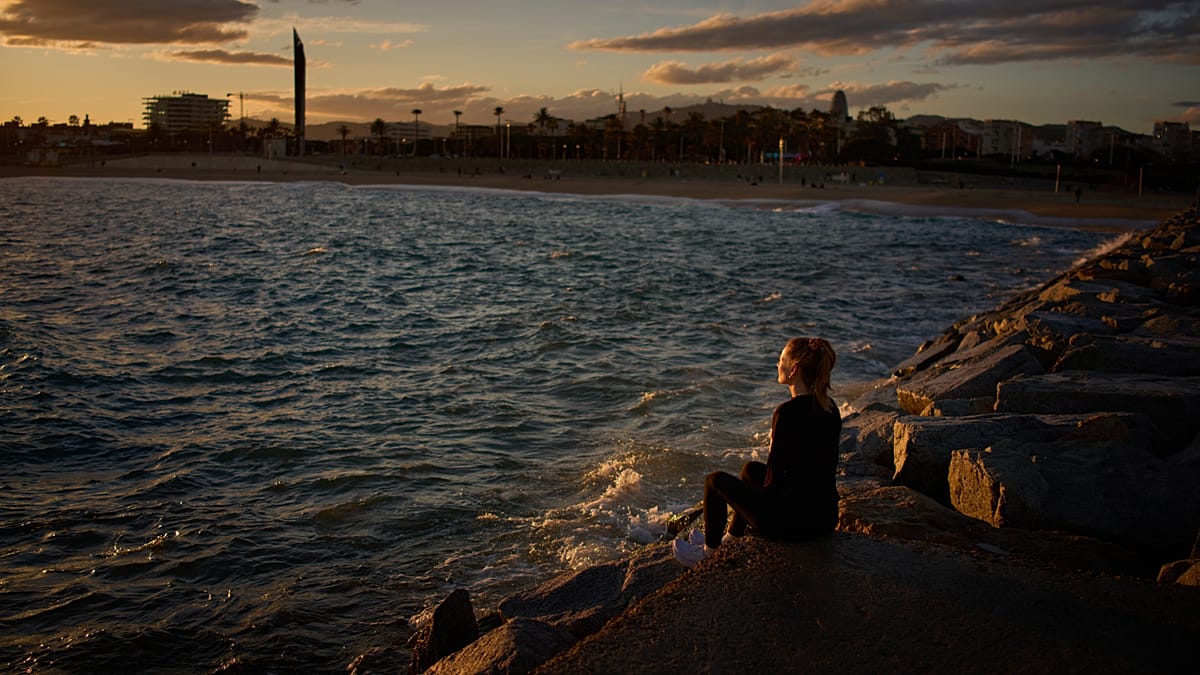
From the Cantabrian Sea to the Balearic Islands, Spanish coastal waters ended May with temperatures never before recorded for that month. Measurements from Puertos del Estado, Spain's state ports agency, show that 18 of its 29 monitoring buoys registered all-time highs for May, following an exceptional heatwave that also pushed land temperatures to summer-like levels.
The records were spread across much of Spain's coastline. All buoys off Galicia and in the Cantabrian Sea reached unprecedented May values, as did numerous stations in the Mediterranean. The highest reading came from the Mahón buoy off Menorca, which hit 26.58°C on 27 May, followed by the Dragonera buoy in the Balearics with 26.2°C on 30 May. Other notable records include Tarragona at 24.64°C, Cabo Begur at 24.47°C, and Valencia at 23.47°C.
Coastal and deep-water records
Puertos del Estado's Coastal Buoy Network also saw historic May temperatures. Tarragona recorded 24.5°C on 30 May, and Barcelona reached 24.2°C the following day. Stations in Bilbao, Pasaia, Gijón, and Langosteira also set new monthly highs. Among deep-water buoys, records were broken at Bilbao-Vizcaya, Cabo de Peñas, Estaca de Bares, Villano-Sisargas, Cabo Silleiro, Valencia, Tarragona, Cabo Begur, Dragonera, and Mahón.
These readings coincide with a spell of exceptional heat that affected Spain and much of Europe during the second half of May. According to the State Meteorological Agency (AEMET), some areas saw temperatures more typical of summer than late spring. In the Cantabrian Sea, surface temperatures were between 1.5 and 2°C above the usual values for this time of year.
Experts point out that the ocean responds more slowly to atmospheric changes due to its high thermal inertia. This means the heat stored in the water can persist for weeks even after air temperatures begin to fall. There is growing concern about the potential impact on marine ecosystems. Persistently high temperatures can favour the development of marine heatwaves, alter species distribution, increase stress on habitats, and affect economic activities such as fishing.
Puertos del Estado manages one of Europe's main oceanographic observation networks, comprising 15 deep-water buoys, 14 coastal buoys, 46 tide gauges, and a network of high-frequency radars that monitor variables like water temperature, waves, sea level, and currents in real time.
The World Meteorological Organization has warned of a high likelihood of global temperature anomalies continuing in the coming months, while various scientific bodies highlight the Mediterranean as one of the regions most vulnerable to climate change. This event underscores the broader trend of warming European waters, which has implications for biodiversity and coastal economies across the continent.