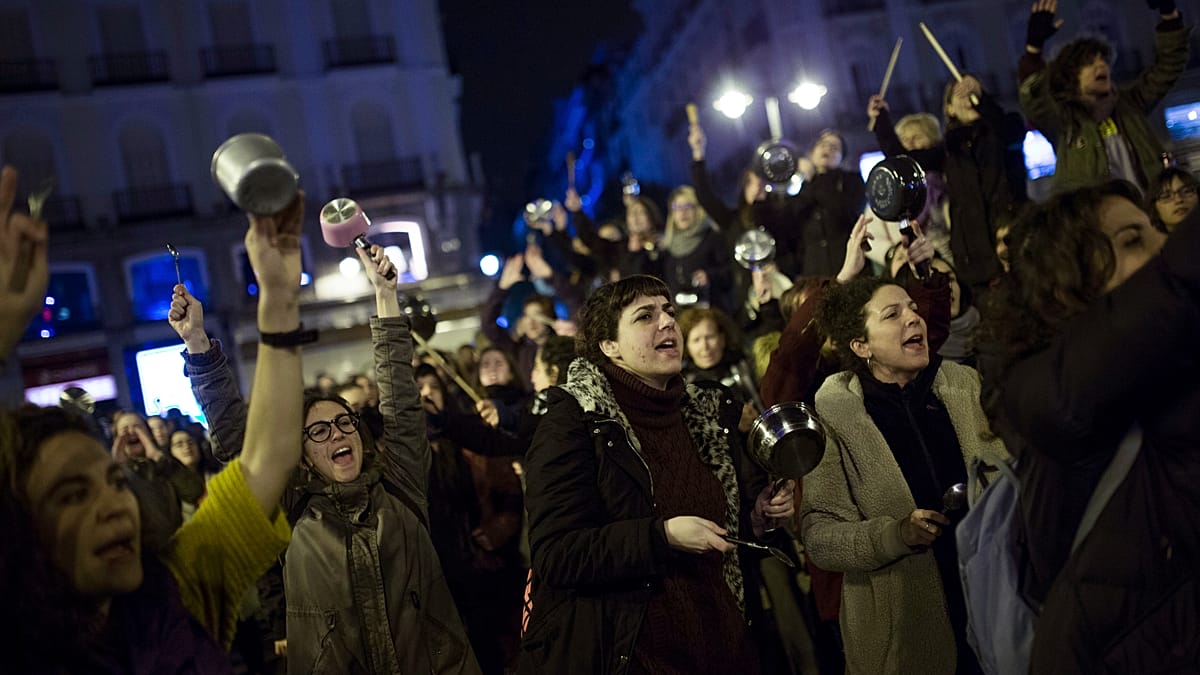
On 25 November, the International Day for the Elimination of Violence against Women, thousands of demonstrators gathered in Madrid, Barcelona, Valencia, Seville, and other Spanish cities to protest against gender-based violence. The marches carried particular weight this year, arriving just days before a general election in which the far-right Vox party is polling at roughly 18%, according to recent averages.
In the capital, the main demonstration snaked from the Cibeles fountain to Puerta del Sol, with Sunday's ballot featuring prominently in chants and on placards. Organised by Comisión 8M, a collective that advocates a trans-inclusive and intersectional form of feminism, the march drew the larger crowd. A separate, smaller rally, led by groups opposed to that approach, headed towards Plaza de España.
Among those joining the Comisión 8M march were Ada Colau, candidate for the left-wing Frente Amplio platform, and Irene Montero, running for Podemos. Begoña Gómez, the wife of Prime Minister Pedro Sánchez, also participated as part of the Socialist delegation.
A decade after La Manada
This year's protests also marked ten years since the gang rape at the San Fermín festival in Pamplona in 2016, a case widely known as “La Manada” that ignited some of the largest feminist demonstrations Spain has seen in recent years. The anniversary served as a reminder of how far the movement has come—and of the internal fractures that have emerged since.
Spain's feminist movement has become increasingly divided over issues such as transgender rights, reflecting debates also playing out in the United Kingdom and elsewhere. The Comisión 8M march embraced a broad, inclusive definition of feminism, while the rival demonstration insisted on a more traditional, biologically based framing.
The political stakes were unmistakable. Rebeca Torró, the PSOE's general campaign coordinator, called on women to vote on Sunday in “self-defence”, presenting her party as the defender of women's rights against political forces that reject the very concept of gender-based violence. Vox has long questioned the existence of structural gender violence and has proposed abolishing specific gender-based violence laws.
The timing of the marches, so close to the election, turned them into a political battleground. Polls suggest the vote could produce a fragmented parliament, with the far right potentially holding significant influence. For many demonstrators, the message was clear: the fight against gender violence is inseparable from the fight at the ballot box.
Spain has one of Europe's most robust legal frameworks against gender-based violence, introduced under the Socialist government of José Luis Rodríguez Zapatero in 2004. Yet activists argue that implementation remains uneven, and that the rise of far-right rhetoric threatens to roll back hard-won gains.
The demonstrations also highlighted broader European concerns. Similar marches took place in other countries, and the issue of violence against women remains a pressing challenge across the continent. As Spain heads to the polls, the outcome will be watched closely not only in Madrid but also in Brussels and other European capitals, given the potential for a far-right surge to reshape the country's political landscape.
For now, the streets have spoken. Whether their message translates into votes on Sunday will determine the next chapter in Spain's ongoing struggle for gender equality.



