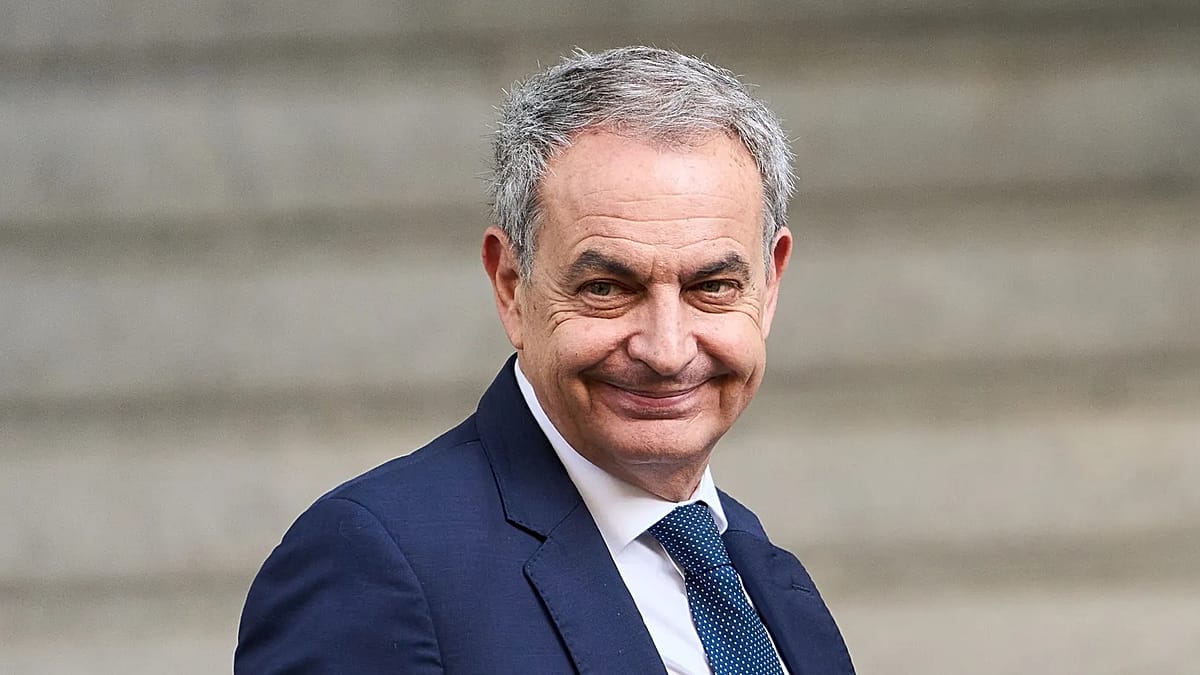
A judge investigating Spain's former Prime Minister José Luis Rodríguez Zapatero for alleged influence peddling has widened the probe to include his two daughters and his secretary, the Audiencia Nacional court confirmed on Thursday. The move escalates a politically sensitive case that has already seen Zapatero become the first former or serving Spanish head of government to appear as a suspect in a corruption inquiry.
Judge José Luis Calama notified Alba and Laura Rodríguez Espinosa of their new status, granting them the right to appear in proceedings and exercise their defence. The court statement said both daughters ran a company whose operations “appear circumstantially to be linked to the scheme under investigation,” adding that the firm held “an instrumental role in the channelling, concealment or facilitation of relevant operations.” Police had already searched the company’s offices in May.
Zapatero’s secretary, Gertrudis Alcazar, has also been placed under formal investigation. The former prime minister, who led Spain from 2004 to 2011, testified for three hours before Judge Calama on Wednesday, insisting he had always acted “with decency and honesty” and denying any illicit ownership of companies, money, or financial products.
Background of the Probe
The investigation centres on the €53 million bailout of the small airline Plus Ultra in 2021. Calama has said there is evidence to suggest Zapatero headed a structure that used “opaque financial channels” to conceal money movements and obtain bribes in exchange for his efforts to secure the rescue package. A police search of Zapatero’s office uncovered jewellery and luxury watches valued at €1.3 million, prompting the judge to also probe potential tax fraud and smuggling. Zapatero’s entourage attributes the hoard to a family inheritance; Spanish media have reported the jewels were a gift from a former king of Saudi Arabia.
The case comes as a series of corruption investigations into Prime Minister Pedro Sánchez’s family and former top allies threaten to destabilise his government. A two-year inquiry into Sánchez’s wife, Begoña Gómez, for alleged influence peddling is nearing a decision on whether to send her to trial. Verdicts are also expected in separate trials of Sánchez’s former right-hand man José Luis Ábalos and his brother David Sánchez.
Recent revelations about a police probe into a former Socialist activist suspected of leading a plot to sabotage investigations into Sánchez’s entourage have added further pressure. The conservative and far-right opposition have demanded Sánchez’s resignation and early elections, but the prime minister insists he will serve out his term until 2027.
Political scientist Astrid Barrio of the University of Valencia told AFP that the investigation into Zapatero imperils the reputation of a “moral beacon” for Sánchez and the Socialists. Sánchez had vowed to clean up Spanish politics when he took office in 2018, after the main conservative Popular Party was convicted in its own graft affair. The Socialists have since suffered four regional election defeats since late 2025, a possible precursor to next year’s national vote.
For more on the initial charges, see our earlier report on Zapatero’s court appearance. The widening probe also echoes broader European concerns about political corruption, as seen in a recent Swedish case.