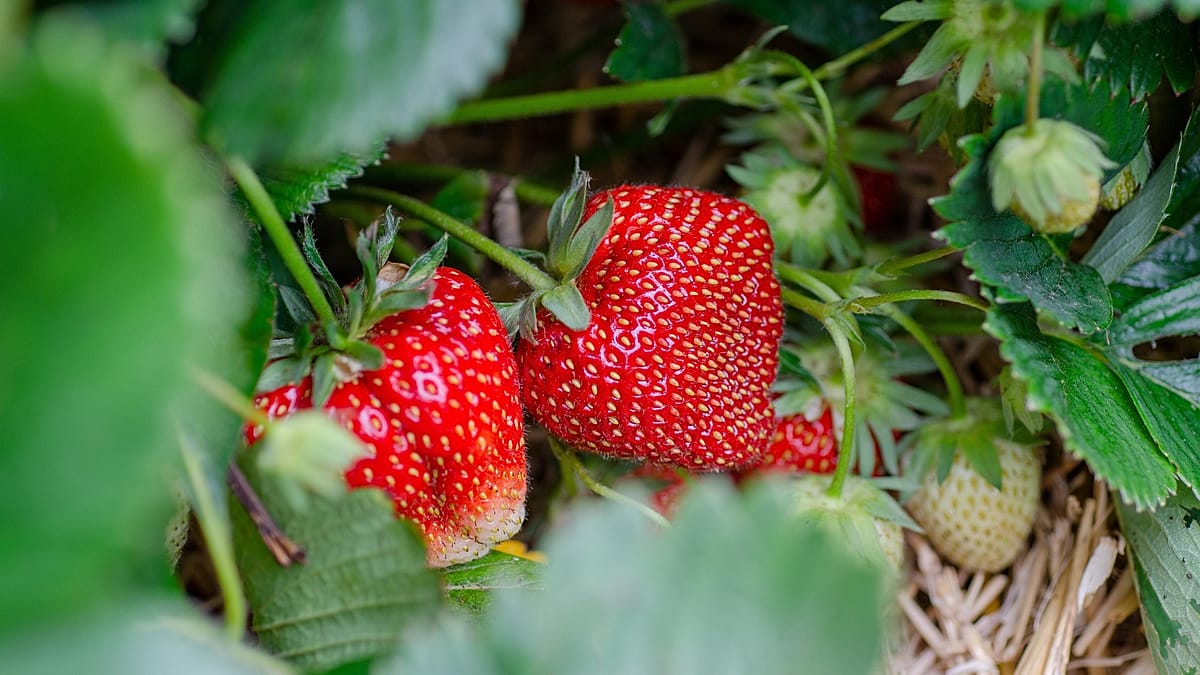
A study published today by PAN Europe, in collaboration with Ecologistas en Acción and other NGOs, reveals that Spanish strawberries are among the least contaminated with pesticides in the European Union. The research analysed strawberry samples from 11 countries, finding that 88% of European strawberries contained pesticide residues. In contrast, Spanish samples from conventional farming showed only two authorised pesticides, both within legal limits.
PFAS and hazardous chemicals widespread
At the European level, 58% of strawberries tested positive for PFAS, the so-called 'forever chemicals' that persist in the body and environment. More than half of the pesticides detected belong to the most hazardous category authorised in the EU—candidates for substitution that were supposed to be phased out since 2011. The findings challenge arguments for relaxing pesticide regulations and underscore the need for stricter enforcement.
Organic strawberries, both in Spain and across Europe, were completely free of residues in all samples analysed. This reinforces organic consumption as the safest option against toxic substances. Kistiñe García, coordinator of the toxic substances group at Ecologistas en Acción, stated: "Not only are organic strawberries free of pesticides, but so is a high proportion of those grown conventionally, which shows that Spain can and must farm without pesticides."
The authors argue that these results undermine the case for easing pesticide rules and call for a more rigorous application of existing regulations. The study also highlights other impacts of intensive strawberry farming, including high water consumption and poor working conditions for women in the sector, which Koldo Hernández, the organisation's water programme coordinator, described as "semi-slavery."
Spain's relatively clean record aligns with broader European trends in environmental quality. For context, Europe's cleanest swimming waters are found in Cyprus, Greece, Bulgaria, and Austria, reflecting varying standards across the continent.
The study comes amid ongoing debates in Brussels about pesticide reduction targets under the Farm to Fork strategy. Environmental groups have pushed for stricter limits, while agricultural lobbies warn of potential yield losses. The data from Spain suggests that lower pesticide use is feasible without compromising production.
Consumer awareness is also rising. A recent survey found that nearly half of European travellers plan 'skillidays' this summer, indicating a shift toward experiential travel that often includes farm visits and organic food tours.
The findings are a reminder that food safety and environmental health are interconnected. As Europe grapples with the legacy of industrial agriculture, the Spanish strawberry case offers a practical example of how conventional farming can reduce chemical inputs without sacrificing quality.