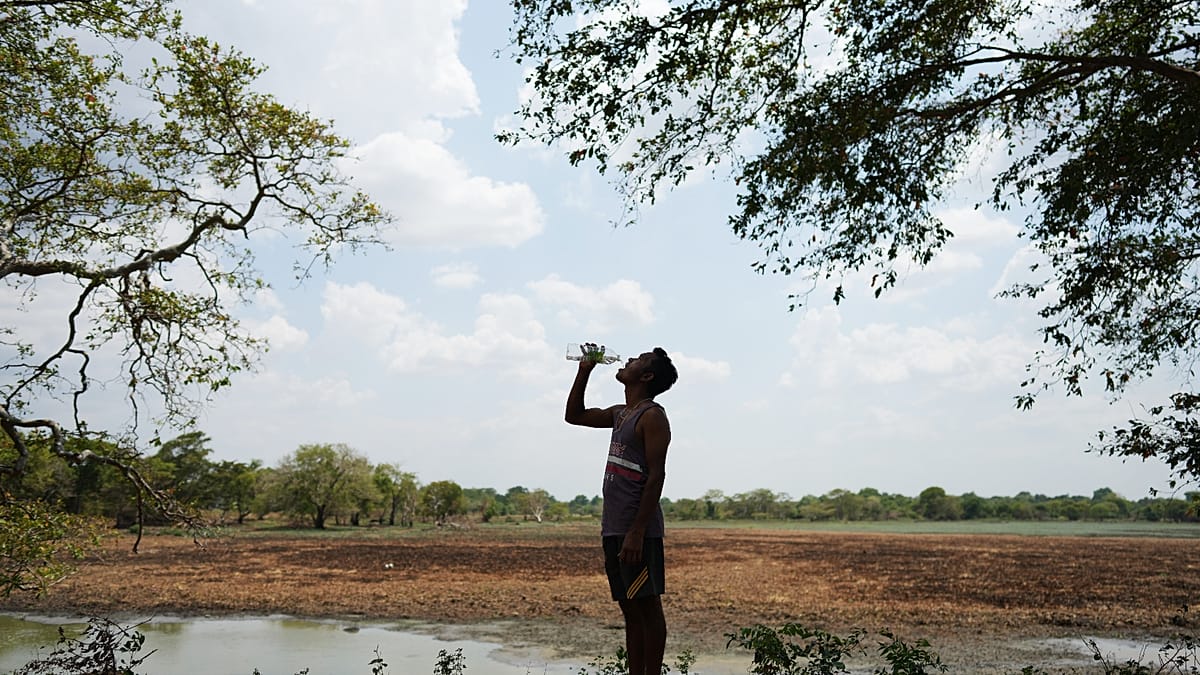
A prolonged drought across central Sri Lanka is taking a heavy toll on rural communities and ecosystems. In districts such as Matale, Kandy, and Nuwara Eliya, wells that have supplied households and small farms for generations are now running dry, forcing families to ration water and rethink their livelihoods.
Farmers bear the brunt
For smallholder farmers, the lack of rainfall has been devastating. Paddy fields lie cracked and fallow, vegetable plots have withered, and livestock are struggling to find pasture. Many farmers have seen their incomes collapse, with some resorting to seasonal migration to urban centres in search of work. Local agricultural officers report that the drought has also delayed planting for the next season, raising fears of prolonged food insecurity.
Water tankers are now a common sight in the worst-affected villages, but supplies are limited and the queues are long. The government has announced emergency relief measures, including the distribution of bottled water and the deployment of additional tankers, but residents say these efforts are insufficient to meet the scale of the crisis.
Wildlife under pressure
The drought is not only a human crisis. In national parks and forest reserves, elephants, deer, and other wildlife are congregating around the few remaining water holes, which have shrunk to muddy puddles. Park rangers warn that the concentration of animals increases the risk of disease transmission and intensifies competition for scarce resources. It also brings wildlife into closer contact with human settlements, leading to more frequent raids on crops and, in some cases, dangerous encounters.
Conservationists are calling for urgent measures to protect both wildlife and people, including the creation of artificial water points and better fencing around vulnerable villages. They also stress the need for long-term strategies to manage water resources more sustainably, as climate models suggest that such droughts may become more frequent and severe.
A broader regional challenge
While Sri Lanka's drought is a national tragedy, it echoes a wider global challenge. Across Europe and beyond, communities are grappling with water scarcity, from the parched fields of Andalusia to the drying reservoirs of Cyprus. The European Union has been investing in water efficiency and drought resilience, but experts argue that more needs to be done. As one Greek climate diplomat recently warned, the world faces a 'meta-crisis' where food, water, and energy systems are increasingly interconnected and vulnerable.
Innovations are emerging to help address water stress. For example, Bulgaria's battery storage boom is helping to cushion its drought-hit power grid, demonstrating how energy and water challenges can be tackled together. Meanwhile, researchers are exploring novel solutions such as underwater solar cells that could reduce evaporation from reservoirs while generating clean energy.
For Sri Lanka, the immediate priority is to provide relief to affected communities and prevent further hardship. But the longer-term lesson is clear: water is a finite and precious resource, and adapting to a drier future requires both local action and global cooperation. As the drought in central Sri Lanka shows, the cost of inaction is measured not only in lost harvests and empty wells, but in the fraying of the natural world that sustains us all.