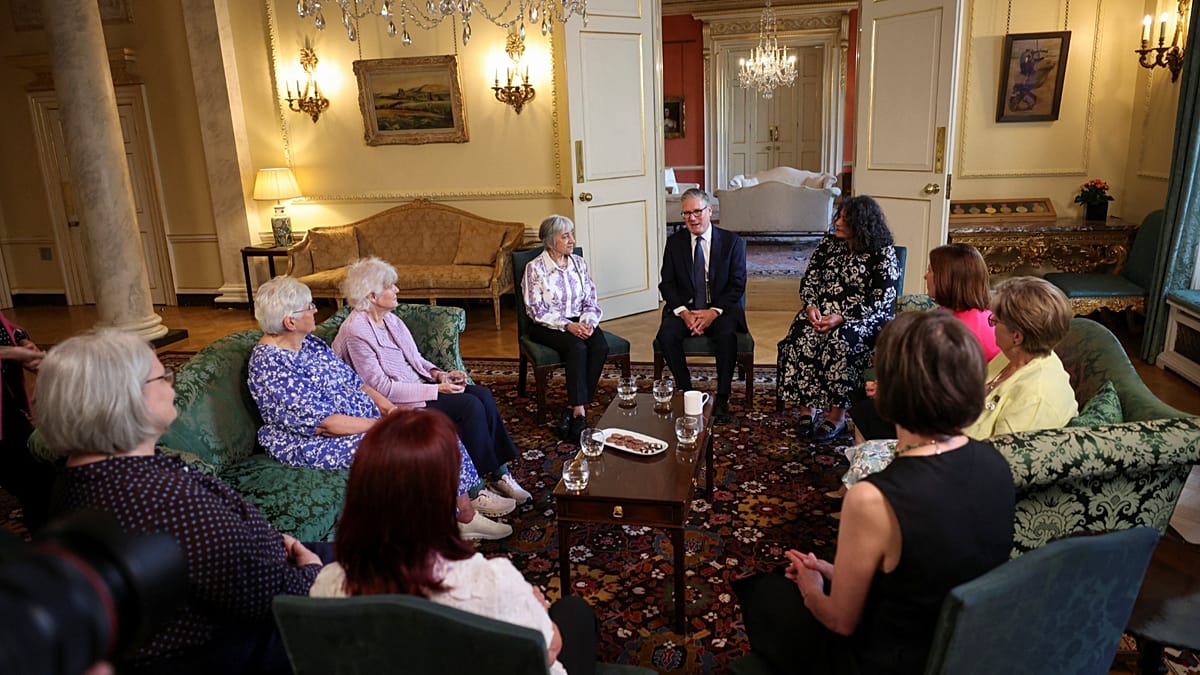
British Prime Minister Keir Starmer delivered a formal state apology on Thursday for the forced adoption of tens of thousands of babies born to unwed mothers between 1949 and 1976, describing the practice as a “stain” on the country’s history. Speaking in the House of Commons, Starmer acknowledged that the state bore responsibility for systems that enabled these adoptions, which campaigners say involved coercion, deception, and bullying.
An estimated 185,000 babies were taken from their mothers in England and Wales during this period, often under pressure from social workers, medical staff, and religious organisations. Unmarried mothers were frequently shamed, hidden away in institutions, and told their children would be better off without them. Many were given no choice but to sign adoption papers.
“Children grew up believing that they were unwanted. Young mothers were told that they were immoral, and that their babies would be better off without them,” Starmer said, adding that the impact of such acts “lasts a lifetime.” The apology came after years of campaigning by affected individuals, some of whom were present in the public gallery of the Commons.
State Responsibility Acknowledged
In 2022, the Parliament’s Joint Committee on Human Rights urged the then-Conservative government to apologise for the suffering caused by public institutions and state employees. Scotland and Wales issued apologies in 2023, but the UK government under the Conservatives refused, arguing that “the state did not actively support these practices.”
Starmer, however, took a different stance. “These were not isolated or accidental acts, they were practices embedded within systems across local authorities, across voluntary and faith-based institutions, and in health and social care services,” he said. “The state bears responsibility for the systems it funded and legitimised which enabled these practices to occur.”
The apology marks a significant shift in official recognition of the harm done. Campaigners have long argued that an apology is a necessary step toward releasing them from the shame they were made to feel. Starmer directly addressed this: “The shame is not yours, the shame was never yours. The shame is ours.”
The issue has parallels in other European countries, where similar practices of forced adoption or coerced relinquishment of children occurred, often tied to social stigma and institutional pressure. In Ireland, for example, the Commission of Investigation into Mother and Baby Homes found widespread abuse and forced adoptions, leading to a state apology in 2021. The UK’s apology may encourage further scrutiny of historical practices across the continent.
Starmer’s government has also been active on other fronts, including unveiling an £80 billion defence plan with a focus on drones and AI, and maintaining a steady foreign policy course on Ukraine and EU ties, as Foreign Secretary David Lammy recently outlined. The apology underscores a broader commitment to accountability and human rights, which aligns with the values of many EU member states.
For the affected families, the apology is a long-overdue acknowledgment. Many have spent decades seeking recognition of the trauma they endured. While the apology cannot undo the past, it may help heal wounds that have festered for generations. As one campaigner put it, “This is not the end, but it is a beginning.”