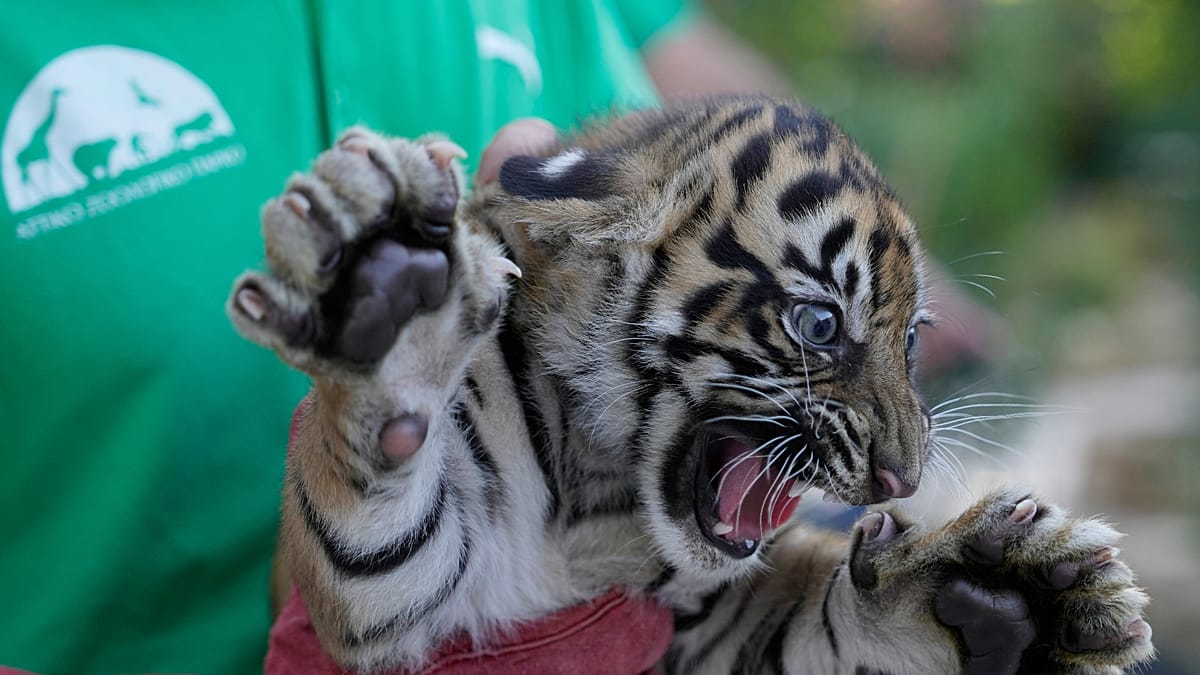
Three Sumatran tiger cubs, born at a zoo near Athens, have undergone their first comprehensive health checks, a vital step in the global effort to preserve one of the world's most endangered subspecies. The procedure, which took place at the Attica Zoological Park, involved vaccinations, microchipping, and a thorough physical examination.
Conservation in action
The cubs, whose births were celebrated by conservationists, are part of a coordinated breeding program aimed at bolstering the genetic diversity of Sumatran tigers in captivity. With fewer than 400 individuals estimated to remain in the wild, each healthy birth is a significant contribution to the species' survival.
Veterinarians at the zoo carefully handled the cubs, ensuring they received the necessary immunizations against common feline diseases. The microchips, implanted under the skin, will allow keepers and researchers to monitor the cubs' movements and health data throughout their lives, both within the zoo and potentially in future conservation projects.
"These checks are routine but essential," said Dr. Maria Papadopoulou, the zoo's head veterinarian. "They give us a baseline for each cub's health and ensure they are protected against diseases that could be devastating to the population."
A European network for endangered species
The Attica Zoological Park participates in the European Association of Zoos and Aquaria's (EAZA) ex-situ breeding program, which coordinates breeding efforts across the continent. This network of zoos, from Lisbon to Warsaw, plays a crucial role in maintaining healthy captive populations of endangered species, including the Sumatran tiger.
The cubs' birth and successful health checks highlight the importance of such collaborative efforts. As wild habitats continue to shrink due to deforestation and human encroachment, these captive populations serve as a genetic reservoir and a potential source for future reintroduction initiatives, though such efforts remain complex and distant.
For now, the three cubs will remain under the watchful eyes of their keepers, growing stronger and more curious each day. Their progress will be closely monitored, and they are expected to become ambassadors for their species, raising awareness among the thousands of visitors who come to the zoo each year.
The health checks come at a time when conservation issues are increasingly in the spotlight across Europe. From innovative waste management on Greek islands to broader environmental policies, the continent is grappling with how to balance human activity with biodiversity protection.
While the tiger cubs are a world away from the political debates in Brussels, their existence is a reminder of the interconnectedness of global conservation efforts. As European institutions push for stricter wildlife trade regulations and habitat protection, the work of zoos like Attica becomes ever more relevant.
The cubs' first health check is a small but meaningful milestone in a long-term effort. It underscores the dedication of the keepers, veterinarians, and conservationists who work tirelessly behind the scenes to ensure that future generations might still see these magnificent animals, whether in the wild or in carefully managed sanctuaries.
As the cubs grow, they will eventually be introduced to the public, offering a rare glimpse of a species that is fighting for its very existence. For now, they are thriving, a testament to the power of coordinated conservation.