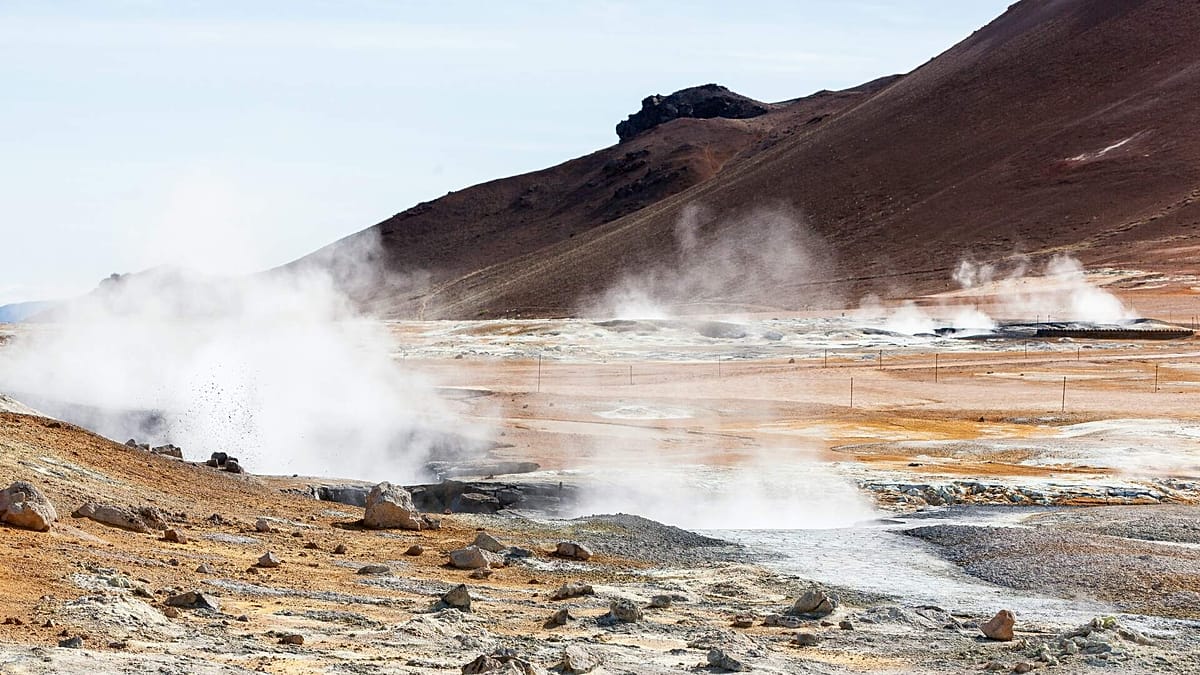
Deep beneath the Earth's surface lies a vast, largely untapped energy source that could reshape the global power landscape. Superhot geothermal energy—targeting rocks hotter than 300°C—promises constant, carbon-free electricity almost anywhere on the planet. The International Energy Agency (IEA) recently flagged it as a source of “clean, firm power” in its State of Energy Innovation report, underscoring its potential to complement intermittent renewables like wind and solar.
What Makes Superhot Geothermal Different?
Conventional geothermal plants rely on naturally occurring underground reservoirs of hot water or steam, typically found in volcanically active regions or along tectonic plate boundaries. Iceland, for instance, has used geothermal water to heat homes for nearly a century, and today about 30% of its electricity comes from such sources. Superhot geothermal goes deeper—drilling several kilometres to reach rocks above 300°C, where water enters a supercritical state, carrying far more energy per unit volume. According to the US-based Clean Air Task Force, tapping just one per cent of these resources could provide more than eight times the current global electricity generation.
The main obstacle has been drilling deep enough to withstand extreme heat and pressure. Conventional systems, many adapted from oil and gas, struggle under these conditions, and costs rise sharply with depth. That has spurred innovation. Quaise Energy, a startup spun out of the Massachusetts Institute of Technology, plans to build what it calls the world's first superhot geothermal power plant in Oregon by 2030. The company will use conventional drilling for the upper sections of its wells, then switch to millimetre-wave technology—high-frequency electromagnetic waves that melt and vaporise rock rather than cutting it mechanically. If successful, the process could allow wells to reach far deeper resources than existing technology permits. Water would be pumped underground, heated by the surrounding rock, and returned as steam to drive turbines before being recycled.
Quaise says each well could deliver 50 megawatts of always-on renewable power—enough for tens of thousands of homes—with plans to scale to 200 megawatts soon after. That would be a significant contribution to a world struggling to cut emissions while meeting rising energy demand.
Why Europe Should Pay Attention
While the most advanced project is in the United States, Europe is actively pursuing superhot geothermal. Researchers in Iceland recently secured €10 million in EU funding to develop similar projects. Last year, New Zealand entered a cooperative agreement with Iceland to advance geothermal technology as part of its long-term energy security plans. The IEA notes that advances in deep drilling could make superhot geothermal viable across larger parts of Europe, Asia, and North America—not just volcanically active zones. For Europe, which is grappling with energy security and climate goals, this technology could offer a stable, homegrown power source, reducing reliance on imported fossil fuels. The EU has already taken steps to shield energy supply amid crises, as seen in its consideration of suspending methane penalties to protect supply.
Unlike solar and wind, geothermal runs continuously regardless of weather. However, the plummeting cost of battery storage is helping renewables provide round-the-clock electricity at competitive prices, according to a recent report from the International Renewable Energy Agency (IRENA). Geothermal also boasts a relatively small land footprint compared with large solar or wind farms—a factor that could ease land-use conflicts in densely populated Europe.
Challenges and Risks
No commercial superhot geothermal plant is operating yet. Researchers must prove that drilling systems, underground rock formations, and power infrastructure can withstand extreme conditions over long periods. There are also environmental concerns. Geothermal drilling can trigger small earthquakes—a phenomenon known as induced seismicity. While most are too small to be felt, some can be serious. In 2017, a magnitude 5.4 earthquake near a geothermal site in Pohang, South Korea, caused widespread damage, believed to be linked to high-pressure fluid injection at the site.
Despite these hurdles, the potential returns are difficult to ignore. The Clean Air Task Force estimates that about two per cent of the geothermal energy between three and ten kilometres beneath the Earth's surface could provide the equivalent of 2,000 times the current energy demand of the United States alone. For Europe, where energy security and decarbonisation are top priorities, superhot geothermal represents a tantalising—if still unproven—opportunity. As the EU's climate chief has called for a radical energy shift, this deep-Earth resource could become a key part of the continent's low-carbon future.