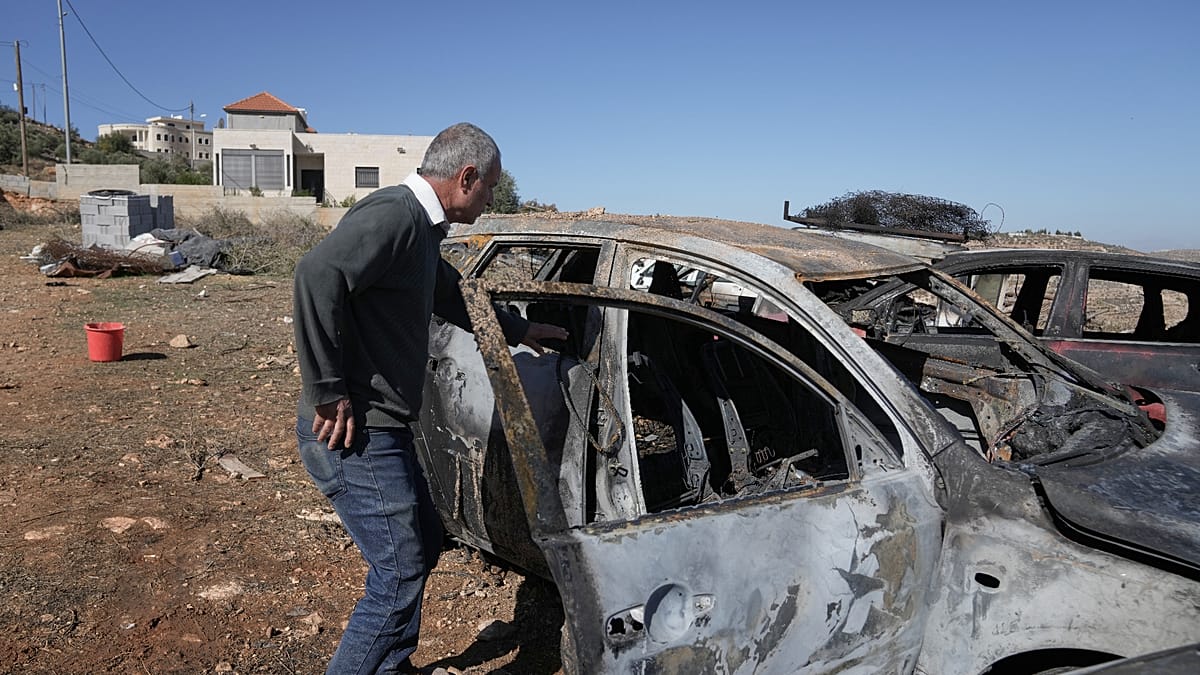
Residents of four Palestinian villages in the Israeli-occupied West Bank woke on Sunday to find burnt-out cars, damaged trucks, and anti-Arab graffiti scrawled on walls. The overnight incidents, which local activists attribute to Israeli settlers, have heightened tensions in an area already simmering with unrest.
The affected villages, located in the central and northern parts of the West Bank, saw a coordinated series of attacks that left property destroyed and communities shaken. According to eyewitness accounts, groups of settlers entered the villages under the cover of darkness, setting vehicles ablaze and leaving behind inflammatory messages.
A pattern of escalating violence
This is not an isolated event. Over the past year, there has been a noticeable uptick in settler-related violence across the West Bank, with Palestinian villages and farms frequently bearing the brunt. Human rights groups have repeatedly called on Israeli authorities to intervene, but prosecutions remain rare.
"We are living in constant fear," said a resident of one of the targeted villages, who asked not to be named for safety reasons. "They come at night, destroy our property, and leave. The army does little to stop them."
The Israeli military has not yet issued an official statement regarding the incidents. However, similar attacks in the past have often been dismissed as "price tag" actions by fringe extremist groups, a term used to describe retaliatory violence against Palestinians.
The European Union has consistently condemned settler violence and called on Israel to protect Palestinian civilians. In a recent report, the EU's foreign policy arm noted that the lack of accountability for such attacks undermines any prospects for a two-state solution.
Meanwhile, the broader regional context remains volatile. The West Bank has seen increased Israeli military operations, particularly in cities like Jenin and Nablus, while diplomatic efforts to revive peace talks have stalled. The situation is further complicated by ongoing conflicts elsewhere in the Middle East, which continue to draw international attention and resources.
For the villagers, the immediate concern is rebuilding what was lost. Many rely on their vehicles for work and transport, and the destruction has dealt a severe blow to their livelihoods. Local NGOs are already mobilizing to provide assistance, but they warn that without a political solution, such attacks will likely recur.
The international community, including European capitals, has urged restraint on both sides. However, with no visible progress on the ground, the cycle of violence appears set to continue. As one activist put it, "We are not asking for much—just to live in peace and dignity."