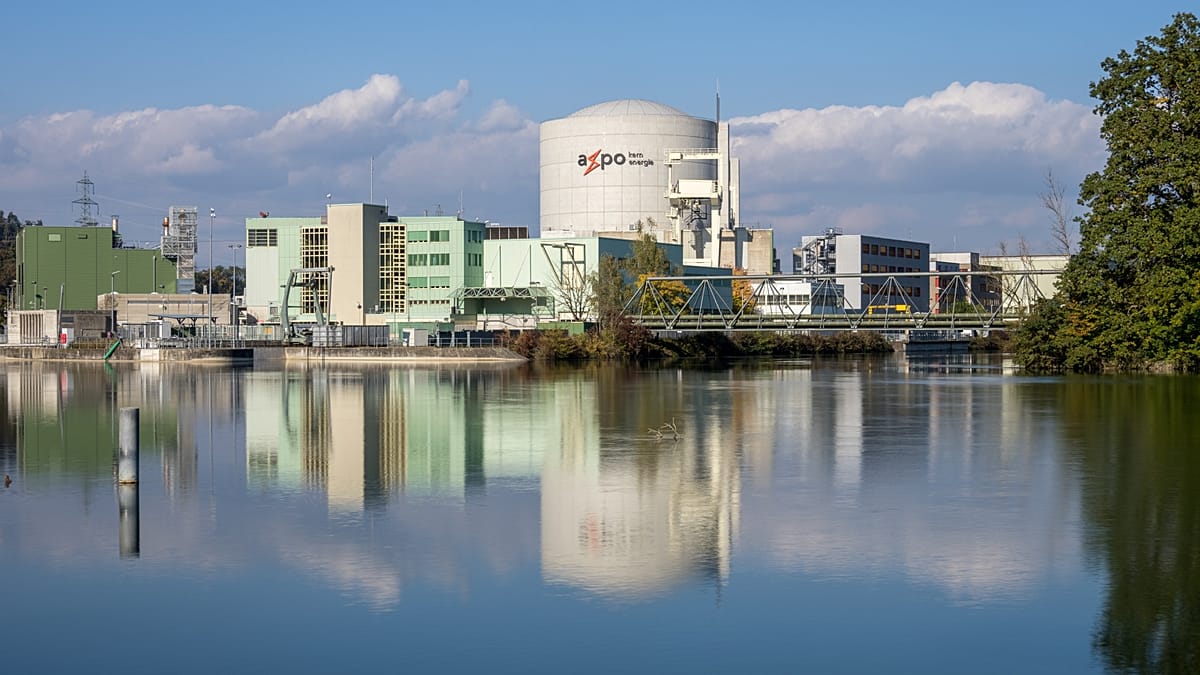
Switzerland's Beznau nuclear power plant, the oldest still operating in Europe, has returned to full operation after a summer of repeated shutdowns triggered by heatwaves that pushed river temperatures to unusual highs. The plant's operator, Axpo, confirmed on Friday that both reactors are now back on the grid.
The second reactor at Beznau, located in the northern canton of Aargau, was reconnected on Thursday evening, Axpo said. The company noted that the unit is "now gradually returning to power operation and is expected to reach full capacity within approximately two days." Reactor 1 had already resumed service on 21 August.
Beznau draws its cooling water from the Aare River, which drains nearly half of Switzerland before flowing into the Rhine. This summer's prolonged heatwaves sent water temperatures in the river above the legal limits for cooling discharge, forcing the plant to cut output or shut down entirely in June and again in July. Reactor 2 was also taken offline on 4 August for scheduled refuelling, during which 20 of the 121 fuel assemblies in the reactor core were replaced.
The shutdowns highlight a growing challenge for European nuclear operators as climate change makes heatwaves more frequent and intense. Several other nuclear plants across the continent, from France to Germany, have had to reduce output or temporarily halt operations in recent years because of low river levels or warm water that cannot safely absorb waste heat.
Beznau's two reactors are among the oldest in the world. Reactor 1 first came online in 1969, and Reactor 2 followed in 1971. Together they supply roughly a tenth of Switzerland's electricity demand. Nuclear energy overall accounts for just over a third of the country's power mix, with the remainder coming largely from hydroelectricity and, increasingly, renewables.
Ageing fleet under scrutiny
The plant's age has long been a point of debate in Switzerland, where energy policy has shifted significantly since the 2011 Fukushima disaster. The Swiss government decided to phase out nuclear power gradually, but the four existing reactors—two at Beznau, one at Gösgen, and one at Leibstadt—are allowed to operate as long as they meet safety standards. In practice, that means they could run for decades more, provided regulators approve.
Axpo has invested heavily in upgrades to keep Beznau running safely, but critics argue that the plant's vulnerability to heatwaves is a sign that it is no longer fit for purpose in a warming climate. The Swiss Federal Nuclear Safety Inspectorate has said the plant's safety systems are adequate, but it has also required additional measures to cope with extreme weather events.
The recent shutdowns come as Europe grapples with broader questions about energy security and the role of nuclear power in decarbonising the grid. While some countries, such as France, are doubling down on nuclear, others, like Germany, have already shut their last reactors. Switzerland's position remains somewhere in between, with a planned phase-out but no firm timeline for closure.
For now, Beznau's return to full capacity will be welcome news for Swiss grid operators, who have had to rely on imports and other sources during the summer's outages. But the episode underscores how even the most established energy infrastructure can be disrupted by the changing climate—a reality that European policymakers will have to confront as they plan for the future.