As Tajikistan marks 35 years since the collapse of the Soviet Union, the Central Asian nation is using the anniversary to project a new image: one of a stable, outward-looking country ready to engage with the world on issues from water security to artificial intelligence.
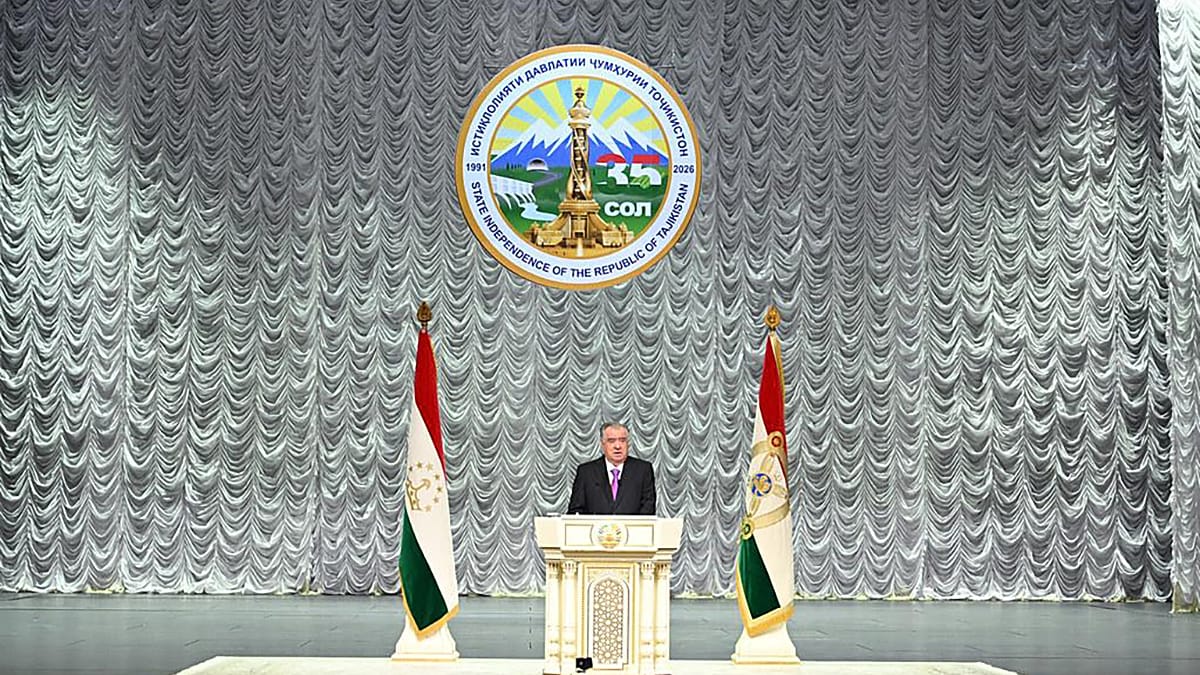
In a speech in Dushanbe on 8 September, President Emomali Rahmon, who has led the country since 1992, underscored Tajikistan's commitment to international peace and highlighted its role in advancing a UN resolution for a “Decade for Strengthening Peace for Future Generations,” set to begin in 2027. The initiative, which Tajikistan championed, reflects a broader strategy to position the country as a constructive actor on the global stage.
Another Tajik-led proposal resulted in the UN General Assembly declaring 31 August as the International Day of Safe, Secure and Trustworthy Artificial Intelligence. Together, these two resolutions illustrate how Dushanbe is seeking to shape the international agenda on digital transformation and sustainable development.
From civil war to regional stability
Tajikistan declared independence on 9 September 1991, but the early years were marred by a devastating civil war that ended with a peace agreement in 1997. Since then, President Rahmon has made peace, national unity, and stability the cornerstones of his rule. The country has rebuilt its infrastructure, expanded energy and transport networks, and invested in education and social services, while strengthening ties with neighbours and the wider world.
Anniversary celebrations are taking place across the country, including cultural performances in Bokhtar and a military parade in the capital. In his address at the National Theatre, Rahmon spoke of his vision for Tajikistan to be recognised internationally as a forward-looking society, a goal reflected in investments in digital skills and institutions.
This ambition is also visible in the country's foreign policy. Tajikistan has been an active participant in regional forums and has sought to position itself as a bridge between Central Asia and the broader international community. The country's mountainous terrain, home to the Pamir range and vast glaciers, makes it a critical source of freshwater for the region, a fact that underpins its diplomatic priorities.
Water, energy, and technology
Tajikistan has made water security a central pillar of its international engagement. It was instrumental in establishing the UN's Water Action Decade (2018-2028), which has fostered cross-border projects and partnerships aimed at averting a global water crisis. The country's own water strategy is closely tied to its energy plans, particularly the development of the Rogun Hydropower Plant, a World Bank-funded project that aims to boost domestic energy security and enhance regional connectivity.
The intersection of water and technology is another area of focus. In May 2026, Tajikistan and the UN co-hosted a forum in Dushanbe titled “Water and AI: A Two-Way Nexus,” exploring how artificial intelligence can support sustainable water management while also considering the water demands of AI itself. This initiative highlights a pragmatic approach to emerging technologies, one that seeks to harness their potential while mitigating their environmental impact.
For European observers, Tajikistan's trajectory offers a case study in post-Soviet state-building and the challenges of balancing development with environmental stewardship. The country's efforts to engage with international institutions and its focus on issues like water and AI resonate with broader European concerns about sustainability and digital governance.
As the anniversary celebrations unfold, Tajikistan is looking ahead to the next 35 years with a clear sense of purpose. The challenges are significant—from climate change and resource management to economic diversification—but the country's leadership is betting on a strategy of international engagement and technological innovation to meet them.
In a region often overshadowed by larger powers, Tajikistan is carving out a niche as a voice for peace and sustainability. Whether it can translate these diplomatic initiatives into tangible progress at home remains to be seen, but the direction is set.