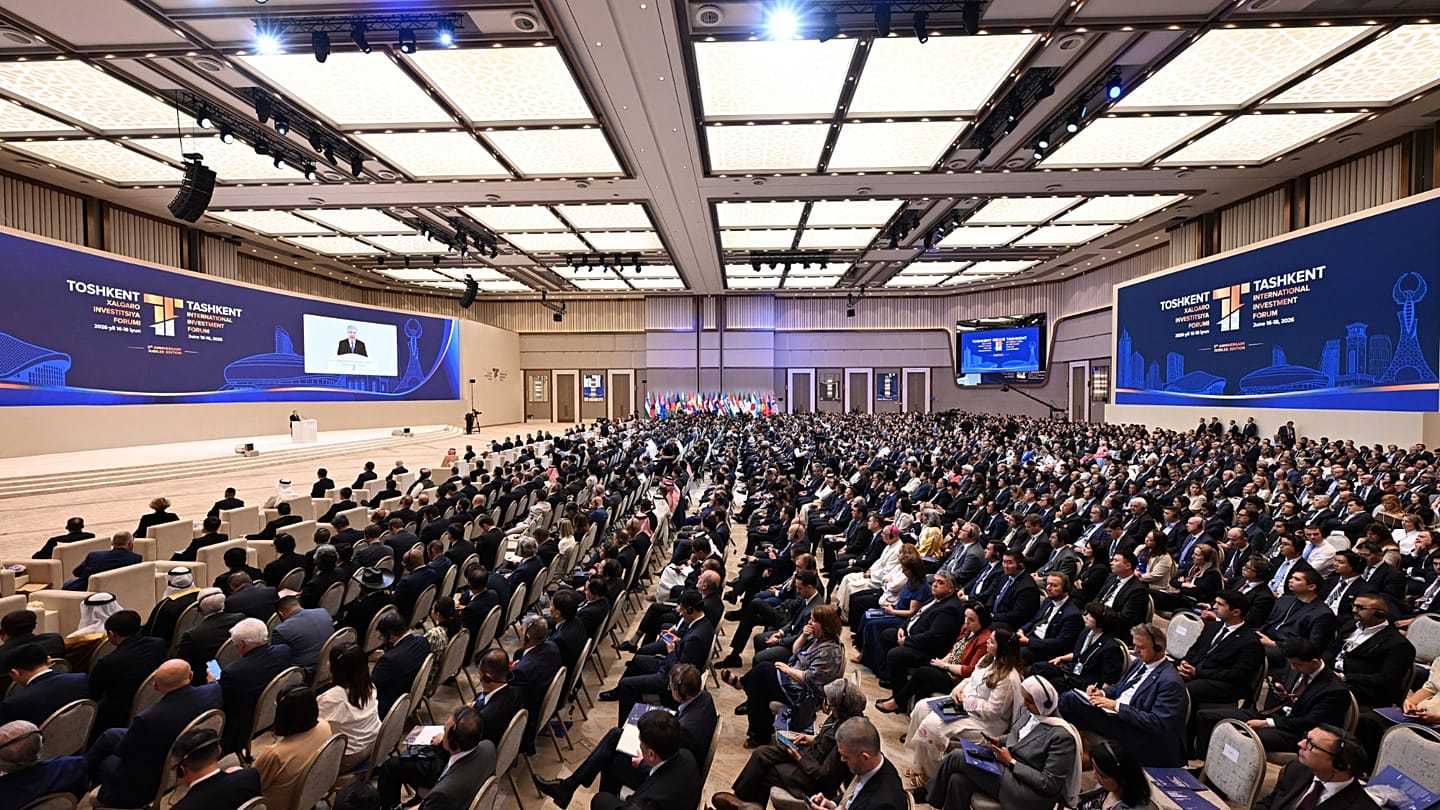
The Tashkent International Investment Forum concluded with a record €37.6 billion in signed agreements, underscoring Central Asia's growing appeal as a destination for European and global capital. More than 10,000 delegates from 102 countries examined market access, transport corridors, renewable energy, and digital trade—areas where the European Union has been deepening its engagement.
Uzbekistan, the host nation, has been actively courting foreign investment as part of its broader economic liberalisation under President Shavkat Mirziyoyev. The forum's outcome signals that international investors are increasingly willing to commit to projects in the region, particularly those that connect Central Asia to European supply chains.
European Interest in Central Asian Infrastructure
Several deals announced at the forum involve European companies and institutions, reflecting a strategic pivot by Brussels toward the region. The EU has been promoting the Global Gateway initiative, which aims to mobilise up to €300 billion in investments worldwide, with a focus on sustainable infrastructure. Central Asia, with its abundant renewable energy potential and strategic location along the Middle Corridor—a trade route linking China to Europe via the Caspian Sea and the Caucasus—has become a priority.
As Europe pushes regulatory stability as key to Central Asia investment, the forum highlighted the need for predictable legal frameworks to turn commitments into operational projects. European delegates emphasised that while the region offers significant opportunities, investors require clear rules on property rights, dispute resolution, and currency convertibility.
Transport links were a major theme. The Middle Corridor, which bypasses Russia, has gained urgency since the war in Ukraine disrupted traditional east-west trade routes. Several agreements signed in Tashkent aim to upgrade rail and road connections between Uzbekistan, Kazakhstan, and the Caspian ports, reducing transit times for goods moving between Europe and Asia.
Green Energy and Digital Exports
Renewable energy accounted for a substantial portion of the deals. Uzbekistan has set a target of generating 25% of its electricity from renewables by 2030, and European firms are well positioned to supply solar and wind technology. The forum saw memoranda of understanding with German and French energy companies for the construction of solar parks and battery storage facilities.
Digital exports also featured prominently. Uzbekistan has been investing in IT parks and outsourcing hubs, aiming to become a regional centre for software development and business process outsourcing. European tech companies, facing talent shortages at home, are exploring partnerships in Tashkent and Samarkand. The forum included sessions on e-commerce, fintech, and cybersecurity, areas where the EU has regulatory expertise to share.
The scale of the forum—€37.6 billion in deals—is a marked increase from previous editions. In 2023, the event secured around €10 billion. This growth reflects both Uzbekistan's improving business climate and broader geopolitical shifts that are redirecting investment flows toward Central Asia.
For European investors, the region offers diversification away from more volatile markets. The Caucasus and Central Asia are increasingly seen as the next frontier for global investment, with a young population, growing middle class, and untapped natural resources. However, challenges remain, including corruption, bureaucratic inefficiency, and limited access to international finance.
The forum also provided a platform for bilateral meetings. On the sidelines, EU officials discussed with Uzbek counterparts the possibility of a enhanced partnership and cooperation agreement, which would further align Tashkent's regulatory framework with European standards. Such an agreement could unlock additional EU funding for infrastructure and green transition projects.
Uzbekistan's neighbours are also courting European investment. Kazakhstan and the EU signed €10 billion in deals during President Tokayev's Brussels visit earlier this year, covering critical raw materials, hydrogen energy, and transport. The cumulative effect of these engagements is a deepening economic relationship between Europe and Central Asia, one that is likely to accelerate as both sides seek to reduce dependence on Russia and China.
The Tashkent forum's success will be measured not just by the value of signed agreements, but by how many are actually implemented. European investors have learned from past experiences in emerging markets that political will and legal certainty are essential. If Uzbekistan and its neighbours can deliver on their promises, Central Asia could become a significant partner for Europe in the decades ahead.