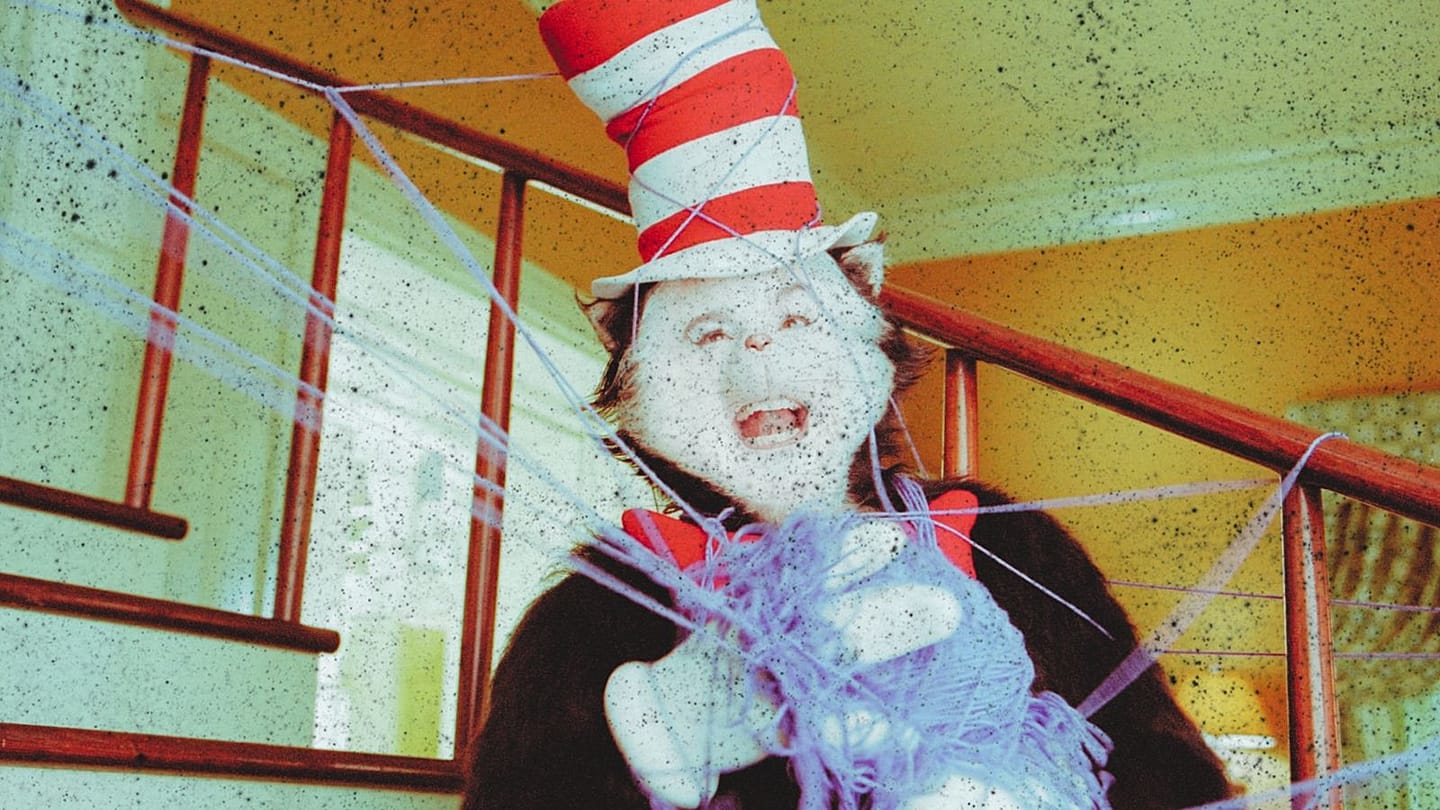
It began as a joke, the kind of absurdist prank that thrives on TikTok. A person dressed as Dr. Seuss's Cat in the Hat — complete with towering red-and-white striped top hat and a mischievous grin — was filmed lurking in residential streets, peering through windows, and slowly chasing unsuspecting pedestrians. Within days, the character had become a viral horror icon, and police forces across the UK and Ireland were fielding concerned calls from residents.
The trend, which appears to have originated in the UK before spreading to Ireland, has prompted official statements from local constabularies. In one widely shared clip, the figure is seen standing motionless in a suburban cul-de-sac in Manchester, while another shows it sprinting after a teenager in Dublin. The videos have racked up millions of views, and the hashtag #CatInTheHat has amassed over 200 million posts on TikTok.
From children's book to nightmare fuel
The Cat in the Hat, created by Theodor Geisel in 1957, has long been a symbol of playful chaos in children's literature. But the internet has a habit of twisting the innocent into the uncanny. The trend taps into a broader appetite for 'analog horror' and 'liminal space' content that has flourished on platforms like TikTok, where creators blend mundane settings with eerie figures to generate unease.
Dr. Linda Papadopoulos, a psychologist and author, told European Pulse that the appeal lies in the disruption of the familiar. "The Cat in the Hat is a character we associate with childhood and safety," she said. "Seeing it in a real, everyday context — outside your window, in a car park — triggers a primal fear response. It's the same reason clowns are terrifying."
The trend has also drawn comparisons to the 'killer clown' panic of 2016, when reports of people in clown costumes menacing passersby swept across Europe and North America. That phenomenon, which began in the US, quickly spread to the UK, France, and Germany, leading to arrests and school lockdowns. The current Cat in the Hat craze appears to be following a similar trajectory.
Police respond, but questions remain
In a statement, Greater Manchester Police said: "We are aware of a social media trend involving a person dressed as a fictional character. While we understand the humorous intent, we urge participants to consider the distress it may cause to vulnerable members of the community. We will take action if any behaviour crosses the line into harassment or public order offences."
Garda Síochána, the Irish national police, issued a similar warning after a sighting in Cork. "We have received multiple reports from concerned citizens," a spokesperson said. "We are liaising with local authorities to identify the individual involved."
The police response has been met with mixed reactions. Some TikTok users have defended the prank as harmless fun, while others have called for stricter moderation. The incident has reignited debates about the platform's role in amplifying potentially dangerous trends. Earlier this year, TikTok agreed to pay $400 million in a US children's privacy settlement, and the company has faced repeated criticism over its content moderation policies.
For its part, TikTok has not issued a public statement about the Cat in the Hat trend. However, the platform's community guidelines prohibit content that encourages "dangerous activities" or "harassment," and it is unclear whether the videos violate these rules. The company has previously taken down similar prank content, but enforcement remains inconsistent.
A symptom of a larger culture
The Cat in the Hat trend is not an isolated incident. It is part of a broader wave of 'prank culture' on TikTok, where creators push boundaries to gain views and followers. From the aura farming battles that have hit Europe's streets to the rise of 'demonic horror' content, the platform has become a breeding ground for viral stunts that blur the line between fiction and reality.
Some experts argue that the trend reflects a deeper societal anxiety. "We're living in a time of uncertainty," said Dr. Papadopoulos. "The Cat in the Hat represents a loss of control, a disruption of order. It's no coincidence that these pranks are happening now."
Others point to the platform's algorithm, which rewards sensational content. "TikTok's recommendation system is designed to maximise engagement," said Dr. Elena Martynova, a media researcher at the University of Amsterdam. "Shocking or unsettling content tends to perform well, which encourages creators to escalate. It's a race to the bottom."
As the trend continues to spread, authorities are urging the public to report sightings rather than confront the figure. In the meantime, the Cat in the Hat has become an unlikely symbol of the internet's capacity to turn the mundane into the monstrous.
For those who find the trend unsettling, there is a simple piece of advice: keep your curtains closed, and maybe skip the next TikTok scroll.