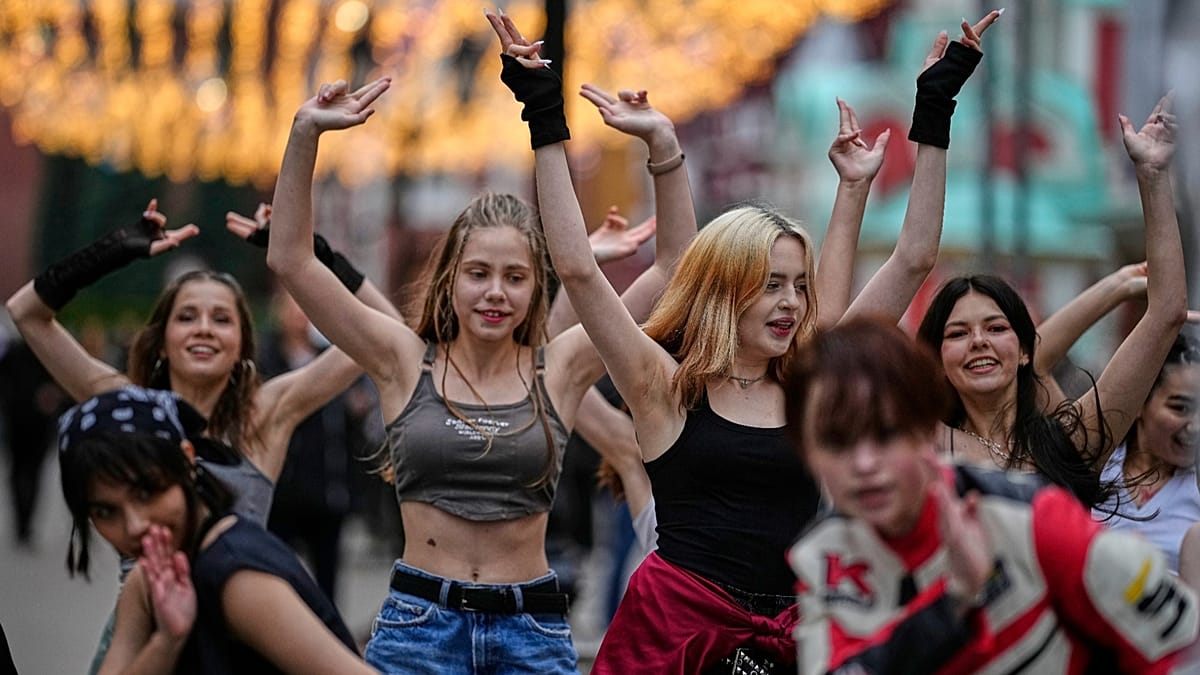
Two teenagers face each other in a crowded square in Madrid, phones raised by onlookers, a soundtrack straight out of a video game thumping in the background. There are no punches, no rap verses, no dance moves. The objective is simpler and stranger: prove who has more aura.
This is the world of aura farming battles, a phenomenon that has migrated from TikTok feeds to public plazas across Latin America and, more recently, into Spain. Participants, mostly aged 14 to 20, compete by stringing together poses, gestures and recreations of the internet's most recognisable memes. The winner is the one who projects the most charisma, style and self-assurance.
For the uninitiated, the performances can look like a private joke. That is precisely the point. Spotting the references is part of the contest, and the more viral material a competitor can weave into their routine, the better their chances of impressing the crowd and the judges.
What does 'aura farming' actually mean?
The term fuses two distinct cultural currents. On TikTok and Instagram, aura has become shorthand for a person's projected coolness, confidence or effortless appeal. Saying someone has “100% aura” is a compliment of the highest order. Farming, meanwhile, comes from video games, where it means repeating actions to accumulate points or resources. Put together, aura farming is the act of deliberately performing gestures or memes to symbolically earn charisma points.
What began as an online expression has turned into a real-world competitive sport. Organised meet-ups have popped up in Mexico, Argentina, Brazil, Peru and Bolivia, and the trend has now crossed the Atlantic to Spain, where events have been held in Madrid and Barcelona. The European iteration is still young, but it is already drawing crowds of curious teenagers and bemused adults.
At a recent battle in front of Mexico City's Palace of Fine Arts, 14-year-old Carlos Irving Quintana, sporting purple hair, won applause by mimicking Cristiano Ronaldo's iconic “Siuuu” leap, then switching to mewing—a TikTok trend that involves tensing the jaw and pointing at it to show off one's profile. His opponent countered with the “6-7” gesture, a meme with no fixed meaning but widespread recognition among Gen Z.
Attitude matters as much as meme knowledge. “Whoever looks better, shows off more, gets more laughs and has more confidence wins,” said Aldhir Gonzalez, organiser of the Mexico City competition, in an interview with AFP.
Props are welcome. The Mexican winner, Kaled Rosales Salazar, wore Rayo McQueen trousers and clogs, and in one duel used an enormous white sandal as a prop, miming lassoing his rival and leading him away like a horse. The performance earned him a 3,000-peso prize (around $177). In Argentina, the reward is often purely symbolic: the right to claim infinite aura.
The trend has even reached professional football. Argentine club Boca Juniors posted on X an image of midfielder Santiago Ascacibar celebrating a goal, joking that his aura was unbeatable.
Not everyone is amused. A mayor in Honduras has banned the battles and suggested compulsory military service as a corrective. Some adults see the trend as a symptom of cultural decline. But Venezuelan psychologist Maria Eugenia Tovar argues that these contests encourage face-to-face interaction among a generation that typically communicates through screens—a point echoed by organisers in Buenos Aires, who insist that aura is a lifestyle “almost nobody understands”.
For Rosales, the Mexico City champion, the motivation is simple: he plans to keep competing, not for the money, but for the thrill of the duel. As the phenomenon spreads across Europe, it remains to be seen whether Spanish teens will embrace it with the same fervour as their Latin American counterparts. One thing is certain: the line between online and offline culture has never been thinner.