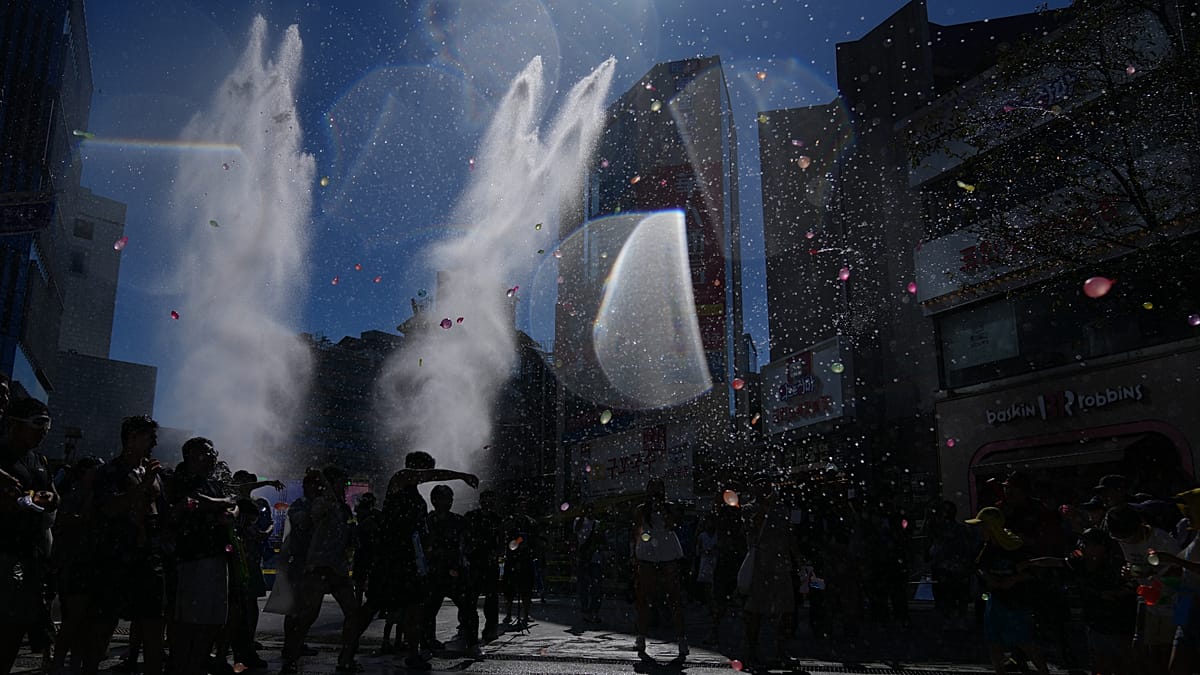
Tokyo's Asakusa district was transformed into a massive water fight over the weekend as the annual Sanja Matsuri festival reached its climax. Thousands of spectators lined the streets, armed with buckets, hoses, and water pistols, drenching the bearers of portable shrines, known as mikoshi, in a tradition that blends reverence with playful chaos.
A tradition of purification and play
The water-throwing ritual, known as mizukake, is meant to purify the mikoshi and its bearers, who carry the heavy shrines on their shoulders through the narrow lanes of Asakusa. While the practice has ancient roots, it has evolved into a spirited spectacle that draws both locals and tourists. This year, the crowds were particularly enthusiastic, with some participants arriving with large water tanks and super-soakers.
"It's a way to cool down the bearers and bring good luck," said Yuki Tanaka, a festival organizer. "The water is a symbol of purification, but it's also a lot of fun. Everyone gets involved, and the energy is incredible."
The Sanja Matsuri is one of Tokyo's most famous festivals, held annually in mid-May at the Asakusa Shrine. It features over 100 mikoshi, each carried by teams of men and women dressed in traditional happi coats. The festival honors the three founders of Senso-ji Temple, and its boisterous atmosphere is a stark contrast to the city's usual orderly demeanor.
While the water fight is a highlight, the festival also includes traditional music, dancing, and food stalls. Visitors from across Japan and around the world flock to Asakusa to witness the spectacle, which has become a symbol of Tokyo's vibrant cultural heritage.
For many Europeans, the festival offers a glimpse into a different kind of communal celebration. Unlike the more structured carnivals in cities like Cologne or Nice, Sanja Matsuri is characterized by its raw, participatory energy. "It's chaotic but organized," noted Maria Schmidt, a German tourist who attended the event. "You feel like you're part of something ancient and alive."
The water fight also serves as a practical relief from the late spring heat, which often exceeds 25 degrees Celsius in Tokyo. "The water is a blessing," said one mikoshi bearer, laughing as he wrung out his soaked shirt. "It keeps us going through the long hours of carrying."
As the festival concluded, the streets of Asakusa were left glistening, and participants dispersed with smiles and soggy clothes. The Sanja Matsuri remains a testament to Tokyo's ability to honor tradition while embracing joy.
For those interested in similar cultural events, Europe offers its own unique festivals, such as the conscious festivals that blend music and spirituality, or the canine festival in Vilnius. These events, like Sanja Matsuri, highlight the diverse ways communities come together to celebrate.