Libya's fractured security landscape has produced two striking drug busts this week, each highlighting the country's growing role as a transit hub for synthetic narcotics and its tangled connections to Europe and the Middle East.
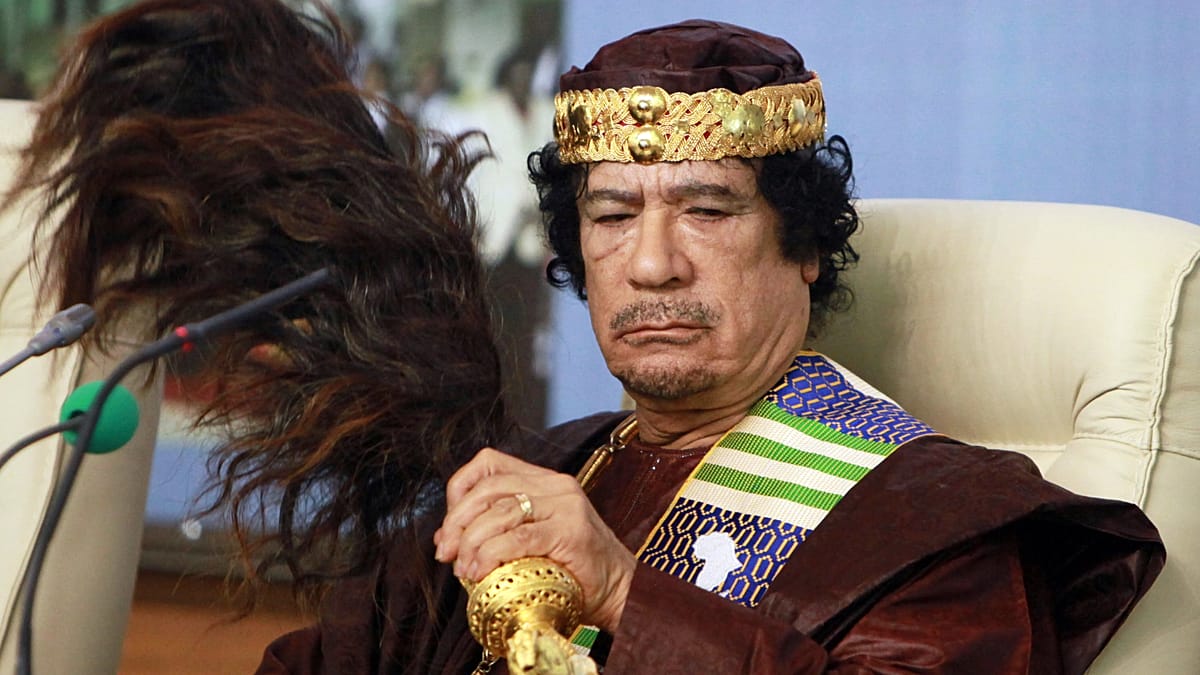
In Tripoli, the Deterrence Apparatus for Combating Terrorism and Organised Crime, known as Rada, announced on Saturday the seizure of approximately 100,000 ecstasy tablets stamped with the likeness of the late leader Muammar Gaddafi. The pills, which feature Gaddafi in his characteristic attire, were discovered hidden inside a Renault Master van that had arrived by sea via an unnamed European port, according to the Libyan news agency LANA.
Rada said its investigators had acted on intelligence about a criminal network pushing the drugs through an undisclosed European country. Several suspects were arrested and referred to the public prosecutor's office. The street value of the haul was not disclosed, but informal estimates suggest the 100,000 tablets could be worth between €500,000 and €1.5 million across the Mediterranean region.
In a separate operation in Benghazi, the eastern city controlled by forces loyal to Marshal Khalifa Haftar, the Criminal Investigation Agency reported the seizure of an undisclosed number of captagon tablets. The agency assessed that Syria was the likely manufacturing origin, pointing to the remnants of the drug empire once run by the regime of Bashar al-Assad.
Captagon's deadly legacy
Captagon, a cheap and highly addictive amphetamine-type stimulant, flooded Middle Eastern markets during Syria's civil war and became a major revenue source for the Assad regime. Analysts at the New Lines Institute estimated the trade generated up to $10 billion (€8.6 billion) annually at its peak, with networks around the Assad family earning an estimated $2.4 billion (€2 billion) per year. The regime's total earnings, which became industrialised around 2018-2019, remain difficult to calculate precisely.
The United States and the United Kingdom have sanctioned Assad's brother Maher and a network of associates for overseeing production and export from regime-controlled facilities in Latakia and the Qalamoun Mountains, in cooperation with Hezbollah. The narcotics link between Latakia and Benghazi is well documented: in December 2018, Greek authorities intercepted a vessel carrying more than 3 million captagon pills from Latakia bound for Benghazi, and separate reporting has documented containers from Syria arriving in the eastern Libyan port with millions of tablets.
After Assad's fall in December 2024, the new Syrian authorities led by interim President Ahmed al-Sharaa destroyed multiple large-scale captagon production and storage facilities, including those on former regime bases. Yet the drug's presence in Libya suggests that trafficking networks have adapted, possibly using existing routes and stockpiles.
Gaddafi-shaped tablets are not new to Libya. In August 2025, Benghazi authorities seized an undisclosed quantity of captagon-type tablets bearing Gaddafi's image, which forensic experts identified as MDMA-type narcotics, with Syria believed to be the source. In another bust that same month, Benghazi found 45 ecstasy tablets shaped like Gaddafi's face among a larger seizure of 1,355 assorted pills. It remains unclear whether these different batches are linked to the same manufacturing or trafficking networks.
Gaddafi, who ruled Libya for 42 years as its "Brotherly Leader," was captured and killed by rebel fighters in October 2011 following a popular uprising backed by NATO airstrikes. Fifteen years on, his image has become increasingly visible in parts of the country, appearing on clothing and at public gatherings marking the anniversary of his 1 September 1969 revolution.
The United Nations Office on Drugs and Crime (UNODC) noted in its 2026 assessment that Libya has become an increasingly significant regional transit point for synthetic drugs due to its political fragmentation and weak border controls. The latest seizures underscore that assessment, as well as the persistent role of European ports in the illicit trade. The Dutch health agency's warning about lethal Trump-shaped ecstasy pills earlier this year highlighted a broader trend of novelty-shaped narcotics circulating in Europe, though the Libyan cases appear to be part of a separate trafficking chain.
For Europe, the implications are clear: the continent's ports and roads remain a conduit for drugs moving between conflict zones and consumer markets. The harsh reality for Syrians returning home after Assad's fall includes the lingering shadow of the captagon trade, which may have found new life in Libya's chaos.