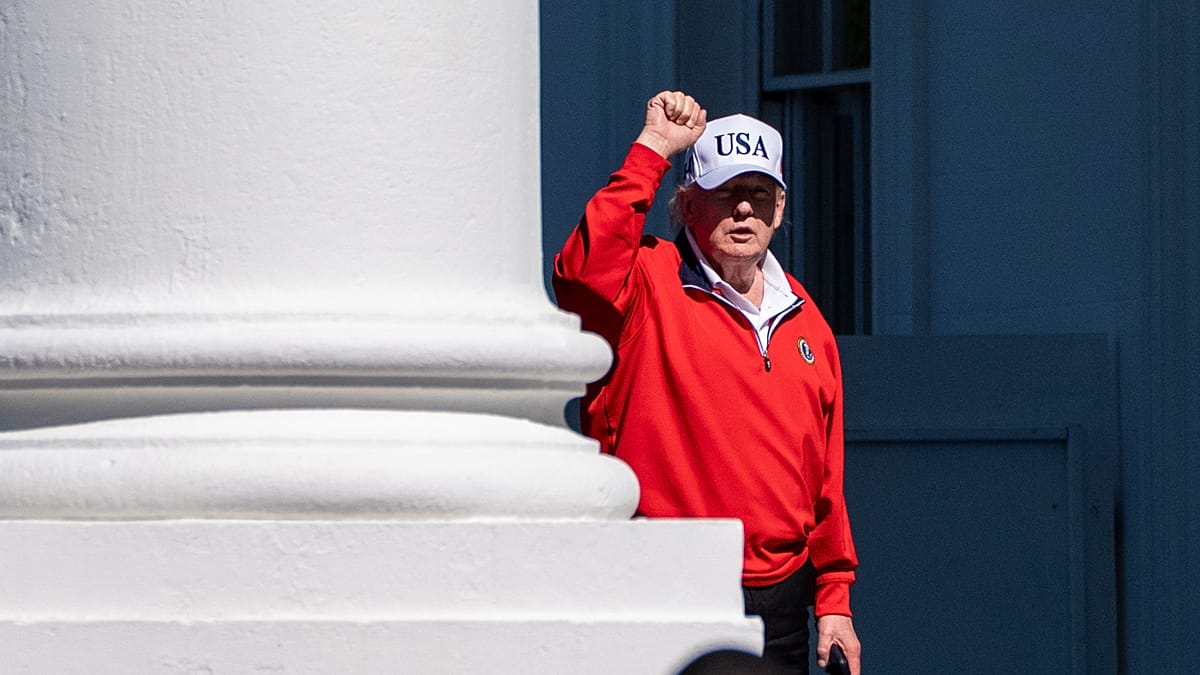
In a dramatic shift from his usual confrontational rhetoric, US President Donald Trump declared on Monday that he had secured a halt to Israel's military offensive in Lebanon, following direct conversations with Israeli Prime Minister Benjamin Netanyahu and Hezbollah. Writing on his Truth Social platform, Trump stated that no Israeli troops would be "going to Beirut, and any troops that are on their way, have already been turned back." He added that Hezbollah had agreed to cease all shooting, with both sides refraining from further attacks.
Trump's unusually conciliatory message came hours after Iran's Tasnim news agency, affiliated with the Islamic Revolutionary Guard Corps (IRGC), reported that Tehran had decided to stop exchanging messages with Washington on a peace deal. The report also threatened to "completely block the Strait of Hormuz" and expand fighting fronts, a move that sent oil prices spiking. For European capitals, the spectre of a Strait of Hormuz closure raises immediate concerns about energy security, given that a significant portion of Europe's crude oil imports transit that chokepoint.
Iran's Mixed Signals and Trump's Dismissal
Despite the Iranian announcement, Trump downplayed its significance in remarks to US media, claiming that Tehran had not formally informed Washington of the decision. "I don't care if they're over, honestly. I really don't care. I couldn't care less," Trump said, adding that he believed oil prices would soon drop sharply. He kept the door open for continued negotiations, stating, "It doesn't mean we're going to go and start dropping bombs all over there. We'll keep the blockade."
Iran's foreign ministry, a civilian body, issued a separate statement blaming the United States for failing to restrain Israel from its offensive in Lebanon. The ministry argued that Washington bore "direct responsibility" for ceasefire violations against both Iran and Lebanon, and warned that Tehran would defend its interests "wherever it deems necessary." Two Iranian generals were quoted by local media as saying the country was prepared to undertake "game-changing measures" and preserve the "Strait of Hormuz equation."
An adviser to Iran's supreme leader and IRGC commander, Mohsen Rezaei, posted on X that Iran would not tolerate a continued maritime blockade or escalating tensions in Lebanon. These statements underscore the fragility of any diplomatic progress, particularly as European diplomats in Brussels and national capitals watch closely. The EU has long sought to mediate between Iran and the US, and any collapse of talks could reignite tensions that directly affect European security interests, from migration flows to the stability of Middle Eastern partners.
Trump's claim of a ceasefire in Lebanon, if verified, would mark a significant de-escalation after weeks of intense Israeli strikes that have devastated parts of southern Lebanon, including the historic city of Tyre. However, the situation remains fluid, and European leaders—particularly in France, which has historical ties to Lebanon—are likely to press for a UN Security Council meeting to formalise any truce. The broader implications for Iran-US relations, and the potential for renewed nuclear negotiations, will be a key topic at upcoming EU foreign affairs councils.