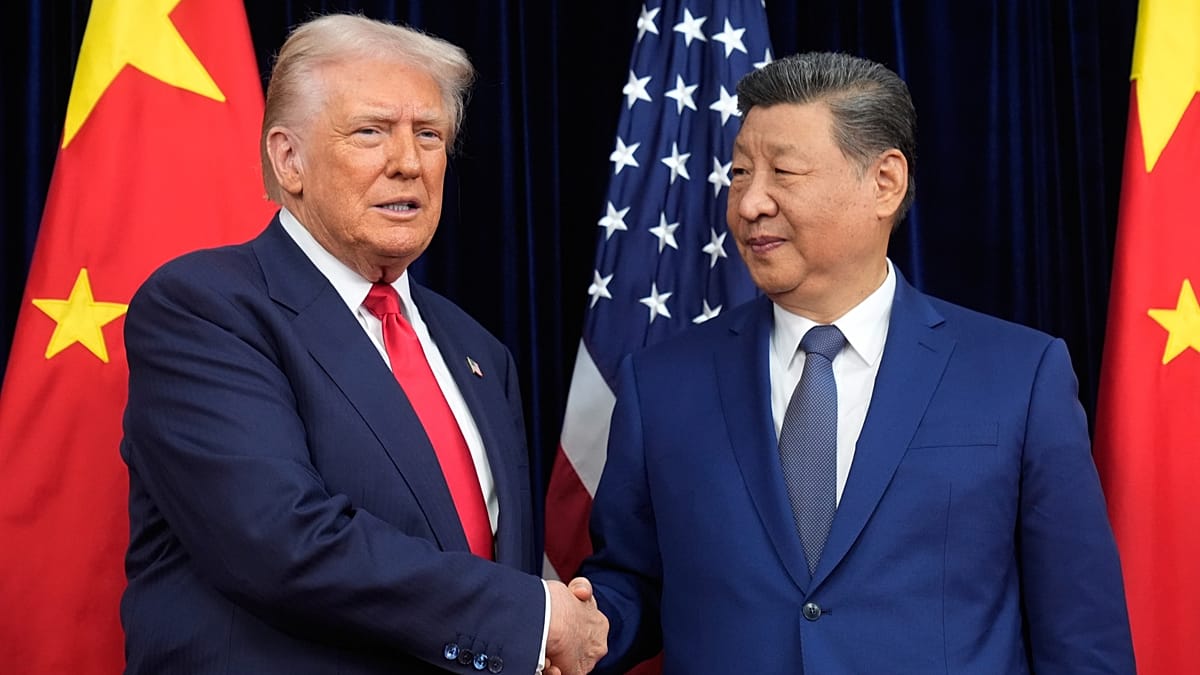
US President Donald Trump is set to arrive in China on Wednesday for a three-day state visit, Beijing confirmed on Monday. The trip, scheduled from 13 to 15 May, marks the first time a sitting US president has travelled to China since Trump himself visited in November 2017.
Chinese foreign ministry spokesperson announced that Trump accepted an invitation from President Xi Jinping. The visit was originally planned for late March or early April but was postponed due to the outbreak of the Iran war.
Trade and Iran at the Forefront
Discussions are expected to centre on two contentious issues: trade tariffs and Iran. Trump is likely to urge Xi to leverage China's influence to push Tehran toward a diplomatic resolution. China remains a major buyer of Iranian oil, a relationship that has long strained US-China ties.
Trump has publicly praised his rapport with Xi, describing their relationship as “extremely good” in a social media post earlier this year. Yet underlying tensions persist. Beyond trade and Iran, the two powers remain at odds over Taiwan, which Beijing claims as part of its territory, and over broader geopolitical alignments.
“The relationship with China, and my personal relationship with President Xi, is an extremely good one, and we both realise how important it is to keep it that way,” Trump wrote.
US Principal Deputy Press Secretary Anna Kelly framed the visit as symbolically significant but stressed that Trump does not travel for symbolism alone. “The American people can expect the president to deliver more good deals on behalf of our country,” she told reporters.
For European observers, the visit carries implications beyond the bilateral dynamic. The EU has been navigating its own trade tensions with Washington, as Trump has issued ultimatums and tariff threats against Brussels. Any deal struck between the US and China could reshape global trade patterns and affect European exporters. Meanwhile, the Iran dimension touches on European security interests, particularly as EU member states have sought to preserve the 2015 nuclear deal and maintain diplomatic channels with Tehran.
Trump's administration has also been active on other fronts relevant to Europe, including considering a relocation of US troops from Germany to Poland, a move that would alter NATO's force posture. Additionally, Secretary of State Marco Rubio recently visited Rome to seek Italian support on Iran, trade, and NATO commitments, underscoring Washington's push for European alignment on these issues.
The visit comes amid a broader recalibration of US foreign policy under Trump, who has pursued bilateral deals over multilateral frameworks. For China, hosting a US president after nearly a decade offers a chance to project stability and influence on the world stage. For Europe, the outcome of these talks will be closely watched, as any shift in US-China relations could ripple across trade, energy, and security policies that directly affect the continent.