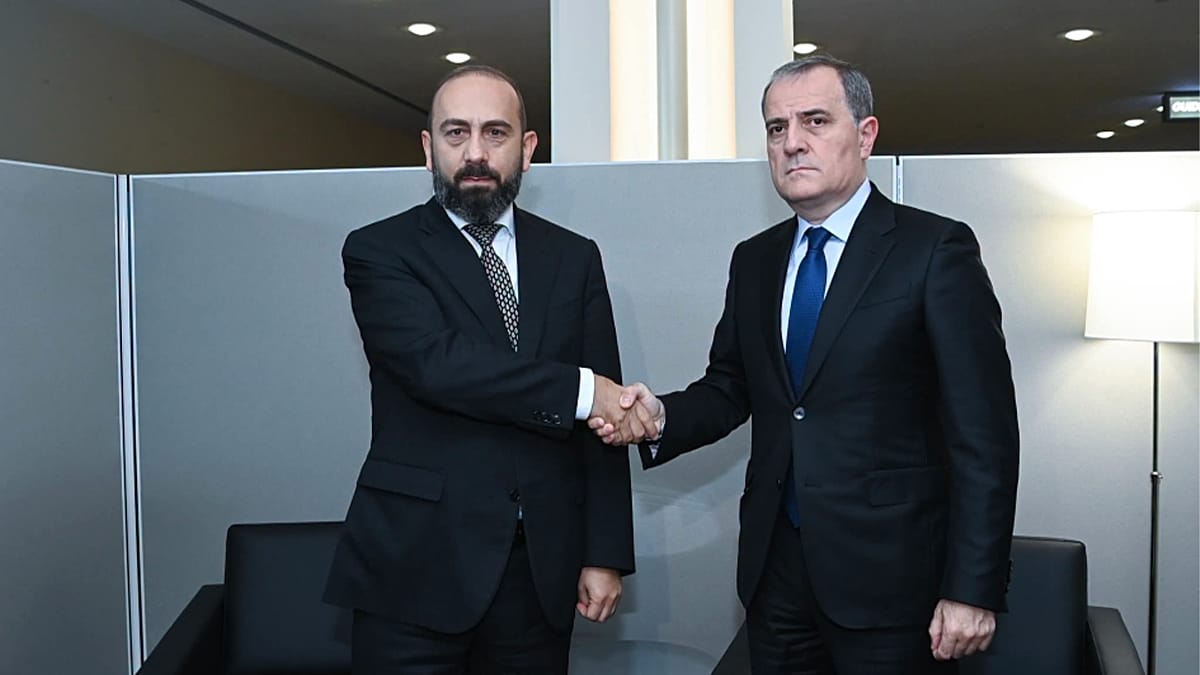
When United States President Donald Trump meets Chinese President Xi Jinping in Beijing this Thursday, the agenda will be shaped as much by technology as by traditional trade and geopolitics. Among the US delegation are Apple CEO Tim Cook and Tesla CEO Elon Musk, but notably absent is Nvidia's Jensen Huang, signaling that semiconductors may not be the centerpiece of discussions.
Instead, the focus is expected to shift to artificial intelligence-enabled warfare, cybersecurity, and the deepening US-China tech rivalry. David Leslie, director of ethics and responsible innovation research at The Alan Turing Institute in London, told Euronews Next that the "big top shelf items" include geopolitical instabilities from the conflict in Iran and uncertainty over US protection of Taiwan. He highlighted the emergence of AI-supported warfare, citing recent deployments in Venezuela, Gaza, and Iran, and noted that both nations have already opened channels on AI, particularly regarding nuclear risks.
AI and Cybersecurity at the Forefront
The summit comes weeks after Anthropic, a US AI company, released its cyber-focused model Mythos to select businesses and cybersecurity firms, warning it "poses unprecedented cybersecurity risks." Leslie argued that frontier AI models exposing vulnerabilities in national cybersecurity infrastructure will be a critical talking point, given their implications for national security.
Another factor is the outsized influence of Trump's Big Tech allies. Leslie observed that Silicon Valley has largely driven policy rather than the other way around, meaning US stances on cybersecurity and intellectual property theft by Chinese tech companies may be shaped more by executives like Cook and Musk than by diplomats. "One of the defining features of the way tech policy has evolved from the Trump administration side is that it has all been largely dictated by the interests of Silicon Valley," he said.
China's AI Push and the Race for Dominance
While the US takes a company-led approach, China is advancing through state-directed education and research ecosystems. Beijing has mandated an AI penetration rate of over 70% in key industries by 2027. Chinese firms like DeepSeek claim to offer cheaper alternatives to ChatGPT, and companies such as Huawei, Alibaba, and ByteDance are developing their own chip designs. According to the Stanford Institute for Human-Centered Artificial Intelligence's annual AI report, China has closed the gap with the US in patents, publications, and physical AI (robotics), though the US still leads in capital, infrastructure, and AI chips.
Complex interdependencies complicate the rivalry. China controls rare earth minerals like cerium and lanthanum, essential for modern technologies. Leslie noted that the US, having depleted its military stockpiles, needs robust access to these minerals, weakening its negotiating position. Jacob Gunter, head of the economy and industry program at the MERICS think tank in Berlin, suggested during a press briefing that China might push for eased US export restrictions on controlled technologies to address the trade deficit. However, he added that Beijing has resisted exceptions for Nvidia chips, prioritizing domestic production over short-term access.
Any attempt by Trump to broker a semiconductor or AI agreement would likely face fierce resistance from the national security wing of his administration, led by figures like Secretary of State Marco Rubio. The European Union, meanwhile, watches these developments closely, as they affect transatlantic tech policy and supply chains. For a deeper look at the broader geopolitical context, see our analysis on Trump's weakened hand in Beijing.
As the summit unfolds, the absence of a chip deal underscores a shift toward AI and cybersecurity as the new battlegrounds in US-China relations—a dynamic with profound implications for Europe's own tech sovereignty and security posture.