İstanbul's cultural landscape is being reshaped less by public institutions than by the country's industrial dynasties. The Sabancı, Eczacıbaşı and Koç families — whose fortunes were built in banking, manufacturing and energy — have become the city's most consequential patrons, funding museums, exhibitions and architectural commissions that now anchor its international reputation.
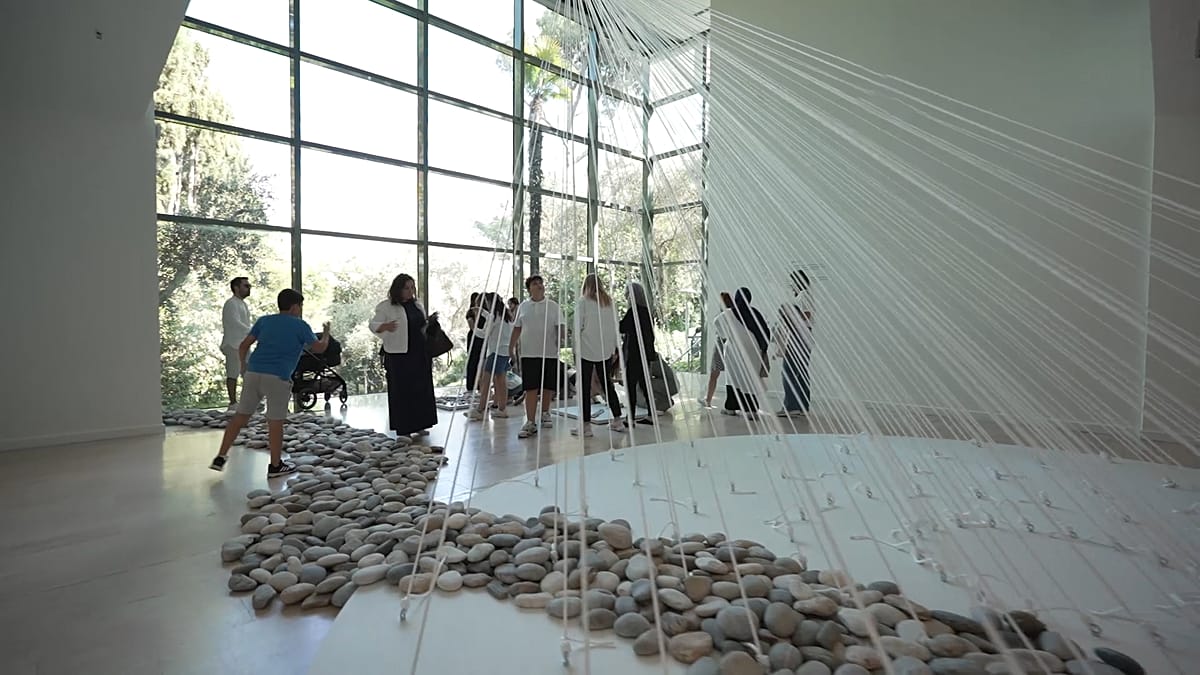
The most visible example this season is the Sabancı University Sakıp Sabancı Museum's Yoko Ono retrospective, organised in partnership with Spain's MUSAC (Museo de Arte Contemporáneo de Castilla y León) and the lender Akbank. The show has drawn attention well beyond Türkiye's borders, positioning İstanbul as a stop on the global touring circuit rather than a regional outpost.
From Piano's waterfront to Koç's industrial archive
İstanbul Modern, backed by the Eczacıbaşı group, reopened in 2023 in a new building designed by Renzo Piano on the Bosphorus waterfront. The Italian architect's involvement gave the museum an instantly recognisable international signature, and the institution has since become a fixture in conversations about contemporary art in southeastern Europe.
The Koç family's contribution runs in a different register. Its industrial museum, established in 1996, has accumulated European recognition for its treatment of Türkiye's manufacturing and transport history — a reminder that the country's business elite has been investing in heritage, not just headline-grabbing contemporary shows, for nearly three decades.
These are not isolated gestures. They reflect a broader calculation among Turkish holding companies that cultural credibility translates into commercial and diplomatic advantage. As Franck Mereyde of TAV Airports has observed, understanding culture has become increasingly central to doing business in Türkiye — a striking admission from an executive whose company runs airports, the most utilitarian of infrastructure.
Tourism numbers sharpen the argument
The economic logic is hard to dispute. Türkiye welcomed close to 64 million visitors in 2025, generating roughly $65 billion in tourism revenue, with cultural attractions cited as a principal draw. For conglomerates with interests spanning aviation, hospitality, retail and finance, a city that pulls in cultural travellers is a city that fills hotel rooms, aircraft seats and shopping districts.
İstanbul's position as a travel hub reinforces the dynamic. The city's main airport has overtaken Heathrow in global connectivity, making it a natural gateway for the exhibition tourism that museums now chase. The same infrastructure that moves business travellers also moves the audiences that cultural institutions need to justify their budgets.
There are risks in leaning so heavily on private patronage. Family-controlled foundations can shift priorities with generational change, and corporate sponsorship rarely substitutes for sustained public funding of the arts. Critics of Türkiye's cultural governance have long noted that private money tends to favour flagship projects in İstanbul over institutions in Ankara, İzmir or the southeast.
Still, the direction of travel is clear. Where Milan has its fashion houses and Bilbao its Guggenheim effect, İstanbul is assembling a coalition of industrial families willing to underwrite its claim to cultural significance. Whether that produces durable institutions or a series of well-publicised exhibitions is the question that will define the next decade.
For European audiences, the stakes extend beyond aesthetics. Türkiye remains a candidate country whose relationship with the EU is perpetually contested, and its cultural sector is one of the few arenas where exchange continues largely unimpeded. Exhibitions co-produced with Spanish museums and buildings designed by Italian architects keep İstanbul inside European cultural networks even when political ones fray.
That may be the quietest argument for the conglomerates' spending: in a city of 16 million at the seam of two continents, culture is also a form of positioning — a way of insisting that İstanbul belongs to Europe's conversation, on its own terms.