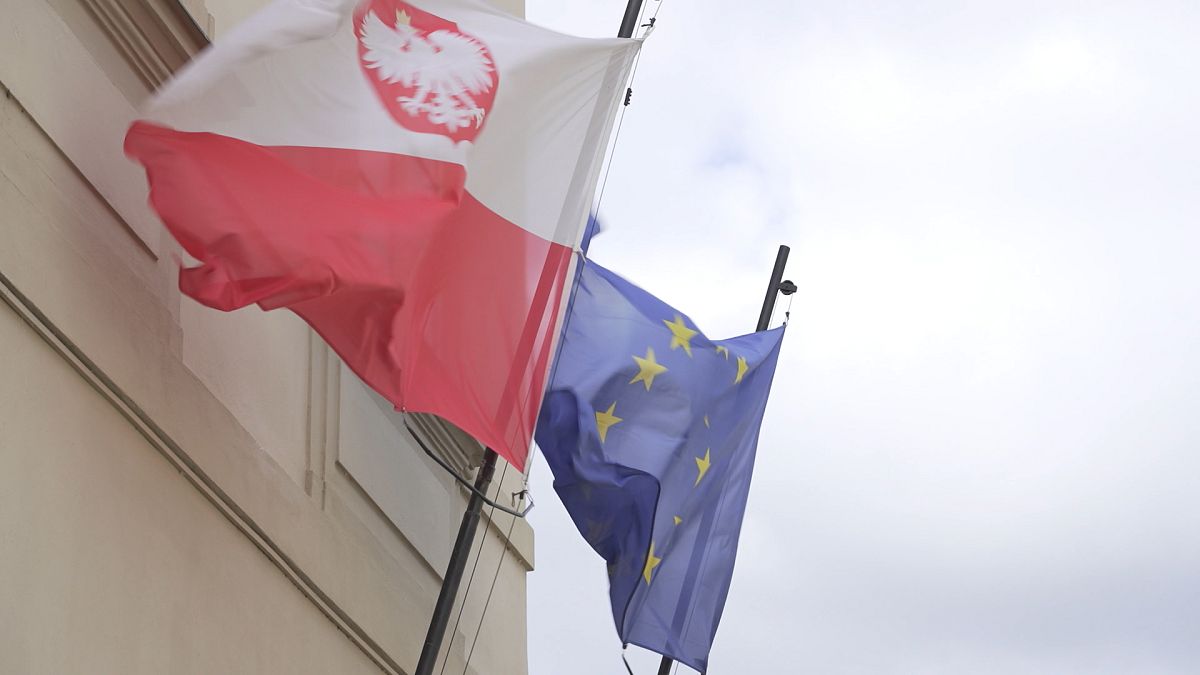
Twenty years ago, the European Union undertook its most ambitious enlargement, welcoming ten nations—primarily from central and eastern Europe—into its fold. For countries like Poland, Hungary, and the Baltic states, accession on 1 May 2004 marked a definitive pivot from decades under communist influence toward integration with Western European political and economic structures. Beyond the geopolitical shift, it unleashed a profound entrepreneurial energy, granting nascent businesses immediate access to a vast single market of over 450 million consumers.
From Local Roots to Global Ambition
The story of MADARA Cosmetics, founded in Riga, Latvia, in the wake of accession, encapsulates this new mindset. Starting in a small apartment, the organic skincare company deliberately drew on its Nordic-Baltic heritage. "We decided to really focus on local nordic nature for our active ingredient research because this is where we come from, this is where our heart is," recalls co-founder Lotte Tisenkopfa-Iltnere. Ingredients like birch water, tapped from Latvian forests, became the foundation of their products.
For MADARA's leadership, EU membership was not a peripheral benefit but a core strategic assumption. CEO Gunta Šulte notes, "Being part of the EU from day one has set the thinking of the founders of this company; it’s going to be a global company." She emphasises how the removal of physical and regulatory barriers reshaped ambition: "You remove this barrier of physical borders... So it removes that barrier of thinking in your head and you already think global from day one."
The Single Market Engine
The harmonised regulatory framework of the EU single market proved a critical accelerant. For a company like MADARA, navigating a single set of cosmetic regulations across 27 member states, rather than two dozen distinct national rules, streamlined everything from product development to labelling. This efficiency has fuelled expansion, with the company seeing rapid growth in key Western European markets like France and Germany, entering hundreds of new retail stores.
The economic convergence following the 2004 enlargement is stark. Trade costs plummeted, supply chains deeply integrated, and foreign direct investment surged. The new member states experienced substantial GDP growth, narrowing the economic gap with western counterparts. This integration continues to evolve, as seen with subsequent accessions by Bulgaria, Romania, and Croatia, and the ongoing candidacy of nations like Albania, Serbia, and Ukraine.
Another standout from the 'class of 2004' is the Czech Republic's Raylyst Solar. Based in Prague and named Europe's fastest-growing company in the FT 1000 list, this photovoltaics wholesaler underscores how the single market enables sectoral leadership. "The single market is very crucial for us," explains Marketing Manager Michal Petřek. "It's free movement of products, it helps us to be faster, no taxes on the borders, it makes everything cheaper." Germany is now Raylyst's largest market, a direct result of seamless cross-border trade.
Powering the Green Transition
Raylyst's explosive growth—reporting compound annual growth over 800% between 2019 and 2022—is also a function of Europe's urgent green transition. Soaring demand for renewable energy infrastructure has created a fertile landscape for innovators. "This market is successful because we need to make a transformation of our energy infrastructure," Petřek says, highlighting how photovoltaic technology facilitates the decentralisation of power grids.
The success stories of MADARA and Raylyst are microcosms of a broader, two-decade upward trend. They demonstrate how accession provided more than a market; it provided a framework for scalability. The ability to hire talent freely from across the EU, as noted by Raylyst's recruitment of German and Italian staff, further cements the deeply integrated economic area that 2004 helped solidify.
This business landscape continues to develop, with forums like the upcoming European Economic Congress in Katowice serving as a hub for the next generation of pan-European strategy.
The 20th anniversary is less a retrospective and more a checkpoint. The initial wave of business optimism that followed the fall of the Iron Curtain has been validated by two decades of growth, innovation, and integration. The companies born in the accession era now operate not as 'eastern European' firms, but as confident European players, their origins a unique strength in a continent still weaving its diverse economies into a more resilient whole.