A Hellenic Air Force Phantom F-4 jet crashed on Sunday during an air display at Tanagra air base, north of Athens, killing both pilots on board. The aircraft went down in front of thousands of spectators at the Athens Flying Week 2026 event, which is one of the largest aviation shows in south-eastern Europe.
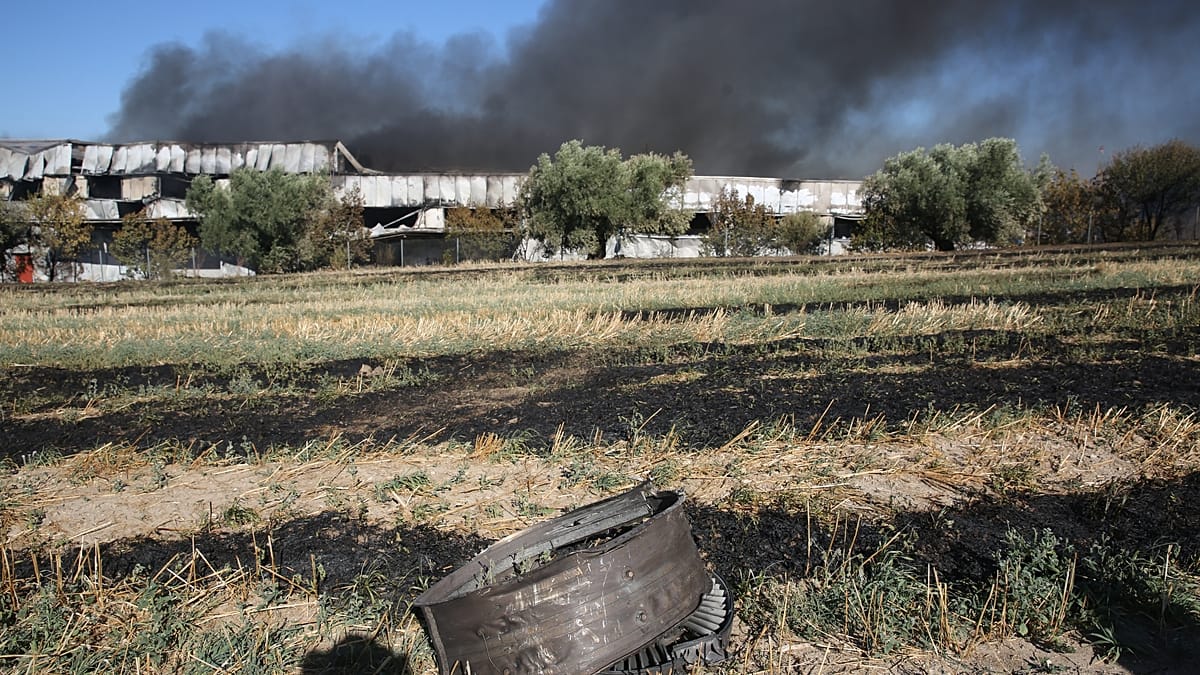
The twin-seat fighter was taking part in a demonstration when it suddenly lost altitude and plunged to the ground, according to state broadcaster ERT. An explosion followed immediately upon impact. The cause of the crash is not yet known, and an investigation has been launched.
Wildfire sparked by the crash
The impact ignited a fire that spread into the surrounding forested area. Firefighting crews were deployed quickly, with 115 firefighters and 36 vehicles working at the scene, supported by three ground teams. Nine aircraft and four helicopters were used periodically, one of them coordinating the operation.
On Saturday afternoon, an emergency alert was sent via the 112 number to residents in the wider area. By late Saturday, the fire situation had improved, but crews remained on site to monitor hotspots.
Defence Minister Nikos Dendias, who was attending the Thessaloniki International Fair, cut short his schedule and returned to Athens following the incident. Organisers cancelled the remaining events of the weekend programme, which had included formation flying, high-difficulty manoeuvres and parachute jumps.
The Phantom F-4, a Cold War-era fighter that has been in service with the Hellenic Air Force for decades, remains a workhorse of the fleet despite its age. The loss of two experienced pilots is a heavy blow to the force and to the wider Greek defence community.
This is not the first such tragedy in recent years. In 2023, a Greek F-16 crashed during a training flight, killing the pilot. The repeated incidents have raised questions about the maintenance and operational readiness of older aircraft in the fleet, though officials have stressed that safety protocols are strictly followed.
The crash also drew attention to the broader issue of military aviation safety across Europe. As air forces in many countries continue to operate ageing platforms, the need for modernisation and rigorous oversight becomes ever more pressing. The European Union has been discussing ways to enhance defence cooperation, but individual member states remain responsible for their own air safety standards.
Athens Flying Week, which was held on 5 and 6 September, attracts aviation enthusiasts from across the continent. The cancellation of the remaining shows is a disappointment for many, but the priority now is to support the families of the deceased and to determine what went wrong.
Greek authorities have promised a full and transparent investigation. In the meantime, the air base at Tanagra remains partially closed as investigators comb through the wreckage and analyse flight data.
The incident has also had an environmental dimension, as the wildfire threatened local woodland. Firefighting efforts were coordinated with the civil protection agency, and no injuries were reported among ground personnel or spectators.
As Europe watches, the Greek air force faces the difficult task of mourning its losses while ensuring that such a tragedy does not happen again.