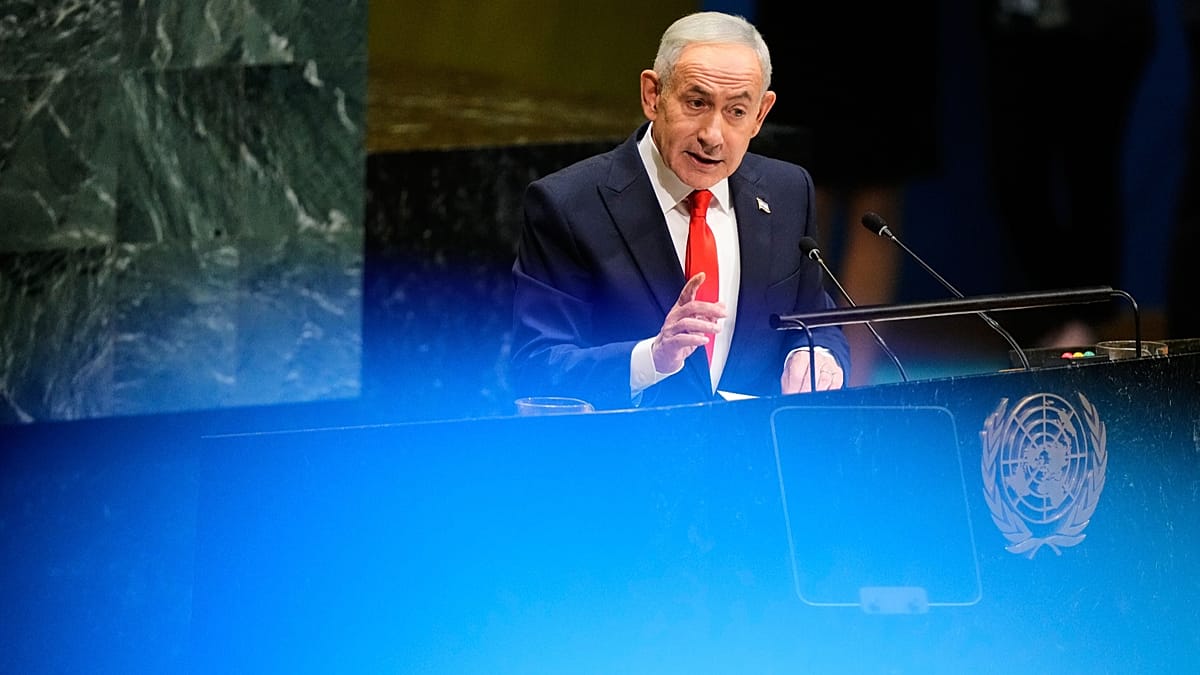
The United Arab Emirates has officially confirmed that President Mohamed bin Zayed Al Nahyan received Israeli Prime Minister Benjamin Netanyahu in Abu Dhabi on Sunday, ending days of speculation and aligning with earlier Israeli media reports. The confirmation came through the state news agency WAM, which described the meeting as a discussion of bilateral ties and ways to strengthen them.
This marks the first time Abu Dhabi has publicly acknowledged such a high-level encounter, though Israeli officials had already indicated the visit. On Monday, Netanyahu's office stated that the trip focused on strengthening relations between the two countries and addressing regional challenges, particularly the ongoing war with Iran.
A warning that never reached the security services
The meeting takes on added significance following a bombshell report in Israeli media that Mohamed bin Zayed had warned Netanyahu about an impending Hamas-led attack before 7 October 2023. According to the report, Netanyahu did not pass that warning on to his security services, a claim the Israeli premier has denied. The visit reportedly included a request from Netanyahu that the Emirati president publicly refute the story.
Israeli media also reported that Netanyahu flew to the UAE to ask Sheikh Mohamed to deny having given the warning. The prime minister's office has not commented on that specific aspect, but the timing of the visit—weeks after the report—suggests it was a central topic.
The controversy has added to the pressure on Netanyahu, who already faces scrutiny over the failures surrounding the October 7 attack. For more on that, see our earlier piece on Netanyahu's October 7 warnings scrutiny.
Regional diplomacy and Gulf connections
Beyond the bilateral meeting, the visit appears to have had a broader regional dimension. Open-source intelligence reports noted that military and government aircraft from several Gulf states landed in Abu Dhabi during Netanyahu's stay, including a Libyan government plane, a Moroccan Hercules, a Qatari military plane, and an Emirati aircraft that had flown in from Riyadh. Israeli media also reported that delegations from Morocco, Libya, Jordan, and Qatar were present for talks.
Israel has no formal diplomatic relations with most of these countries, making the reported contacts significant. The UAE, along with Bahrain, Morocco, and Sudan, normalized ties with Israel under the Abraham Accords in 2020, brokered during Donald Trump's first term as US president. The UAE remains a top US ally in the region and a key economic partner for Israel.
The visit also comes amid heightened tensions between Israel and Iran, with the war in Gaza and regional instability dominating the agenda. Netanyahu's office said the discussions covered "regional challenges," a phrase that likely encompasses the Iranian threat and the ongoing conflict.
Security concerns and censorship
The visit was kept under wraps until Israeli media broke the story, prompting a rare complaint from Israel's domestic security service, Shin Bet. On Monday, Netanyahu's office announced that Shin Bet had filed a complaint with the Chief Military Censor, demanding that Channel 12 be prosecuted for a "severe censorship violation." The statement said the publication endangered the lives of the prime minister, his wife, and the delegation, which included the head of the Mossad and other top security officials.
The visit was made public while Netanyahu's plane was still outside Israeli airspace, according to the statement. Mossad, which also operates under the Prime Minister's Office, issued a similar condemnation.
This is not the first time Netanyahu's travel has raised questions. In May, the UAE denied reports that Netanyahu had secretly visited the country, after his own office said he had met with the Emirati president during the war with Iran. That denial now appears to have been overtaken by events, as Sunday's meeting was officially acknowledged.
The confirmation of the visit underscores the complex web of Middle Eastern diplomacy, where public posturing often masks private engagement. For European observers, the developments carry implications for regional stability, energy security, and migration flows—all issues that resonate across the continent. As the situation evolves, European capitals will be watching closely, particularly given the EU's role in the region and its own internal debates over policy toward Israel and the Gulf states.