The United Arab Emirates has cut all economic links with Iran, announcing an indefinite suspension of trade, commercial exchange, and financial transactions. The decision, confirmed by Afra Al Hameli, Director of the Strategic Communications Department at the UAE Ministry of Foreign Affairs, came after Iran launched two ballistic missiles toward the country on Tuesday. Both projectiles landed in the sea, one inside Emirati territorial waters, and Abu Dhabi later clarified they had been aimed at shipping.
Al Hameli framed the move as a defence of international financial norms: "In light of regional escalations ... all trade, commercial exchanges, and financial transactions with Iran have been halted until further notice." She stressed the UAE's commitment to "safeguarding the integrity of the international financial system, in line with international law and the highest global standards," while rejecting allegations about the previous state of bilateral economic relations and reaffirming the country's dedication to dialogue and regional integration.
Tehran has denied any involvement. Iranian foreign ministry spokesman Esmail Baghaei "categorically rejected the United Arab Emirates' claim that Iran had launched a missile towards that country." The denial comes amid a broader conflict that began on 28 February with US and Israeli attacks on Iran, followed by daily Iranian missile and drone strikes on targets in neighbouring states.
Severing a vital economic artery
The UAE had been one of Iran's most important trading partners, despite international sanctions, and is home to a sizable Iranian expatriate community. Tuesday's announcement is the latest in a series of Emirati measures against Tehran, following the recall of its ambassador early in the war and the closure of Iran-linked schools and a hospital.
The suspension covers direct dealings, but it remains unclear whether it extends to transactions routed through third countries. This is a significant loophole, as US Treasury's Financial Crimes Enforcement Network warned in June 2025 that Iranian networks have been setting up front companies in free trade zones, particularly in the UAE and Hong Kong, to circumvent sanctions. These entities often bank in China through non-resident accounts and trade with counterparties in Singapore and Hong Kong.
Hours after the UAE's announcement, Iran's armed forces chief of staff, Ali Abdollahi, issued a stark warning to Gulf states, according to Mehr news agency. "Any assistance or facilitation provided to the aggressor US military amounts to participation in the US military operation," he said, casting doubt on assurances that Gulf countries would not allow the US to use their territory as a launchpad. "It seems unlikely that such a large number of military aircraft, particularly refuelling aircraft, could be present at regional bases without knowledge of host countries," he added, noting that Gulf states "should know that we are fully aware of the situation."
The Gulf hosts a significant US military presence, including in the UAE, and media reports have suggested that Saudi Arabia, the UAE, Kuwait, and Bahrain have all struck targets inside Iran in retaliation for attacks on the Gulf, though most have denied this.
Strait of Hormuz under pressure
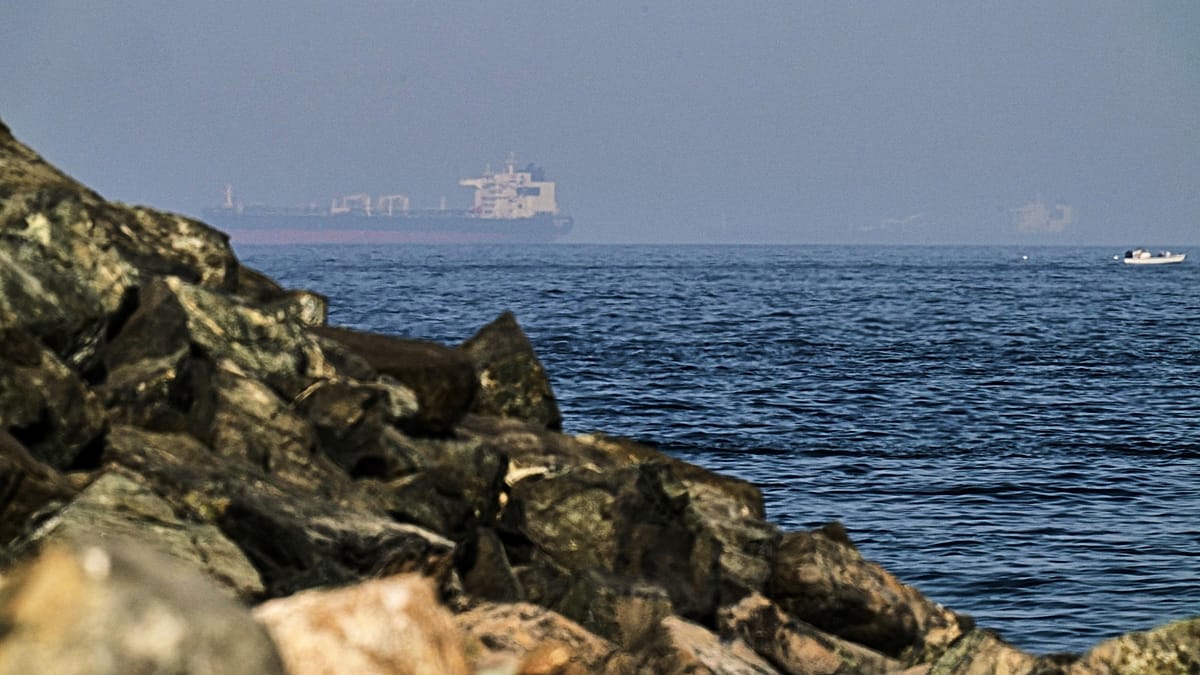
The economic rupture comes as the strategic Strait of Hormuz, through which vessels leaving most UAE ports must pass, remains effectively blockaded by Iran. Emirati state oil company ADNOC has seen its tankers targeted repeatedly in recent weeks. On 8 August, a missile hit an ADNOC carrier crossing the strait, and on 14 August, two more vessels were attacked. Abu Dhabi condemned these as "flagrant violations" of UN Security Council resolutions on freedom of navigation, calling the use of the strait for "economic coercion or blackmail" an act of piracy by Iran's Revolutionary Guard Corps.
The UAE has demanded an immediate cessation of hostilities and the unconditional reopening of the strait. A US-Iran framework deal to restore passage has collapsed, and conflicting statements from Washington have added to the confusion. On Monday, Jared Kushner, President Trump's envoy and son-in-law, claimed "very positive and active conversations" were underway, but on Tuesday Trump denied any talks, insisting that the "Naval Blockade remains in full force and effect."
The impact on global energy markets is severe. Crude flows through the Strait of Hormuz averaged just 4.9 million barrels per day in the second quarter of this year, down from 21.6 million in the final quarter of 2025. The US Energy Information Administration expects flows to remain severely constrained through August, with a slow recovery from September, and does not foresee production and trade patterns returning to pre-conflict levels before early 2027. This disruption is likely to have ripple effects on European energy prices and supply chains, as the continent watches the Gulf crisis unfold.