The United Arab Emirates has confirmed that the drones which struck its Barakah nuclear power plant last week were launched from Iraqi territory, pointing to a direct role for Tehran-backed militias in a conflict that has repeatedly targeted Gulf energy infrastructure.
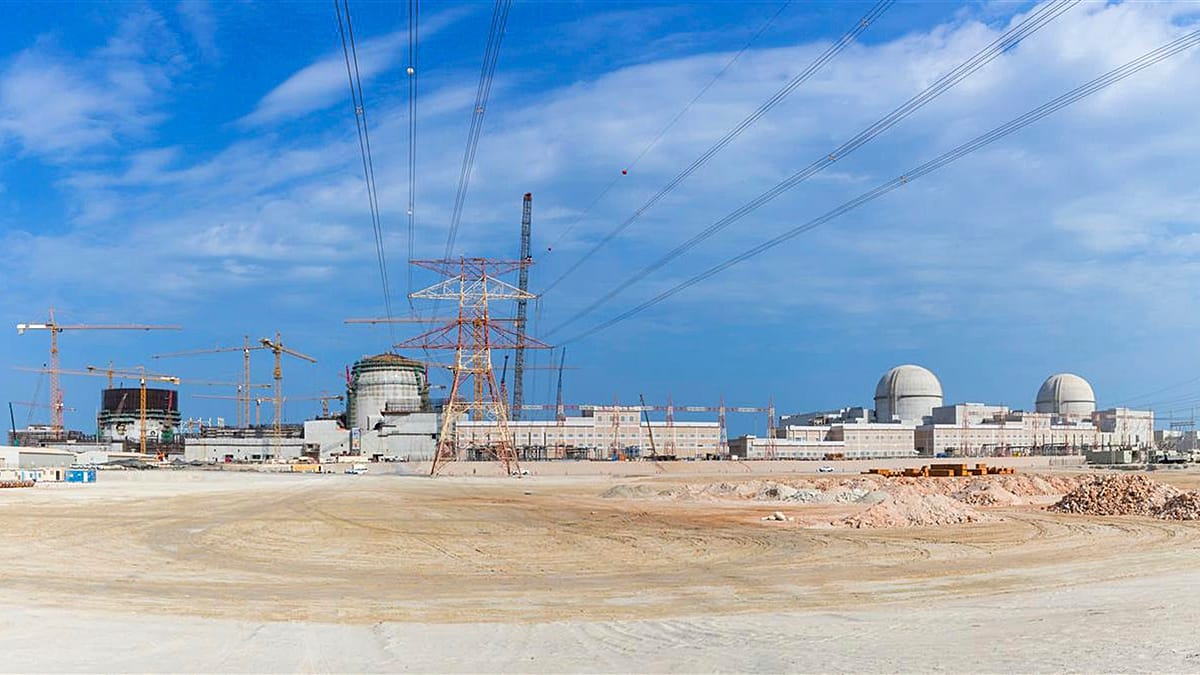
On Sunday, an unclaimed drone hit an electrical generator near the Barakah plant in Abu Dhabi, causing a fire but no injuries or radiation leak. Two other drones were intercepted before reaching the site. The facility, located near the borders with Saudi Arabia and Qatar, is the UAE's largest source of electricity, supplying about a quarter of the nation's power.
“As part of the ongoing investigation into the blatant attack on the Barakah Nuclear Power Plant on 17 May 2026, technical tracking and monitoring confirmed that the three drones ... all originated from Iraqi territory,” the Emirati defence ministry said on Tuesday.
Escalation in a Broader Conflict
The attack marks a notable escalation in the ongoing hostilities between Iran and Gulf states, which have intensified since the US and Israel launched strikes on Iran on 28 February. While Tehran has previously targeted energy and economic infrastructure in the UAE and other Gulf nations, the nuclear site had remained off-limits until now.
According to US officials, Iran-backed militias operating under the umbrella of the Popular Mobilisation Forces have struck US military bases in Iraq more than 600 times since the war began. Among the most active groups is Kata'ib Hezbollah, a separate entity from the Lebanese organisation of the same name, which the US has designated a terrorist organisation.
These paramilitary groups have repeatedly targeted Gulf states, drawing condemnation from Baghdad, which has struggled to control them. Iraqi government spokesman Bassem al-Awadi issued a statement on Tuesday “expressing strong condemnation” of the drone attacks on the UAE, without directly addressing the Emirati defence ministry's report. He called for “effective regional and international cooperation to prevent any escalation or harm to the stability of the region.”
Earlier on Tuesday, Anwar Gargash, a senior Emirati diplomat and advisor to the president, indirectly criticised neighbouring countries for their hesitant response. Writing on X, he said: “The confusion of roles during this treacherous Iranian aggression is baffling, encompassing the Gulf Arab region’s surrounding states. The victim’s role has merged with that of the mediator, and vice versa, while the friend has turned into a mediator instead of being a steadfast ally and supporter.” He added that “the gray position remains more dangerous than outright inaction.”
Iran's influence in Iraq expanded dramatically after the US-led invasion toppled Saddam Hussein in 2003, creating a power vacuum that Tehran filled by funding, arming, and training a network of paramilitaries. These groups have since grown into a formidable parallel security structure operating alongside—and often beyond the control of—the Iraqi state.
The attack on Barakah has heightened fears of a broader regional conflagration, with European capitals closely monitoring the situation. The European Union has repeatedly called for de-escalation in the Gulf, but the targeting of a nuclear facility raises the stakes considerably. For European readers, the incident underscores the fragility of energy supplies in a region that remains a critical source of oil and gas for the continent, even as Europe diversifies its energy imports following the war in Ukraine.
The UAE has not directly accused Iran of ordering the attack, but the evidence points to Tehran's proxies. The incident comes amid a flurry of diplomatic activity, including renewed US threats against Iran as a nuclear deal deadline approaches. The Barakah plant, built with South Korean technology and subject to International Atomic Energy Agency safeguards, remains operational, but the psychological and strategic impact of the strike is likely to reverberate across the Gulf and beyond.