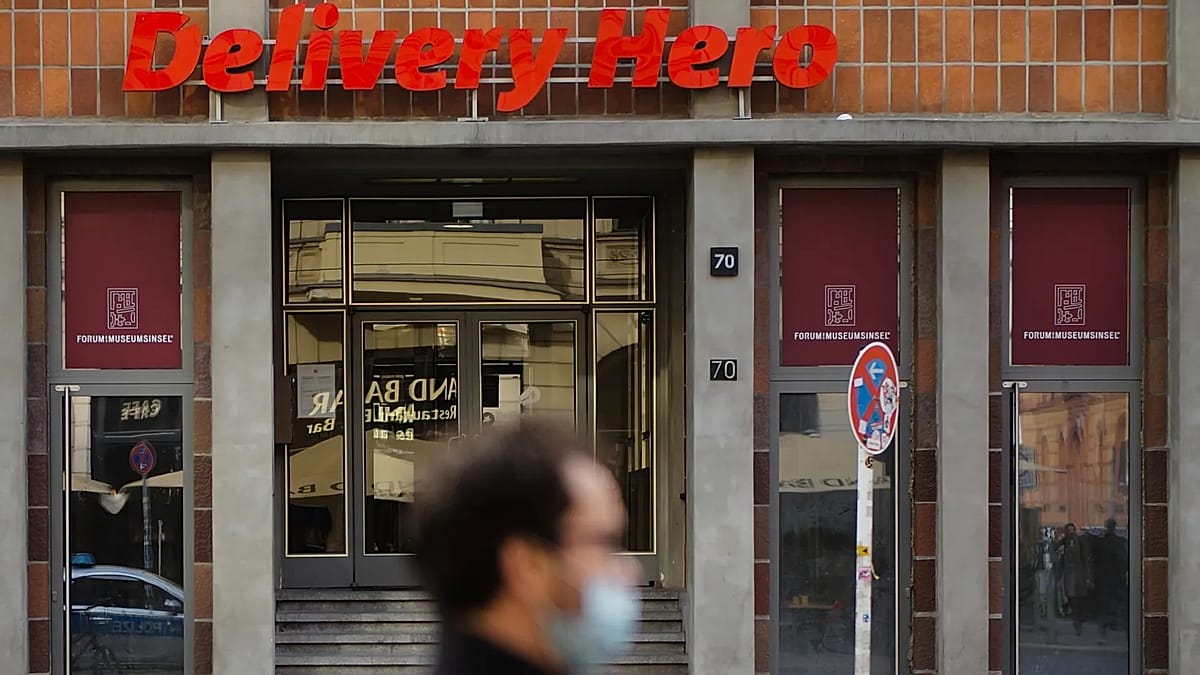
Berlin-based food delivery giant Delivery Hero has formally endorsed a €13 billion takeover bid from Uber, a move that would significantly reshape the global food delivery landscape and give the American ride-hailing firm a dominant position across Asia, Latin America, the Middle East, and parts of Europe.
Under the terms announced on Thursday, Uber will pay €41.50 per share in cash for all outstanding shares of Delivery Hero, valuing the German company at approximately €13 billion ($14.8 billion). After accounting for Uber's previously acquired stake, the net transaction value is roughly $13.7 billion (€12 billion). The deal is expected to close in the second half of 2027, pending regulatory approvals and shareholder acceptance.
A Global Delivery Behemoth
Founded in Berlin in 2011, Delivery Hero now operates in more than 60 markets and has expanded beyond restaurant delivery into quick commerce, delivering small packages to customers within minutes. The combined entity would span 99 countries, with gross merchandise value (GMV) of $236 billion (€205.9 billion) in 2025. Uber described the merger as creating the world's largest mobility and delivery platform.
Uber CEO Dara Khosrowshahi said: “By bringing our platforms together, Uber will extend affordable, reliable delivery to many millions more people in some of the world’s most dynamic economies, while creating more opportunities for merchants and couriers.”
Niklas Oestberg, CEO and co-founder of Delivery Hero, added: “Uber's global mobility and delivery platform and our shared commitment to innovation make this the right partnership to build on Delivery Hero's strengths in local food delivery and quick commerce.”
Commitments to Germany and Berlin Jobs
To secure the deal, Uber has made several commitments to German stakeholders. The company agreed not to make changes to Delivery Hero’s workforce in Berlin until at least 2029. Additionally, Uber pledged to invest €2 billion in Germany through 2031, focusing on expanding its local corporate workforce, growing its nationwide business, and launching autonomous vehicle deployments in partnership with the German automotive industry.
These commitments come amid broader European scrutiny of large tech acquisitions and their impact on local labour markets. The deal also requires Uber to secure at least 50% plus one share of Delivery Hero's outstanding share capital, including shares it already owns. Prosus, Delivery Hero's largest shareholder, has irrevocably committed to tender its shares, giving Uber an economic interest of about 53%.
Divestitures and Regulatory Hurdles
Separately, Delivery Hero has agreed to sell its businesses in 14 markets where it competes with Uber Eats to New York-based investment firm SSW Partners for around €1.4 billion. That sale is conditional on the Uber takeover being completed and other customary conditions being met. This divestiture is likely aimed at addressing antitrust concerns in overlapping markets.
Delivery Hero's management and supervisory boards have recommended that shareholders accept the offer, subject to reviewing the formal offer document. The deal will also require approvals from competition authorities in multiple jurisdictions, including the European Commission.
In Frankfurt, Delivery Hero's shares dipped 0.5% to €37.90 by early afternoon, reflecting some market caution about the timeline and regulatory risks.
The acquisition underscores the ongoing consolidation in the global food delivery sector, where scale and cross-market synergies are increasingly critical. For Uber, the deal provides a strong foothold in key markets such as South Korea, Italy, Saudi Arabia, the United Arab Emirates, and Argentina—territories where Delivery Hero has established a leading presence.
Uber expects the acquisition to boost its adjusted earnings per share by a high single-digit percentage by the third year after closing.