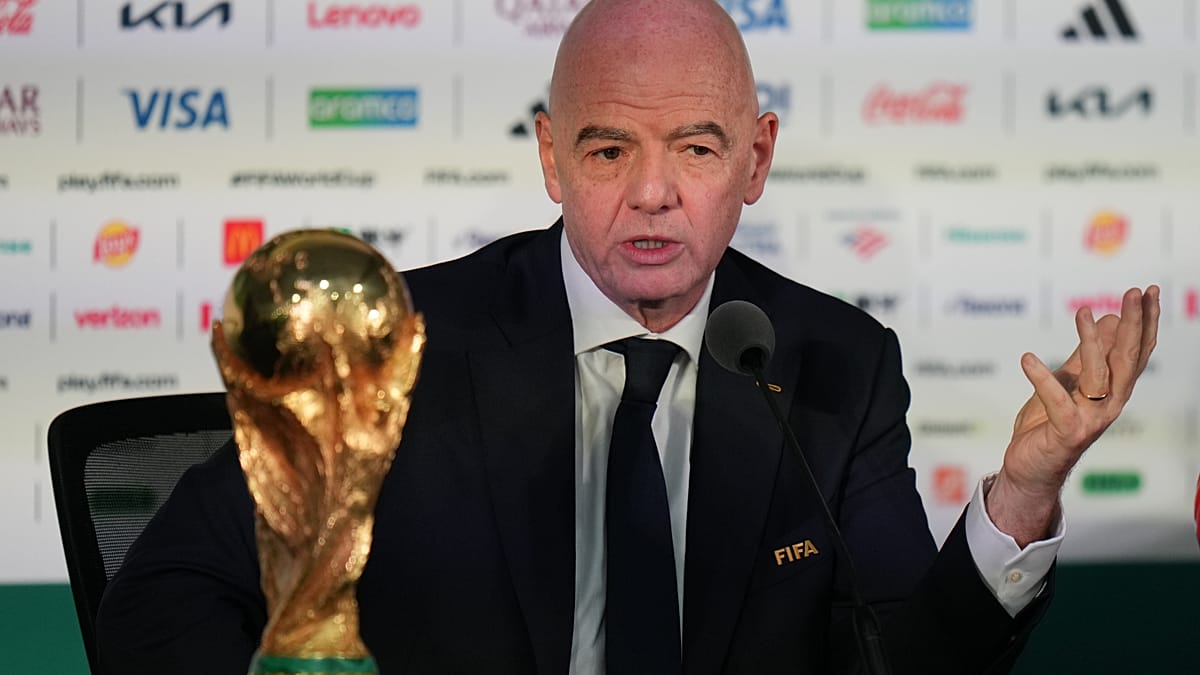
European football's governing body UEFA has taken a decisive stand against FIFA's proposal to open its competitions to private investment, voting on Thursday to boycott future men's and women's World Cups unless the plan is abandoned.
In a statement released after an emergency meeting of its 55 member associations in Nyon, Switzerland, UEFA declared that the World Cup "cannot be treated as an investment product." The organisation warned that national associations face an ultimatum: "accept the irreversible capture of football's greatest competitions or bear the consequences."
UEFA's resolution stipulates that no national team from its member associations will participate in any FIFA competition "for so long as these proposals remain alive," unless FIFA provides binding assurances that it will never again open its governance or competitions to private ownership. This marks an escalation in the ongoing war of words between UEFA and FIFA over the investment plan.
Historical precedents for World Cup boycotts
Boycotts are not unprecedented in the history of the World Cup. England snubbed the first three editions in 1930, 1934, and 1938, believing itself superior to the rest of the footballing world. African countries boycotted the 1966 tournament by withdrawing from qualifying in protest at FIFA's allocation of places, while the Soviet Union refused to play a qualifying match against Chile after Augusto Pinochet's military coup, forfeiting its chance to qualify for the 1974 World Cup.
The current dispute, however, strikes at the heart of FIFA's governance model. Critics argue that allowing private investment could fundamentally alter the nature of international football, prioritising financial returns over sporting integrity. UEFA's position has found support beyond the football world, with the European Union also expressing concern. The EU and UEFA have united against FIFA's plan, highlighting the broader political implications of the proposal.
FIFA has yet to respond formally to UEFA's boycott threat, but the organisation has previously defended its investment strategy as necessary to modernise and expand the game globally. The proposal is believed to involve selling stakes in future World Cups to private equity firms or sovereign wealth funds, a move that UEFA argues would strip national associations of control over their most prestigious tournaments.
The standoff raises the prospect of a split in international football, with European teams—among the most competitive and commercially valuable in the world—potentially absent from future World Cups. Such a scenario would mirror the tensions that have occasionally fractured other global sports, though UEFA insists it is acting to protect the game's long-term health.
For now, the ball is in FIFA's court. UEFA has made its position clear: withdraw the investment plan in full and provide binding guarantees, or face a boycott that could reshape the landscape of international football for decades to come.